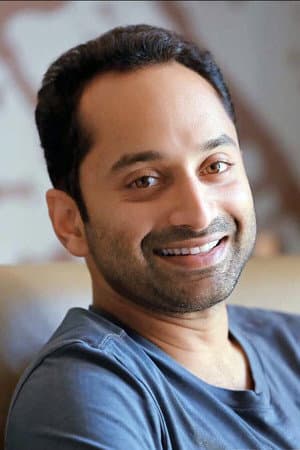
Fahadh Faasil: A Career In Tamil Cinema examines how a performer from a neighbouring language industry becomes a familiar presence in Tamil films without ever needing to be the centre of the frame. He built his reputation primarily in Malayalam-language films. Malayalam is the language of Kerala, the state bordering Tamil Nadu, and Tamil cinema is the industry centred in Chennai. A performer who moves between the two is said to work in more than one film industry, meaning more than one language market, each with its own stars, crews and production culture. His Tamil filmography is short, seven titles across roughly a decade, and that compactness is exactly what makes it readable. This feature traces what he has done in Tamil cinema, what each film added, and why a viewer outside the region should know the name.
A Body of Work Built on Range
What connects his Tamil work is not a genre or a repeating character type. It is an appetite for parts where the performance carries weight beyond screen time. He has stood inside large ensemble casts and inside star-led films where his role is one thread among many. The through line is the willingness to serve someone else's story rather than occupy every frame.
Two roles mark his Tamil entry points. In Velaikkaran (2017) he plays Aadhi, in a film about an enterprising youngster from a slum who wants his people to live with dignity and must take on an ambitious capitalist bent on dominating his field. A story with a social argument at its centre, it placed him in a commercial Tamil film alongside a major lead. Vikram (2022) casts him as Amar, assigned to investigate a case of serial killings. Amar comes to realise the case is not what it seems, and following it leads toward a war between everyone involved. Together the two films show how he functions here: a substantial presence in films not built around him alone.
The Films That Shaped the Reputation
Super Deluxe (2019) is the title most often cited when his Tamil work is discussed. He plays Mugilan in a film that braids several stories: an unfaithful newly-wed wife, an estranged parent, a priest and an angry son, each in an unexpected predicament, all on one fateful day. The structure lets each performer hold a strand, and Mugilan is one of several lives the film follows. For viewers outside the region, this is the film that best explains why his name travels.
Maamannan (2023) casts him as Ratnavel, and Vettaiyan (2024) as a character credited as Cyber Patrick, nicknamed Battery. Both extend the same pattern: he enters established Tamil projects and gives them a distinct presence without displacing the film's centre. Maareesan (2025) casts him as Dhayalan. Idhayam Murali (2026) casts him as Suryah, in a story about a young man navigating the complexities of unrequited love, where even as years pass and life takes unexpected turns, certain emotions remain deeply embedded. That is a smaller, more inward register than the investigation dramas, and it shows the range of material he is willing to take on.
What He Returns To
Across these films a few recurring interests are visible. He is drawn to stories about institutions and the people caught inside them: a company and a community in Velaikkaran, a police investigation in Vikram, a single day that pulls several lives apart in Super Deluxe. He is also drawn to men whose inner lives do not match their surface, characters with a private weight the plot does not always explain. Seven titles is a small sample, and it is enough to show a performer who chooses variety over repetition.
Why the Name Matters Beyond the Region
For a reader outside Tamil cinema, Fahadh Faasil is a useful entry point because his Tamil work is a map of the industry's range. A commercial drama about labour and capital, a serial-killer investigation, an ensemble film about a single day, a star vehicle and an inward romance: each title sits in a different corner of what Tamil cinema produces. Following him is a way of sampling all of it without committing to one genre.
He is not the centre of every film he appears in, and that is the point. His career shows how a performer from a neighbouring language industry becomes a familiar presence in Tamil films by taking the roles that serve the story. The seven titles listed here form a compact, varied introduction for anyone building a watchlist from outside the region, and the name attached to a project is a reliable signal that the performance will reward attention. For background on the wider industry, the Wikipedia entry on Tamil cinema is a reasonable starting point, and the Wikipedia entry on Malayalam cinema explains the industry he came from.