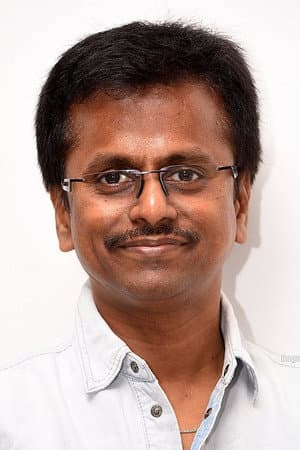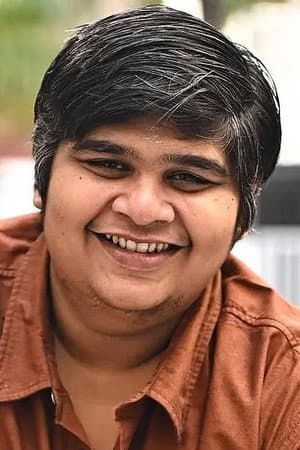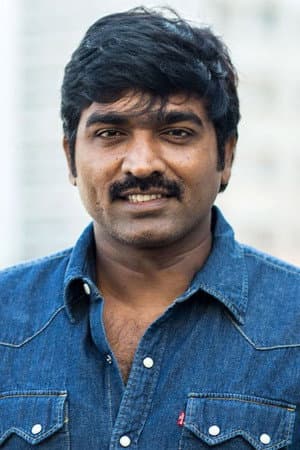
Few performers in Indian cinema carry a title given to them by the audience rather than by an industry body. Vijay Sethupathi is one of them. Fans and media call him Makkal Selvan, meaning People's Treasure, and the name says something about how he is regarded: not as a title holder but as someone the audience feels it discovered. This is a career feature about a body of work, and that work has a shape worth tracing, particularly for viewers who know the name but not the filmography behind it.
From Supporting Player to "Makkal Selvan"
Vijay Sethupathi entered Tamil cinema without a film family behind him. No studio lineage, no launch built around his face, no carefully arranged debut. His route to lead roles ran through smaller parts and character work, the kind of apprenticeship that on paper rarely produces a leading man. What it produced instead was a performer who could be dropped into almost any register of a film and hold it.
Bench Talkies (2015), where he appears as Mahesh, belongs to that stretch of the filmography. It is an anthology, a format in which several short films by different teams are bundled into a single release. That structure matters here. An anthology spreads attention across segments rather than concentrating it on one face, and his presence in it shows an early career sitting inside ensemble and experiment rather than at the centre of things.
The interesting gap is between how he looks on paper and what he does with it. He does not fit the conventional leading man profile, and yet the filmography keeps returning him to the middle of the frame.
The Films That Define the Filmography
The filmography is best organised by what each title demonstrates rather than by the order things arrived.
Villainy with weight
Vikram Vedha (2017) casts him as Vedha, in a cop and criminal story told through stories within stories, where the criminal keeps narrating episodes that unsettle the policeman chasing him. Vikram (2022) places him as Sandhanam inside a larger investigation narrative, one that begins as a serial killing case and widens into something else. Together the two show how often he is cast as the disruption a film's machinery has to account for.
The ordinary man under pressure
96 (2018) gives him Ramachandran Krishnamoorthy, known as Ram, a man meeting a school sweetheart years later. Kadaisi Vivasayi (2022) makes him Ramaiah. Maharaja (2024) makes him a barber seeking vengeance after his home is burgled, who tells the police his "Lakshmi" has been taken and leaves them unsure whether he means a person or an object. The film withholds information deliberately, and much of the performance is carried by what the character declines to explain.
The ensemble piece
Super Deluxe (2019), where he plays Shilpa, brings an unfaithful newly wed wife, an estranged parent, a priest and an angry son into separate predicaments that converge on one day. An ensemble film distributes screen time across several storylines, so a performer's job is to hold a strand rather than carry the whole. That is a different skill from leading a film, and it is one he keeps using.
The voice and the stillness
Kiss (2025) credits him as narrator, a role in which the performer is heard rather than seen. Gandhi Talks (2026) casts him as Mahadev in a silent black comedy about a character's monetary needs and how those needs affect the people around him. Mahadev is a young unemployed graduate trying to land a job by any means, who crosses paths with a businessman and a petty thief. The film switches off dialogue entirely, which is a very different demand from the talk heavy roles described above.
Master (2021), with him credited as Bhavani and as the voice of Young Bhavani, DSP (2022) as M. Vascodagama, and Petta (2019) as Jithu, all point to the same appetite for contrast.
Where He Sits in Tamil Cinema, and Why a Reader Elsewhere Should Care
The connective thread across this Vijay Sethupathi: A Career In Tamil Cinema is an interest in characters defined by need, secrecy or absence, and a willingness to move between the centre of a film and its edges. The range runs from a barber carrying an entire revenge story to a narrator who is never seen at all. That span, rather than any single performance, is the real argument for the body of work.