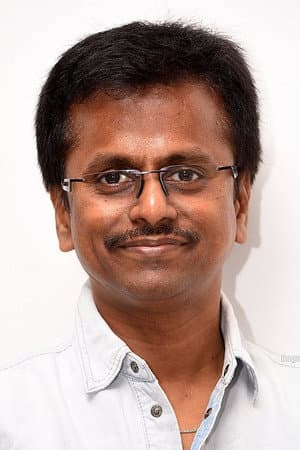
Nelson Dilipkumar is a Tamil film director and screenwriter whose work has travelled far beyond the language he works in. The clearest way into his filmmaking is a single idea: control. His films sit where crime, action and dark humour meet. At the centre of each one stands a protagonist who looks ordinary, or past his best, until the situation demands otherwise. In Tamil film vocabulary, a director with a fingerprint this recognisable is said to have a "brand", meaning audiences know the tone and the kind of lead character to expect before they know anything else about a project. Nelson's brand is the quiet man who turns out to be the most dangerous person in the room. His filmography, from debut to most recent work, follows that thread closely, and this piece traces Nelson: The Films And The Filmmaking across that run.
 Photo: TMDb
A Body of Work Built on Control
Nelson's debut arrived in 2018 with Kolamavu Kokila, and it landed as both a critical and commercial success. That is rarer than it sounds. A first film usually shows a director still assembling a voice. Here the template was already in place: a story rooted in crime, told with a straight face, laced with black comedy, and carried by a central figure whose circumstances push them into a world they never planned to enter. It set the tone audiences would come to associate with his name.
What connects the films is method as much as mood. Nelson writes and directs his own work, and that double role matters. The humour is not sprayed over the action by a separate hand. It sits inside the plotting, in the gap between how serious a problem is and how strangely the hero goes about solving it. Crime supplies the setting, action supplies the release valve, and dry comedy runs through scenes that would otherwise play as pure tension. The recurring lead is what the industry might call a "quirky but very controlled central protagonist", a person who does not shout, does not panic, and does not explain himself. Tamil cinema has always loved a powerful hero. Nelson's variation is a hero whose power is withheld until the moment it is needed, and the withholding is where the filmmaking lives.
His most recent credits extend that run in directions beyond direction. Bloody Beggar arrived in 2024 with Nelson credited as producer and nothing else. In Tamil cinema the producer is the person who finances and backs a project, often the one who gets a film made at all, and taking on that role is how a filmmaker extends influence past the films he directs himself. Alongside it, a narrator credit on Mask in 2025 and an on screen part as a TV Reporter in Jana Nayagan in 2026 place him around the work in different capacities. None of these is the centre of his career. Together they sketch a modern filmmaking life rather than a single narrow job.
The Films, One by One
Doctor, in 2021, is the Nelson method in miniature. He wrote and directed a film about an army doctor who helps his love interest's family find their kidnapped daughter. His strategy is the giveaway: he stages a kidnapping of his own. The problem is serious, the solution is strange, and the hero pursues it with total calm. It shows how comfortably Nelson works with a controlled central figure who solves problems sideways rather than head on, and it is the clearest early demonstration of a hero whose plan looks absurd until it works.
Beast, in 2022, written and directed by Nelson, belongs to the same stretch of work and is worth noting as one of the films that shaped how his filmmaking is read. Across this period the ingredients stay steady. The setting is crime, the release is action, and the humour never fully leaves the room.
Jailer, in 2023, is the film that widened his reach. Nelson wrote and directed it, and the premise is pure Nelson: Muthuvel Pandian, a retired, stern yet compassionate jailer, lives peacefully with his family until his cop son's involvement with an antique mafia gang goes wrong and forces him back into a dark world he had voluntarily left behind. The retired man pulled back into violence is an old idea. The deadpan humour and the refusal to treat the hero as fragile gave it a distinctive charge. It is also the fullest example of that controlled protagonist, a man whose age reads as cover rather than weakness.