There is a particular kind of ache that comes with the almost-said. The sentence you rehearsed in the shower, the confession you typed and deleted, the confession you typed and sent - only to have it vanish into a read receipt that never comes. Tamil cinema has long been fluent in the language of longing, but rarely has it compressed that vast, unsettling emotion into a tight twelve-minute frame. That is precisely the gamble of Unsaid, a new Kollywood drama that arrived on July 9 and is still quietly circulating in festival circuits and select screenings. It is a small film with a deliberately small palette, yet its echoes feel considerably larger than its runtime suggests.
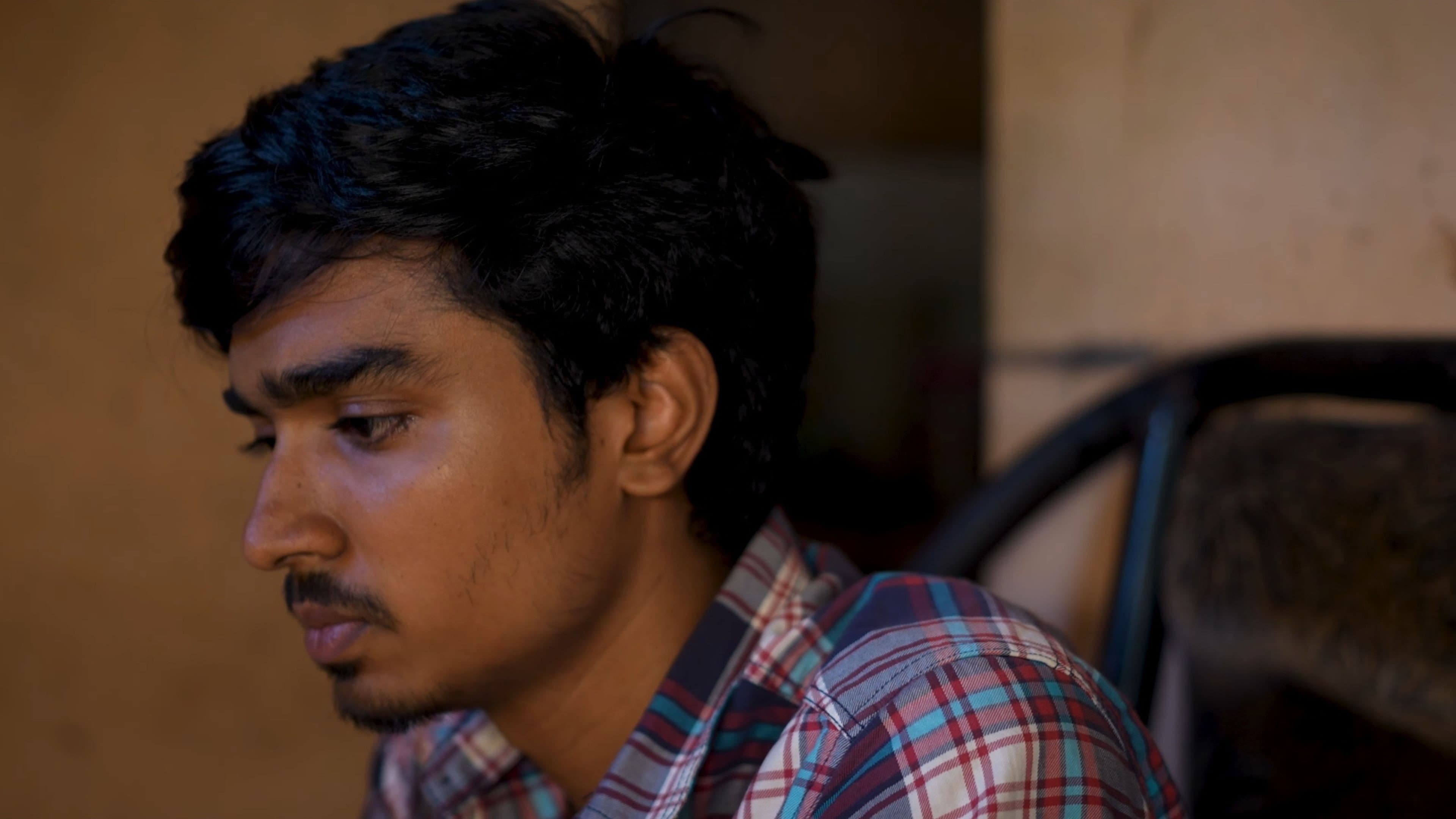
The premise is deceptively simple, almost literary in its construction. Jaikanth plays Akhil, a young aspiring writer who has just missed his window. The feelings were there. The moment was there. But the words were not, and now he is left to inhabit the hollow space of his own hesitation. Rather than wallow in passive grief, however, Akhil does what writers do: he rewrites the past. He begins crafting the story he wishes he had lived, inventing a fictional version of himself and the woman he failed to approach. It is a coping mechanism, a fantasy, and, perhaps, a confession disguised as craft.
Director Manoj Sukrith, who also appears in the film as Ram, Akhil’s friend, has structured Unsaid as a two-tier narrative. In the real world, we watch Akhil fumble with regret, his conversations with Ram carrying the weary pragmatism of a friend who has heard the same lament one too many times. In the fictional layer, Yogesh steps in as the idealized Akhil, and Monisha plays Niranjana, the woman at the center of this imagined romance. The doubling is not merely a gimmick. It allows the film to ask a thornier question: when we invent alternate versions of our lives, are we healing, or are we simply finding a more elegant way to avoid the truth?
The performances anchor the conceit with understated commitment. Jaikanth’s Akhil is all contained restlessness - the kind of man who speaks fluently on the page but turns to static in the presence of his own feelings. Yogesh, as the fictional Akhil, gets to embody the confidence the real one lacks, and there is a quiet poignancy in watching him say all the right things to Monisha’s Niranjana, knowing full well that these words are borrowed. Monisha brings a warmth to her role that prevents Niranjana from becoming a mere muse; she feels like a person with her own interiority, even if we only ever glimpse her through the lens of someone else’s fantasy. Sukrith, meanwhile, grounds the film in Ram’s dry, lived-in realism, offering the necessary friction against all that ethereal longing.
What is most striking about Unsaid, however, is its restraint. At twelve minutes, there is no room for melodrama or sweeping gestures. Sukrith trusts the weight of silence, the pause between breaths, the way a single unreturned glance can carry more devastation than a shouted argument. The film’s visual language mirrors its thematic preoccupation with absence. Frames linger on empty chairs and half-finished notebooks. Dialogue is sparse, often replaced by the ambient hum of a city that does not know it is the backdrop to someone’s quiet unraveling.
The title, of course, does a lot of heavy lifting. Unsaid is not merely about what Akhil failed to tell Niranjana. It is about the unsaid between friends, the unsaid we withhold from ourselves, and the stories we tell to fill those gaps. The fiction-within-a-fiction structure suggests that writing is itself an act of intimacy - a way of saying the thing without saying it to the person who needs to hear it. The film never resolves whether this is a healthy mechanism or a perilous delusion. It leaves that judgment to the viewer, which is a mature choice for a debut feature.
There is no commercial noise around Unsaid, no inflated box-office chest-thumping. Its TMDb rating sits at a clean zero, which is less a commentary on quality and more a reflection of its recent release and niche distribution. This is a film that will likely live on recommendation and word of mouth, passed between those who appreciate the short form’s capacity for density. It is not a spectacle. It is a whisper.
And perhaps that is exactly the point. In an industry that often equates volume with impact, Unsaid argues that the quietest regret can be the loudest thing in a room. Akhil spends the film learning that words, once missed, do not come back easily. But the act of writing them down - even for an imaginary audience - might be its own kind of release. By the final frame, we are left not with an answer, but with a feeling. And sometimes, for a short film, a feeling is more than enough.