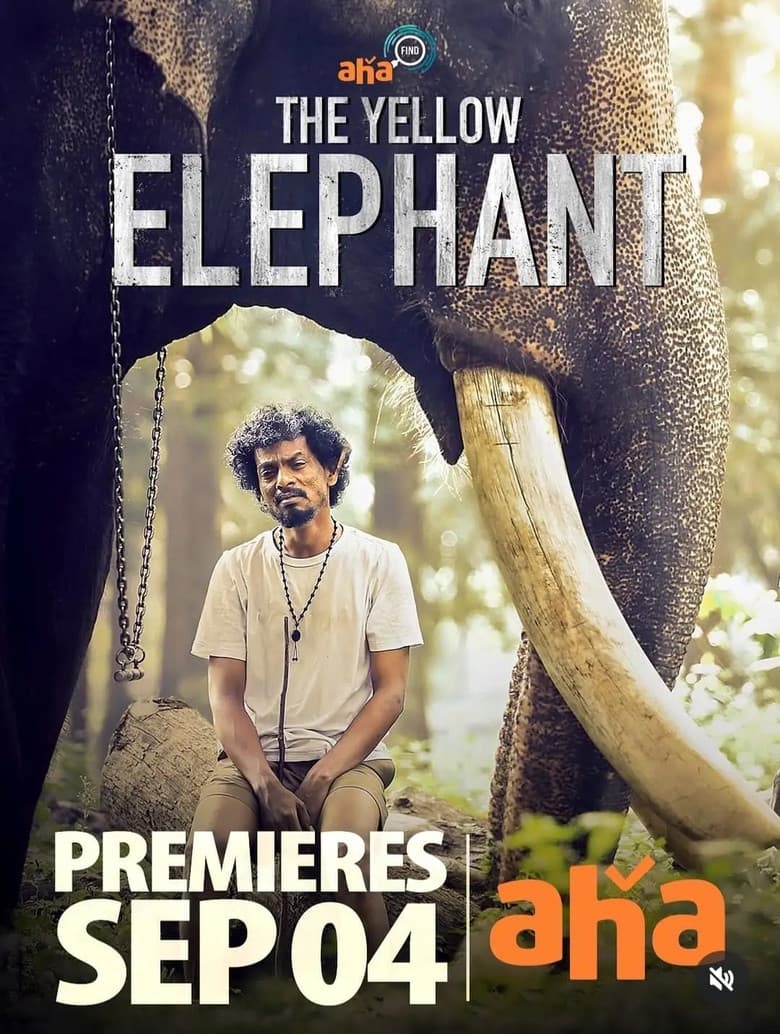
The silence of the forest is rarely ever silent. It hums with insects, rustles with unseen movement, and carries the distant, thunderous footfall of a titan. But when that footfall meets the hard edge of a village boundary, the silence breaks into something far more complex: fear, anger, and a desperate plea for space. That collision is the beating heart of a new documentary arriving this week, a film that refuses to look away from one of South Asia’s most pressing ecological crises. On the eve of its release, all eyes are on a debut filmmaker who has spent years chasing a shadow through the undergrowth.
Here is everything you need to know about The Yellow Elephant, a project that arrives with quiet ambition and a heavy conscience. It is not a spectacle in the traditional sense, but rather a patient, observational gaze into a conflict that has no easy villains. The film, produced within the vibrant ecosystem of Kollywood, dares to ask a simple, devastating question: who owns the land when both man and beast call it home?
Release Date & Where to Watch
Mark your calendars for tomorrow, September 4, 2026. The Yellow Elephant is scheduled to hit select screens across Tamil Nadu, with a curated release that suggests a thoughtful, festival-adjacent rollout. Given the documentary’s intimate scope, this is not a wide, multi-screen extravaganza; instead, expect it to be anchored in major metropolitan centers like Chennai, Coimbatore, and Madurai, where discerning audiences have historically championed meaningful cinema.
As of now, there has been no official announcement regarding a simultaneous OTT premiere. The producers appear to be banking on the traditional theatrical window, hoping that word-of-mouth will carry the film through its initial run. For those outside the region, patience will be required - international distribution and streaming details are expected to be locked in following the initial domestic response. The theatrical release itself feels like a statement: a documentary of this magnitude, dealing with such physical and emotional terrain, deserves to be seen on the largest screen possible, where the sheer scale of the elephants and the claustrophobia of the villages can be felt in equal measure. Check your local listings for showtimes, as the film is likely to have limited daily screenings, perhaps favoring evening shows to accommodate the working crowd.
Cast & Crew
At the helm is director Baskar Arumugam, a name that may not be familiar to the mainstream yet, but one that documentary circles have been whispering about for some time. Arumugam, who also serves as the film’s narrative anchor, brings a background in wildlife cinematography mixed with a journalist’s instinct for truth. This is his feature-length directorial debut, and the pressure is palpable.
Unlike narrative features, The Yellow Elephant does not boast a traditional star cast. There are no heroes or villains in the conventional sense; the protagonists are the residents of the conflict zones and, of course, the elephants themselves. The "cast" is effectively a community - forest department officials, weary farmers, and the matriarchs of the herds who navigate a landscape crisscrossed by railway lines and electric fences. We can expect the film to rely heavily on the testimony of these real-life individuals, their faces etched with the fatigue of constant vigilance.
The technical crew is where the film’s pedigree shines. Rumors within the industry suggest Arumugam collaborated with a small, dedicated team of sound recordists and cinematographers who spent months in the wilderness, often sleeping in makeshift huts to capture dawn light and nocturnal movements. The editing, crucial for a documentary of this nature, is said to be a rhythmic, patient process that allows scenes to breathe, letting the tension build naturally rather than through forced montage. While the TMDb rating currently sits at a neutral 0/10, that will change rapidly once the public and critics weigh in post-release.
Story & What to Expect
The Yellow Elephant is not a nature reel filled with cute cubs and playful antics. It is a hard-hitting, ground-level examination of human-elephant conflict, a term that has sadly become a euphemism for a tragic, ongoing war. The title itself is evocative, but not literal - there is no yellow elephant here. Instead, the "yellow" may reference the amber hues of the drying landscape or perhaps the warning signals that flash in the night when a herd approaches a village.
Expect the narrative to alternate between two perspectives. First, there is the elephant scenario: a highly intelligent, migratory animal whose ancient pathways have been severed by expanding farmlands and concrete barriers. We see them navigating highways, snacking on sugarcane crops, and facing the anxiety of a shrinking habitat. Second, there is the human scenario: farmers who have lost their year’s livelihood in a single night, families living in fear of dusk, and conservationists caught in the middle, trying to build corridors while managing the ire of the public.
Arumugam’s camera is likely to favor long takes and observational sequences over expository interviews. Expect scenes of villagers patrolling their fields with firecrackers alongside heart-wrenching shots of a lone tusker standing at a forest’s edge, gazing at a city’s glow on the horizon. The film does not offer a solution, but rather an immersive experience of the problem. It will challenge the viewer’s perception of "pest" versus "protected species." The pacing may test those accustomed to high-octane thrillers, but for the patient viewer, the payoff is a profound, lingering unease about the future of coexistence.
Why It's Worth Watching
In an era where streaming algorithms push us toward true-crime podcasts and superhero sagas, The Yellow Elephant stands as a defiantly different cinematic meal. It matters because it confronts an issue that is not abstract but immediate, affecting thousands of rural families while simultaneously dealing with the majestic, endangered Asian elephant. This is cinema with a conscience, a film made with the hope that witnessing a problem is the first step toward solving it.
For fans of Kollywood, this represents an expansion of the industry’s vocabulary. It proves that Tamil cinema is not just about masala blockbusters and intense action sequences; it is also a space for thoughtful, environmental storytelling. Baskar Arumugam has traded the studio floor for the forest floor, and his passion radiates through every frame.
The documentary also benefits from the element of sensory immersion. On a big screen, the subsonic rumbles of elephant communication are felt in the chest, while the crackling of a burning field fills the theater with visceral dread. It is a wake-up call wrapped in cinematic beauty, reminding us that the environmental crisis is not just about melting ice caps, but about elephant tracks crossing a muddy village road next to a child’s footprints. If you are looking for a film that will stay with you long after the credits roll, sparking conversation at the dinner table, this is the one. It might be a difficult watch, but it is an essential one - a mirror held up to a conflict that we can no longer afford to ignore.