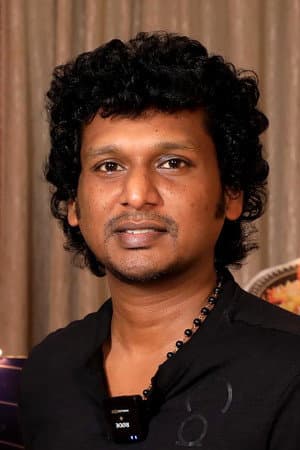
Lokesh Kanagaraj works in Tamil cinema, the film industry based in Chennai that produces movies in the Tamil language. His name sits on some of the most widely discussed action and crime films to come out of South India. His body of work is distinctive enough that audiences recognise a "Lokesh film" before they see a single frame. What follows is a look at what he has made, what connects it, and why it travels well beyond its home region.
 Photo: TMDb
A Career Built In Fragments And First Features
Lokesh began by directing one of four segments in the anthology film Aviyal (2016). An anthology is a single film made up of several short, self-contained stories by different directors, and it is a common route for newcomers to prove themselves. His first full-length feature, Maanagaram (2017), followed quickly. He wrote the story and the screenplay as well as directing, and that established a working method he has kept: he is usually the author of the material he directs, not a hired hand brought in to execute someone else's script.
Maanagaram is a hyperlink film, a term for a story that follows several separate groups of characters whose lives cross paths, sometimes violently, by the end. That structure, along with a preference for stories that unfold largely at night, became the signature of what came next. He has cited Quentin Tarantino as a major inspiration. The result is a body of work where the storytelling choices are as recognisable as the films themselves. The director's name functions as shorthand for a particular kind of experience: tense, nocturnal, and built around consequences that arrive late but land hard.
 Photo: TMDb
From Kaithi To Leo: The Films And What Each Added
Kaithi (2019) widened his reach. He again directed and wrote the story and screenplay, and the result cemented his command of sustained tension, action staged in darkness, and a protagonist with a plain, practical goal. Master (2021) pushed him toward a bigger canvas. He directed it and wrote the story and screenplay, and he also appears in it as a prisoner, one of the few times he has stepped in front of the camera. With two strong leads in opposition, the film showed he could carry star-driven material without losing his own voice.
Vikram (2022) turned his films into something larger than individual titles. He directed it and wrote the story and screenplay, and its plot drew on characters and events from his earlier work, effectively making separate films into chapters of one continuing story. For audiences, this created a reason to watch his filmography as a whole rather than title by title. It is also the clearest example of how deliberately he plans ahead. Leo (2023) moved his storytelling outside Tamil Nadu. He directed and wrote it, and its plot follows Parthiban, a cafe owner living with his family in Himachal Pradesh whose life is upended when he gets in the way of a drug cartel. A quiet man with a hidden past, forced back into violence: this is the shape Lokesh returns to again and again.
Coolie (2025) continued in that vein. He directed it and wrote the story and screenplay. Its plot follows Deva, whose quiet life is shaken when a close friend dies under suspicious circumstances. He infiltrates a powerful gang operating in the shadows, and as he investigates he becomes entangled in a web of crime, betrayal and secrets from his own past. It is the same engine as Leo and Kaithi, restated with a different man at the centre.
DC (2026) casts him in front of the camera rather than behind it, as Devadas. The plot places the rebel Devadas alongside Chandra in a dangerous world where passion and peril collide, with survival as the ultimate stake. Jana Nayagan (2026) is a special appearance, a brief role rather than a lead: he plays a TV reporter. Its plot sets two opposing ideologies against each other. One man stands for the people, the other feeds on control, until a child's silent fear draws a former police officer into a fight bigger than personal revenge. He also produced 29 (2026), a role that involves backing a film financially and overseeing it without necessarily directing. His work is catalogued on TMDb alongside the rest of his credits.