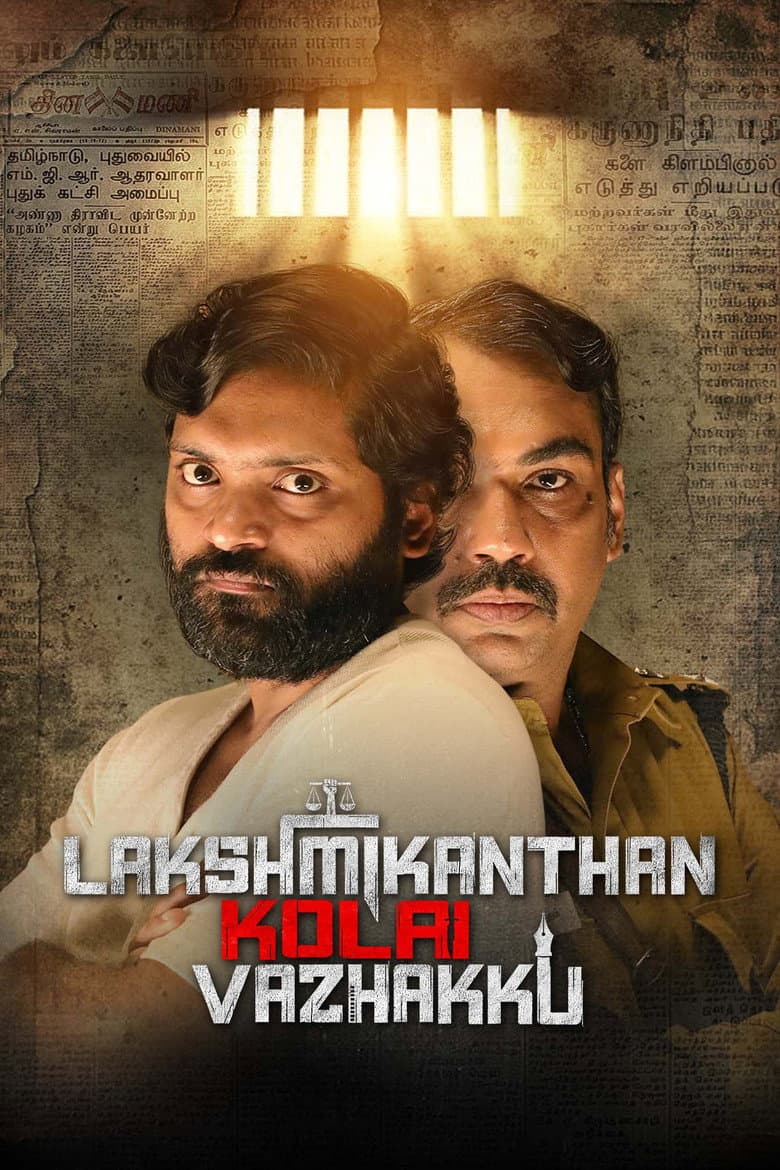
The date on the calendar is September 1, 2026, which means we are exactly seven weeks removed from the release of what might be the most quietly devastating Tamil film of the year. It has taken some time for the dust to settle, for the initial wave of reaction to subside, and for the true weight of Lakshmikanthan Kolai Vazhakku to sink in. When it premiered on July 10, it didn't arrive with the thunder of a commercial spectacle. Instead, it crept in like a slow, creeping dread - a feature-length night sweat that has refused to leave the collective consciousness of Kollywood audiences since.
Directed with unflinching, almost unbearable restraint by Dayal Padmanabhan, this is not a film you watch. It is a film you endure. And I mean that as the highest possible compliment. At a lean, taut runtime of 107 minutes, Padmanabhan has crafted a pressure-cooker of moral ambiguity, stripping away the usual masala trappings of Tamil cinema to deliver a crime drama that functions less as a whodunit and more as a harrowing examination of the price of certainty.
The premise is deceptively simple, yet impossibly fraught. Arivumathi, played with wide-eyed, skeletal intensity by Vetri, is a young man who has been convicted of a gruesome murder. He sits in a cold cell, hours away from the hangman's noose at dawn. There is no last-minute reprieve on the horizon, no heroic rescue. The machinery of the state is oiled and ready. But the men tasked with pulling the lever are not. Rangaraj Pandey delivers a career-best performance as Sivanandham, the judge who signed the death warrant. He is a man of the law, a believer in the finality of his gavel, yet as the clock ticks, the certainty he once possessed begins to curdle into something far more corrosive.
Padmanabhan wisely refuses to offer easy answers. Is Arivumathi innocent? Guilty? A victim of circumstance? The film doesn't spoon-feed the audience, instead placing us squarely in the uncomfortable shoes of the other men in the room. Subramaniam Siva shines as Dharman, the aging hangman whose hands have ended lives before, but who now questions the ritualistic horror of his profession. And then there is Saravanan as Sargunam, the jailer, a man torn between the rigid protocols of his uniform and the flicker of humanity he sees in the condemned.
The narrative is anchored by the presence of Mallika, played with haunting fragility by Brigida Saga. She is the emotional core, the human collateral damage in this cycle of vengeance and retribution. Her interactions with Vetri provide the film's most tender - and therefore its most devastating - moments. In one sequence, the condemned man speaks of his mother, Annam (Kanya Bharathi), and the simple, unfulfilled promise of a shared meal. It is a moment of such profound, quiet grief that the theater falls into a stunned silence, broken only by the distant clang of a metal door.
What sets Lakshmikanthan Kolai Vazhakku apart from typical genre exercises is its refusal to sensationalize. There are no slick, slow-motion flashbacks to the crime, no dramatic courtroom monologues. Instead, the camera lingers on the mundane details of death row: the scrape of a metal plate, the flicker of a dying fluorescent light, the sound of a key turning in a lock. The film trusts its actors to carry the subtext, and they deliver in spades. Lollu Sabha Maaran, known primarily for his comedic timing, sheds all traces of humor to play Murthi, a prison guard whose skin has thickened to the point of numbness - yet even he shows cracks. Lizzie Antony and Subramaniam Siva’s supporting turns add layers of weary resignation to the proceedings.
However, this is Vetri’s film to command. His Arivumathi is a study in contradictions. One moment he is resigned, muttering about the futility of hope; the next, his eyes flash with a desperate, primal animal instinct to live. He doesn't play the martyr, nor does he play the monster. He plays a human being, which makes the final act all the more excruciating.
There are those who might argue that the film's bleakness is a barrier, that the lack of a conventional twist leaves the audience feeling hollow. But that is precisely the point. Padmanabhan is not interested in suspense; he is interested in the aftermath of the verdict. The real horror here is not the murder itself, but the slow, grinding process of sanctioned death. The film asks a singular, soul-shattering question: what does justice cost the people who have to administer it?
As the final hour approaches, the editor's work becomes brutally efficient, cross-cutting between the three men - the judge, the hangman, and the jailer - each wrestling with their own demons. They are, in a sense, the real protagonists, or perhaps the real victims. By the time the end credits roll, you will not feel entertained. You will feel exhausted. You will feel implicated.
Lakshmikanthan Kolai Vazhakku is a masterclass in cinematic tension, a film that burrows under your skin and refuses to leave. It is a stark, uncompromising look at the machinery of capital punishment, told with a maturity that demands to be seen on the big screen. It is not a pleasant experience. It is an essential one.