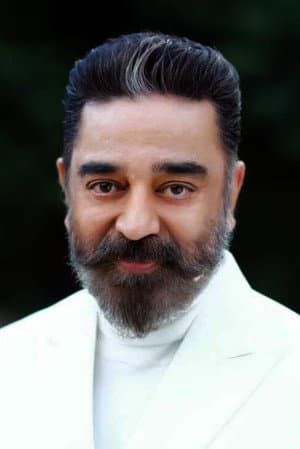
Kamal Haasan: A Career In Tamil Cinema is a story about range more than any single performance. Over six decades and across six languages, he has worked in front of and behind the camera on more than two hundred and forty films. Again and again he returns to the same set of questions about the outsider, the investigator and the parent. For readers who follow Tamil film from outside the region, the confirmed filmography is the clearest way in.
What the Job Titles Actually Mean
Tamil cinema credits a small number of people with a very wide range of work. Kamal Haasan's confirmed credits run from leading performer to director, producer, screenwriter, playback singer and lyricist. The list continues into assistant director, choreographer, editor, make up artist, narrator and film distributor. Two of those words deserve explanation for anyone new to the industry.
A playback singer records a song that a performer then mimes on screen. The voice the audience hears on the soundtrack is often not the one in the scene. A narrator, in the Tamil film context, is a voice that guides the audience through events the camera does not show, and it is a job that sits apart from playing a character. Both appear in his later work. Both show how far the credit list reaches beyond the frame.
The Confirmed Filmography and What Each Title Added
Kurathi Magan (1972) came before any of the later experiments, with Kamal Haasan as Ashok. The film follows Malaikottai, a man who turns on his wife over a question of chastity; cast out of the village, she takes her son and sets out to give him an education. Lalitha (1976) followed, with him as Balu. The two sit at the start of a working life that kept going for decades. The mother who fights for a child's schooling in the earlier film is a thread that runs through the whole body of work.
Sankarlal (1981) marks the turn into the decade in which he became a fixture of Tamil film. Unnal Mudiyum Thambi (1988) casts him as Udhayamoorthi and Soora Samhaaram (1988) as ACP Athi Veerapandiyan, a police officer. The pair is a useful illustration of range: a social drama on one side, a police story on the other.
Magalir Mattum (1994) is the film where the off screen work becomes most visible. He appears as the Boss from Head Office and is also credited as producer and writer, standing at the edge of the drama rather than only at its centre.
The Later Work and the Patterns Inside It
Vikram (2022) is the largest convergence in the list. The film follows Amar, an investigator assigned to a series of killings, who finds the case is not what it first appears and that the path leads toward a war among everyone involved. Kamal Haasan appears as Karnan and as Arun Kumar Vikram, and is credited as producer. Ponniyin Selvan: Part I (2022) and Ponniyin Selvan: Part II (2023) place him outside the drama entirely, with a narrator credit.
Leo (2023) uses his voice for the character Vikram, in a story about Parthiban, a cafe owner in Himachal Pradesh whose life turns when he gets in the way of a drug cartel. Amaran (2024) puts him on the producing side rather than in the frame. It tells the true story of Major Mukund Varadarajan, an Indian Army officer decorated for bravery during a counterterrorism mission in Kashmir's Shopian district, and of the devotion of his wife Indhu Rebecaa Varghese. Thug Life (2025) brings him forward again as Rangaraya Sakthivel, with producer and story credits alongside the role.
Read as one body, the list keeps returning to a few obsessions: the outsider who refuses to be absorbed, the officer who follows a case past the point where it makes sense, the ordinary man pulled into a conflict bigger than his own street, the parent fighting for a child's future. He is also more willing than most to work at the edges of a film rather than only at its centre, providing a voice, funding a project, writing its story.
Where the Work Sits
What gets recognised here is not a single performance but the decision to keep taking every job on a set. That is the reason the name travels beyond Tamil cinema, and it is why a reader outside the region should know it. The scale of the output, more than two hundred and forty films across six decades, is unusual on its own, but the shape of it matters more. A performer who also writes, produces, sings and narrates is making a claim about how a film gets made, not just about who stands in front of the camera. For background on the wider industry, see the Tamil cinema overview on Wikipedia and the National Film Development Corporation for how Indian film production is organised.
Kamal Haasan: A Career In Tamil Cinema rewards a reader who follows the credits as closely as the performances. The titles change, the decades pass, and the same few concerns keep surfacing: who belongs, who is cast out, and who keeps going anyway.