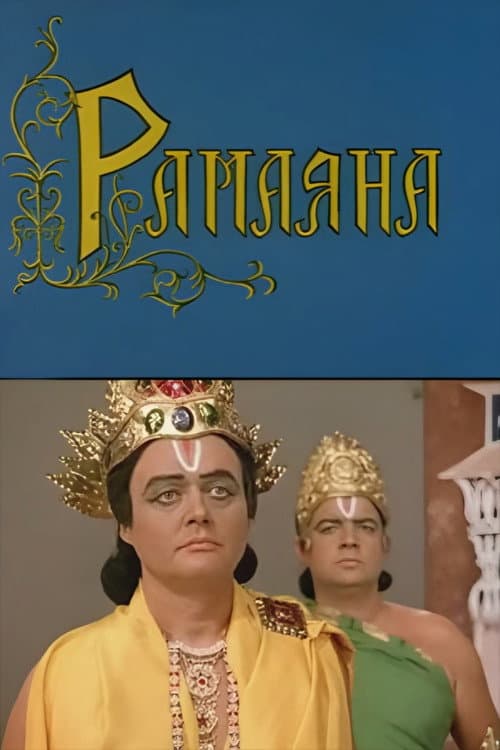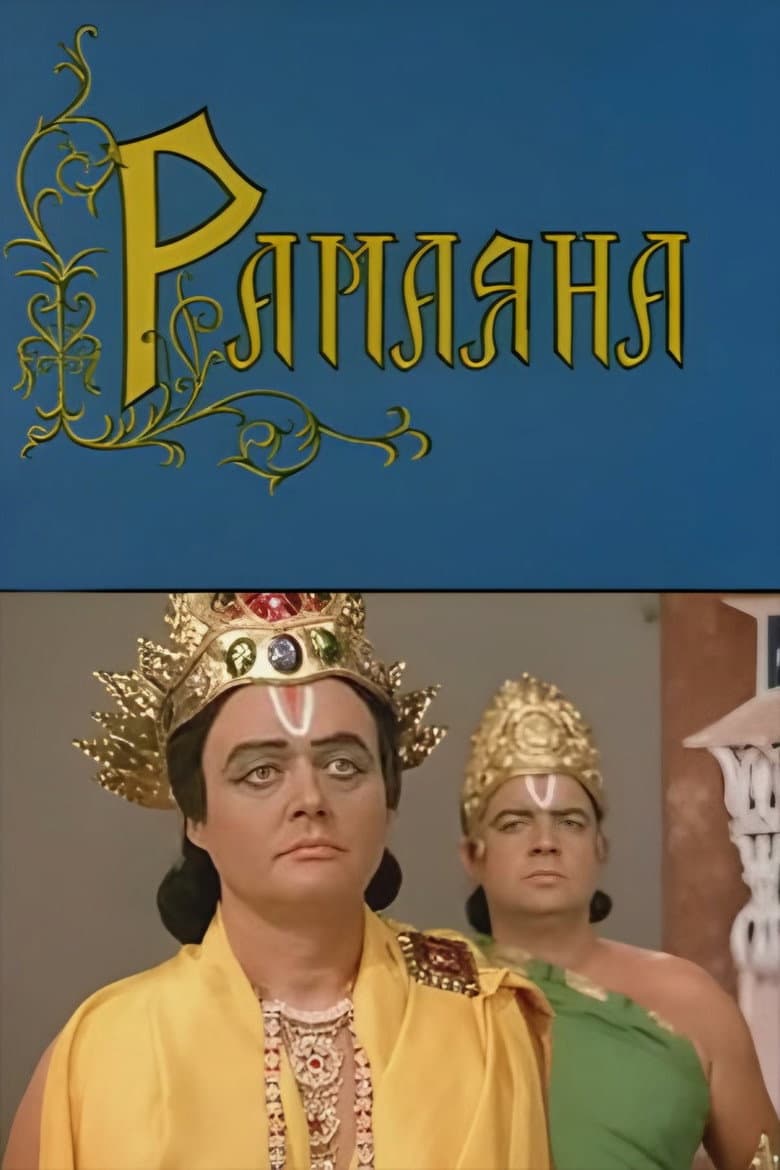
A film that positions itself as far more than a standard mythological adaptation is set to reach audiences under the title Ramayana X, and the question already circulating among viewers is a familiar one: does it work, and can it find a foothold with the public? Part of the answer lies in what the project claims to be. According to its official description, this is not just an ordinary story. It carries the teachings of the ancient sages, delivered through an allegorical narrative that blends philosophy with devotion. At its center stand Rama, Sita, Lakshmana, Bharata, Hanuman and Ravana - figures described as integral parts of India's cultural consciousness. That framing invites audiences to approach the film as something reflective and symbolic rather than purely spectacular.
The production comes with a biography that stretches back decades. Ramayana X was directed by Vladimir Grave, and its credited cast includes Gennadi Pechnikov, Margarita Kupriyanova, Ivan Voronov, Boris Chukaev, Galina Stepanova, Valeria Menikovskaya, Vladimir Poluparnev and Yuriy Luchenko. The film is listed with a runtime that remains unknown, and its release date is recorded as June 6, 1976. It is classified in the fantasy and family genres. Its original language is Russian, and it is filed under the Kollywood industry label in the available metadata. Audiences encountering the title for the first time may be surprised by that combination of details, since the epic subject matter and the production background do not sit together in the way most viewers might assume.
An Epic Told Through Allegory Rather Than Spectacle
What distinguishes Ramayana X in its own description is the emphasis on meaning over scale. The film presents its material as an allegorical narrative, one that weaves philosophy and devotion into the fabric of the story rather than treating them as decoration. The characters are not framed as distant mythological figures alone; they are presented as living parts of the cultural consciousness of India, which suggests the film's interest lies in what these figures represent as much as in what they do. For viewers drawn to the reflective side of the Ramayana tradition, that approach may be the project's strongest selling point.
The genre labeling reinforces this reading. Fantasy and family are the two categories assigned to the film, a pairing that hints at a viewing experience built around wonder and shared storytelling rather than gritty realism. Family films in this vein tend to succeed or fail on whether they can hold the attention of younger viewers while giving older ones something to think about. Whether Ramayana X strikes that balance is precisely the sort of judgment that reviews are meant to settle, and with a rating currently sitting at 0 out of 10 on TMDb - a figure that reflects an absence of audience ratings rather than a verdict - early word of mouth will carry unusual weight.
A Curious Profile That Raises Questions
The broader profile of the film is likely to prompt as much discussion as the film itself. A 1976 release, a Russian-language original, a director in Vladimir Grave and a cast of names unfamiliar to most contemporary Tamil cinema audiences together create a package that does not match the usual expectations for a Ramayana-themed title. That mismatch is not necessarily a weakness. It may be the very reason the film is being revisited now, offered to viewers as a curiosity with historical depth rather than a fresh mainstream release.
For Tamil audiences, the film's subject matter is deeply familiar territory. The Ramayana has been retold on screen many times, and viewers bring strong preconceptions about how its characters should look, speak and behave. A version that leans on allegory and philosophy, presented in another language and shaped by a different filmmaking tradition, will inevitably be measured against those preconceptions. The question of whether it will be a hit or a miss therefore depends less on spectacle than on whether its interpretive approach resonates with the audience it now reaches.
The absence of a confirmed runtime leaves one practical unknown in place, and the lack of substantial viewer ratings means the film's reception remains genuinely open. What can be said with confidence is that Ramayana X arrives with a clearly stated purpose: to present the teachings of ancient sages through characters who remain central to Indian cultural life. Whether that purpose translates into a satisfying viewing experience - and whether the film earns a place in the conversation around Ramayana adaptations - is the judgment audiences will now make for themselves.
Source: Filmibeat Tamil