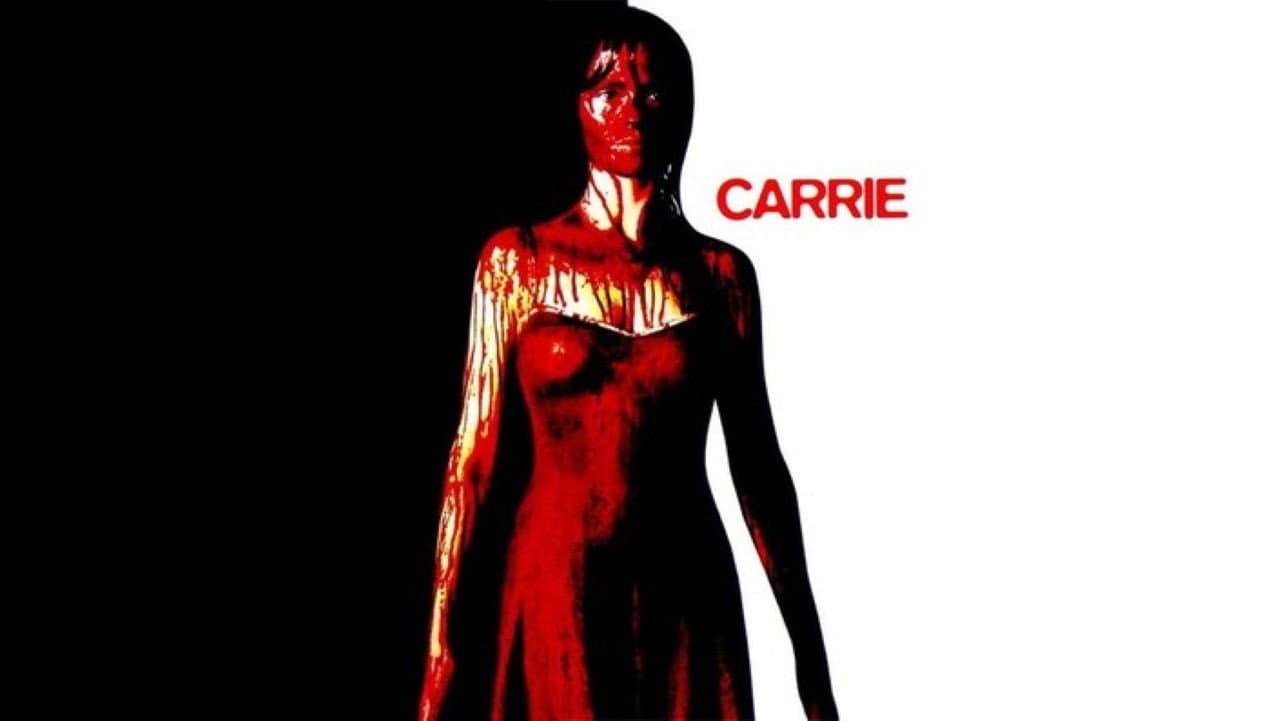
The 2002 television adaptation of Carrie arrives on streaming platforms this week, bringing David Carson's 132-minute take on Stephen King's famous novel back into the spotlight. Angela Bettis leads the cast as Carrie White, the shy, telekinetic teenager whose life is shaped by two relentless forces: the cruelty of her schoolmates and the religious fanaticism of her mother at home. The film, which first aired on November 4, 2002, is classified as a horror thriller made for television, with an English-language original and a current TMDb rating of 6.142 out of 10. For Tamil-speaking viewers discovering it through streaming, the story's central tragedy - a girl pushed past endurance until she turns her pain outward - resonates in ways that recall the fire of Kannagi, the legendary figure who burned a city to answer an injustice.
Bettis plays Carrie as a figure isolated on two fronts. At school she is the target of unending mockery; at home she faces Margaret White, portrayed by Patricia Clarkson as a mother whose piety curdles into oppression. The film spends much of its runtime building the pressure inside that closed world, so that the audience understands exactly what has been stored up before the prom night sequence arrives. When her tormentors stage a humiliating prank at the senior prom, Carrie releases the chaos she has held back, and the film ends in destruction that spares almost nothing in its path.
A Story Built on Two Kinds of Cruelty
What gives this Carrie its weight is the balance between the two sources of suffering. The school bullying is public and performative, led by figures such as Christine Hargenson, played by Emilie de Ravin, and Billy Nolan, played by Jesse Cadotte. The abuse at home is quieter but just as damaging, and Clarkson's Margaret gives the film its second engine of dread. Carrie's telekinesis is not presented as a superhero gift but as a pressure valve, and Carson's direction keeps the focus on the girl rather than the spectacle until the story demands otherwise.
The supporting cast fills out the social world around Carrie. Rena Sofer appears as Miss Desjarden, Kandyse McClure as Sue Snell, Tobias Mehler as Tommy Ross and Meghan Black as Norma Watson. Their presence matters because the film's horror depends on ordinary people making ordinary choices - some cruel, some cowardly, a few decent - and then living with the result. The senior prom prank is not an act of nature; it is the work of classmates who believe their target cannot fight back, and the film's final stretch is the answer to that belief.
Why the Streaming Return Matters
This Carrie was made for television, and that status shapes both its strengths and its limits. It is a horror thriller with a runtime of 132 minutes, long enough to give the home life and the school life proper room, though the pacing may feel slower to viewers raised on leaner modern horror. Its TMDb rating of 6.142 out of 10 suggests a divided reception - neither a cult favorite nor a dismissed footnote. For an audience in the streaming era, the film offers something the theatrical adaptations do not: a longer, more patient look at how Carrie became who she is before the blood falls.
The comparison to Kannagi is not casual. In the Tamil epic tradition, Kannagi's fury is the response of a woman wronged by a system that refused to protect her, and her fire is remembered as justice as much as vengeance. Carrie's rampage works on the same emotional logic. She is not a monster who attacks without cause; she is a girl whose suffering was treated as entertainment. Watching the film in 2026, that reading feels sharper than ever, especially for viewers who have followed conversations about bullying and about the homes that fail the children inside them.
The Performances That Carry the Film
Bettis had the difficult task of making Carrie sympathetic without making her passive, and she holds the center of the film through long stretches where little happens beyond humiliation and isolation. Clarkson's Margaret is the other pillar, a mother whose love and violence are impossible to separate. The two performances together make the prom sequence land as tragedy rather than as a mere set piece. Sofer's Miss Desjarden and McClure's Sue Snell provide the film's few adult and peer figures who see Carrie as a person, and their relative powerlessness is part of the point.
The film's genre label - horror, television movie, thriller - accurately describes a work that relies on dread and character more than on gore. Carson, working from King's novel, keeps the camera close to Carrie's face and lets the telekinetic displays serve the emotion rather than replace it.
For viewers in the Tamil film community who mostly follow local releases, this Carrie is a reminder that the revenge tragedy travels well. The setup is American, the school corridors and the prom and the small-town churchgoing mother are specific to their setting, but the wound at the center - a girl tortured by those who should have protected her - crosses languages and industries without losing force. Streaming has given the 2002 film a second audience, and the story of Carrie White still burns.
Source: Filmibeat Tamil