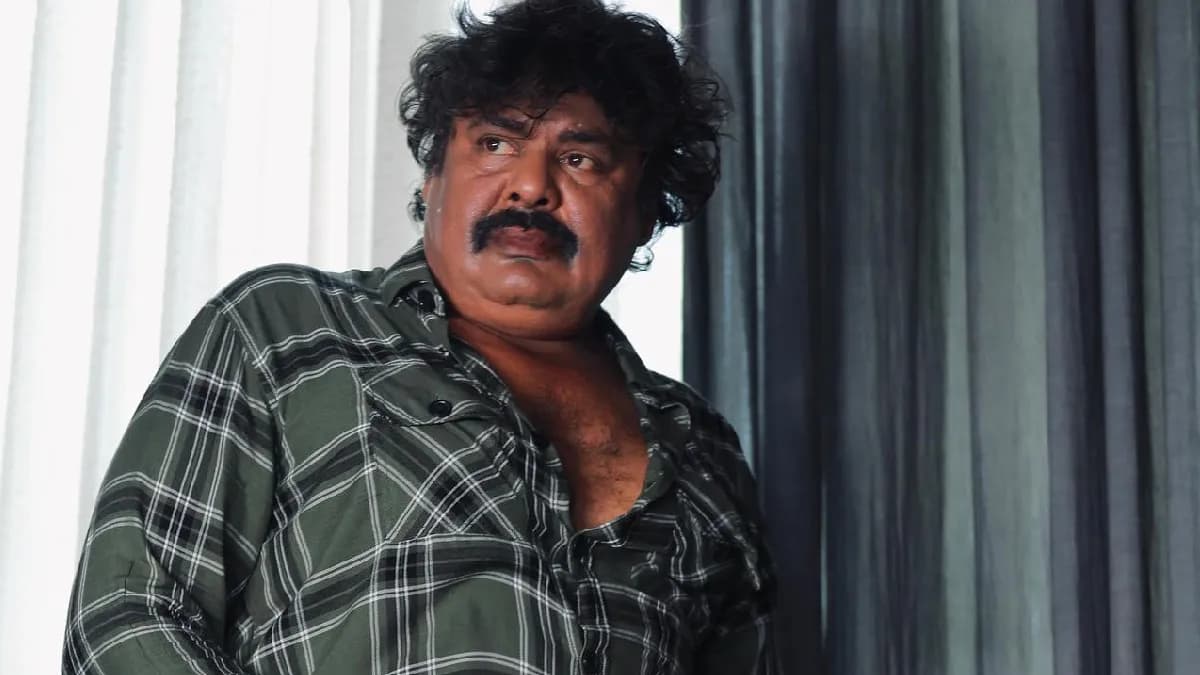
Mansoor Ali Khan Slams Suriya, RJ Balaji Over Karuppu
Actor Mansoor Ali Khan questions where his scenes are in 'Karuppu Panchayat', expressing disappointment against Suriya and RJ Balaji.
Advertisement
Actor Mansoor Ali Khan questions where his scenes are in 'Karuppu Panchayat', expressing disappointment against Suriya and RJ Balaji.
Veteran actor Mansoor Ali Khan has publicly expressed his frustration over his absence from the final cut of the upcoming film starring Suriya, a project that also features comedian RJ Balaji in a prominent role. The actor, best known for his recent work in the critically acclaimed film Jai Bhim, took to social media to question why the scenes he shot for the movie were nowhere to be seen in the theatrical release. His outburst, which has quickly gained traction among fans and industry insiders, throws a spotlight on the often-unseen tensions that can arise between actors and filmmakers during post-production.
The controversy began when Mansoor Ali Khan posted a series of messages on his official X (formerly Twitter) account, expressing his dismay in no uncertain terms. While he did not explicitly name the film’s title in his initial posts, the context made it clear that he was referring to a high-profile project featuring Suriya and RJ Balaji. The actor’s core complaint was simple yet pointed: he had invested time and effort into performing scenes for the movie, but when the final version hit the big screen, his work had been entirely excised. He argued that this kind of treatment was disrespectful to the craft and to the actors who commit to a vision, only to have their contributions silently discarded.
The timing of Mansoor Ali Khan’s remarks is notable, as the film in question is reportedly generating significant buzz in Tamil cinema circles. Suriya, who has been on a career resurgence with a string of socially relevant and commercially successful projects, is the clear anchor of the movie. RJ Balaji, meanwhile, has carved a niche for himself as a multi-hyphenate talent - actor, writer, and director - and his involvement in this project was seen as a plus point for the film’s appeal. However, the veteran actor’s grievance suggests a breakdown in communication or, at the very least, a difference in expectations between the performers and the editing team.
In one particularly pointed post, Mansoor Ali Khan wrote, “I acted in those scenes with full commitment, believing in the story and the director’s vision. But what was the point if they were going to remove every single frame of mine? I feel cheated.” He went on to express his anger specifically toward Suriya and RJ Balaji, suggesting that as lead actors and producers on the project, they bore a responsibility to ensure that supporting cast members were treated fairly. The phrase “karuppu panchayattu” (which translates to a “black panel” or an unjust judgment) was used by the actor to describe the decision-making process that led to his scenes being cut, implying that the move was both unilateral and unfair.
The use of that particular phrase has resonated with many fans, who have interpreted it as a commentary on how power dynamics operate in the film industry. Established stars often have final say over the edit, and lesser-known actors frequently find their work on the cutting room floor without explanation. Mansoor Ali Khan’s public airing of this grievance is rare because most actors in his position would quietly accept the loss or negotiate privately. By going public, he has made a statement that many in the industry are likely talking about behind closed doors, even if they are unwilling to voice it themselves.
It is worth noting that Mansoor Ali Khan is no newcomer to Tamil cinema. With a career spanning several decades, he has appeared in dozens of films, often playing character roles that add depth to the narrative. His performance in Jai Bhim, where he held his own against Suriya, earned him fresh appreciation from audiences and critics alike. That film, directed by T.J. Gnanavel, was a hard-hitting legal drama that highlighted caste-based discrimination and police brutality. The actor’s role was small but impactful, and it seems that the positive reception to that film may have emboldened him to speak out now.
However, the circumstances surrounding this current project are different. Unlike Jai Bhim, which was helmed by a director with a strong vision and a clear narrative focus, the new film appears to be a more commercially oriented venture. Without confirmed details about the director, runtime, or genre, it is difficult to speculate on why the edits were made. It is possible that the film tested poorly with audiences in early screenings, prompting the team to trim certain subplots to tighten the pacing. Alternatively, the scenes might have been removed for tonal reasons, if they did not align with the overall mood of the final cut.
Regardless of the reasoning, Mansoor Ali Khan’s anger is palpable. He also took the opportunity to remind his followers of his upcoming projects, perhaps as a way of signaling that he will not be silenced by this setback. In one of his posts, he wrote, “I have been in this industry for a long time. This is not the first time I have been treated this way, and it won’t be the last. But I will not stop working.” That defiant tone suggests that he is determined to move forward, even as he demands accountability from those he feels wronged him.
As of now, neither Suriya nor RJ Balaji has issued a public response to the accusations. The silence from the film’s camp is typical of how such controversies are usually handled - by waiting for the buzz to die down rather than engaging in a public spat. Whether that strategy will work remains to be seen, as Mansoor Ali Khan’s comments have already sparked heated debates on social media. Some users have rallied behind him, calling for greater transparency in filmmaking, while others have pointed out that cutting scenes is a normal part of the editing process and not necessarily a slight against the actor.
For the uninitiated, it is important to clarify that this is not a new phenomenon. Directors and editors routinely make tough calls about what to include and what to leave out, often with the goal of delivering a tighter, more engaging story. In many cases, actors themselves understand this and accept the outcome with grace. The problem arises when the actor feels that the removal was done in a way that undermines their contribution or when they were never given a heads-up about the changes.
In the absence of official statements from the film’s team, the story remains a one-sided account. However, it has already achieved what Mansoor Ali Khan likely intended: it has brought attention to the film and to the veteran actor’s plight. Whether this results in a resolution or escalates further will depend on how the involved parties choose to respond in the coming days. For now, Tamil cinema fans are left with a burning question: were those cut scenes truly dispensable, or did they hold the key to a richer, more complete film? Only those with access to the editing room know for sure, and they are not talking.
Source: Filmibeat Tamil
Advertisement
Advertisement