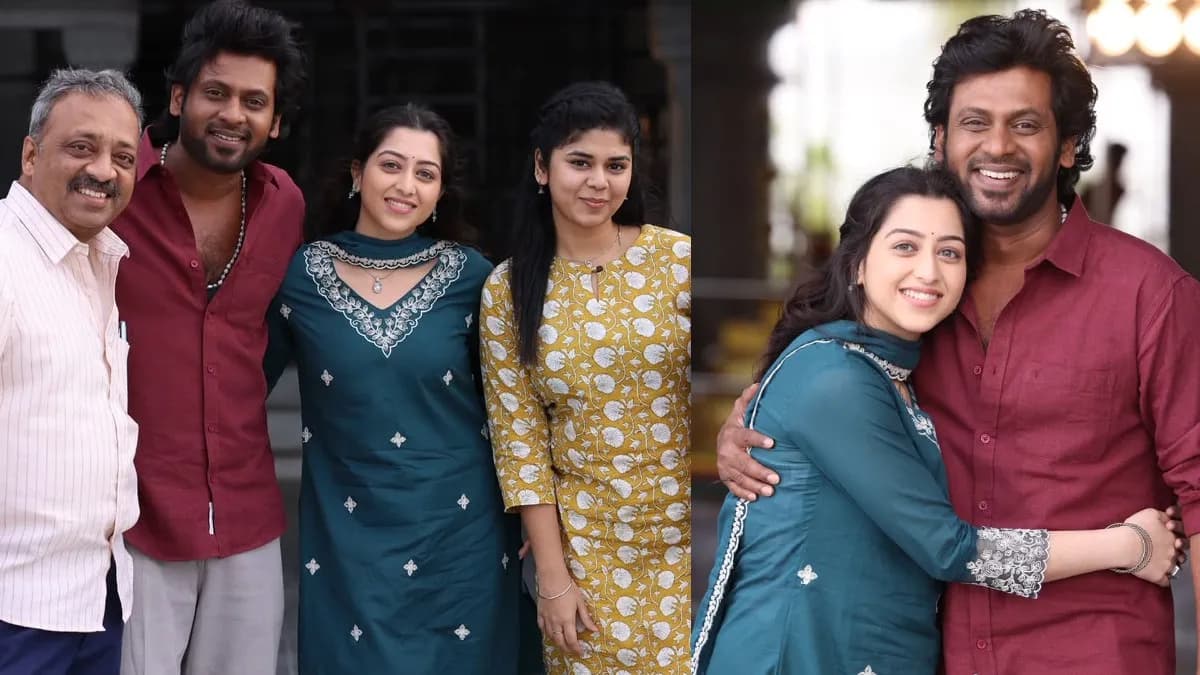
The release of Ram and Leela has sparked intense debate among Tamil audiences, but not for the reasons the makers might have anticipated. The film’s central premise - rooted in a provocative question about gender identity - has turned into the talking point of the season, with viewers leaving theaters less concerned about the plot and more fixated on the title’s implied query. The buzz is less about the love story and more about the ambiguity it presents, and that has divided opinion right down the middle.
At its core, the film attempts to blend a conventional romance with a social twist, but the execution has left many scratching their heads. The narrative follows the expected arc of boy meets girl, they fall in love, and then a complication arises. However, the complication here is not a rival lover or a family feud; it is the very identity of the female lead. The promotional material teased a mystery, and the film delivers on that tease, but whether it delivers a satisfying answer is the subject of heated argument.
A plot that hinges on a whispered doubt
The story unfolds in a seemingly straightforward manner, introducing the audience to Ram, a man who is immediately smitten by Leela. Their chemistry is palpable in the early reels, and the director spends considerable time building their world. Yet, a lingering shadow is cast over every intimate moment, as the script continuously drops hints that something about Leela is not what it appears to be. This is not a subtle subtext; it is the engine of the entire film. The audience is placed in the same position as Ram, constantly questioning the reality of the woman in front of him.
What works in the film’s favor is the tension this creates. The screenplay manages to sustain a degree of suspense, making the middle portion of the movie genuinely engaging. The audience is not just watching a romance; they are actively searching for clues, weighing every gesture and dialogue for confirmation or denial of their suspicions. This engagement is a testament to the director’s ability to craft a mystery, even if the final reveal fails to land with the intended impact.
Performances carry the weight of the uncertainty
The lead actors are tasked with a difficult job. The male lead must portray a convincing sense of confusion and growing affection, all while grappling with doubt. He manages to convey this internal conflict with a believable sense of earnestness. However, it is the actress playing Leela who has the more challenging role. She is required to be alluring, vulnerable, and simultaneously ambiguous, keeping the viewer guessing for nearly two hours. Her performance is a balancing act, and for the most part, she succeeds in keeping the mystery alive, even when the dialogue falls short.
The supporting cast, however, is largely relegated to the sidelines. They serve as the chorus, commenting on the central question without adding much depth to the story. One wishes they had been given more to do, as their reaction to the central twist could have provided a more nuanced perspective. As it stands, they are merely functional, populating the world without enriching it.
The core question overshadows the cinematic craft
Technically, the film is competent. The cinematography captures the vibrant locales with a rich color palette, and the music complements the mood, particularly in the song sequences. The editing is crisp, keeping the runtime tight. But these elements are all in service of a narrative that ultimately hinges on a single, polarizing idea. The film invites the audience to ask a question that, in today’s sensitive social climate, carries a significant amount of weight. Is the film a progressive exploration of identity, or is it a regressive attempt to sensationalize a sensitive topic?
The director does not provide easy answers, and this is where the film seems most divisive. Some will view the ending as a thoughtful commentary on the nature of love and acceptance, while others will likely see it as a cop-out, a refusal to take a definitive stand. The ambiguity is clearly intentional, but it also leaves a feeling of incompleteness. The film raises a point, examines it from all angles, and then abruptly stops, leaving the resolution to the viewer’s interpretation.
A talkative but not definitive entry
Ram and Leela is a film that is impossible to ignore, primarily because of the conversation it has started. It is a film that will be debated in coffee shops and on social media, with passionate arguments on both sides. Whether that debate is a sign of artistic success or a fatal flaw depends entirely on the perspective of the viewer. For those looking for a straightforward romantic drama, it will likely disappoint. For those drawn to narratives that challenge conventional storytelling, it offers a provocative, albeit flawed, experience.
The film does not break new ground in terms of romance or technical craft, but it does break a kind of narrative barrier by placing a deeply uncomfortable question at the heart of a mainstream love story. It forces the audience to confront their own biases and expectations. In that regard, it achieves something that most commercial films do not. It is not a masterpiece, but it is a film that refuses to be forgotten, and in the crowded landscape of Tamil cinema, that alone is a notable achievement. Ultimately, it leaves you with the very question it poses, ensuring that the conversation will continue long after the credits roll.
Source: Filmibeat Tamil