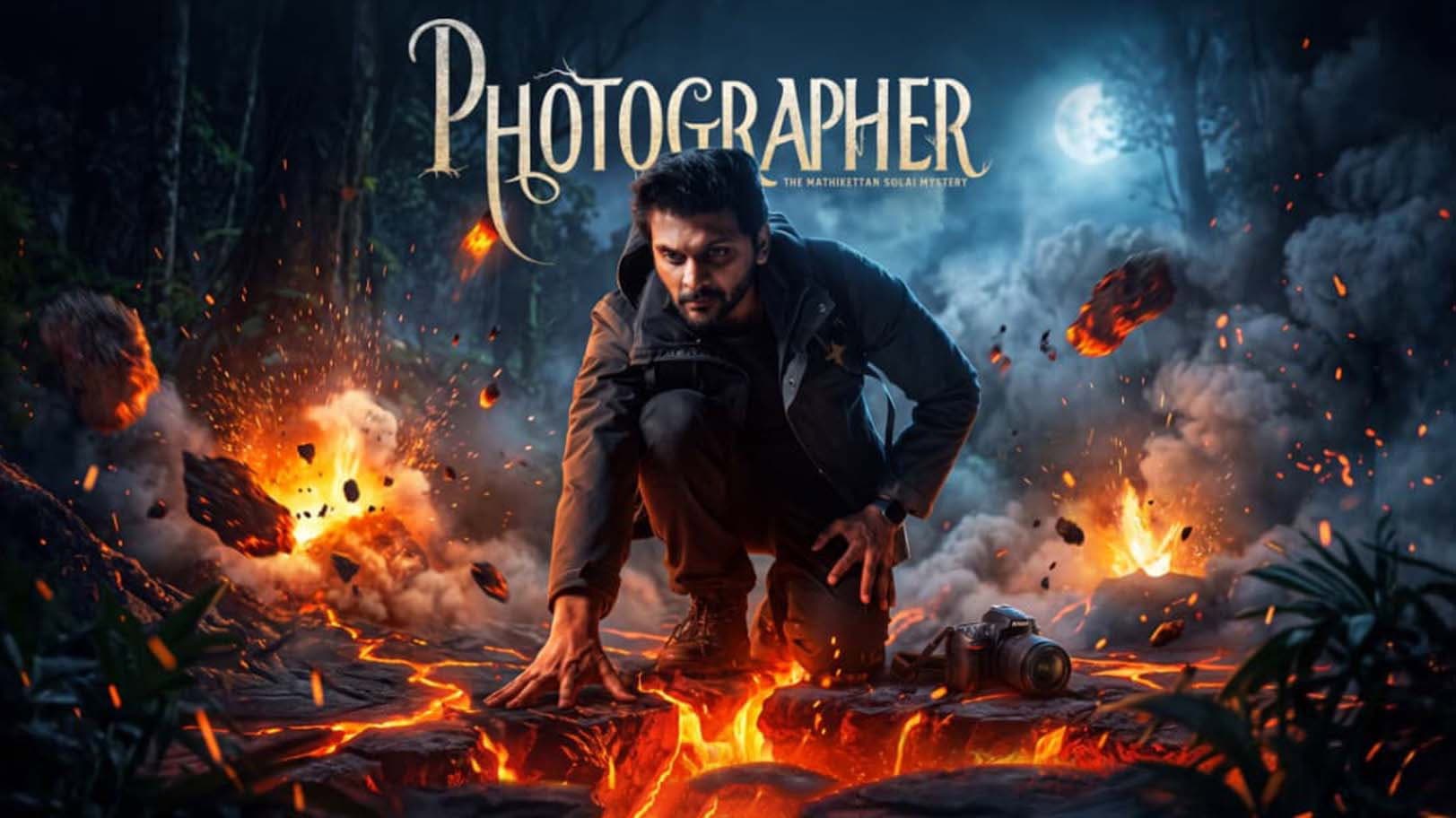
Veera doesn’t just take photographs; he hunts them. There’s a ferocity in the way he frames a shot, a desperation that suggests the image is the only thing standing between him and oblivion. That’s the pulse of Photographer, the ambitious new Tamil-language thriller that slipped quietly into theatres on August 7, 2026, and has been developing a slow, simmering word-of-mouth ever since. It’s not a film that shouts for your attention; it waits, patient as its protagonist, and then snaps its shutter at the exact moment you least expect it.
At the centre of this mystery-fantasy hybrid is a performance that feels less like acting and more like a controlled burn. Ashraf A, who also steps behind the camera for his directorial debut, plays Veera with a coiled intensity that makes every frame feel loaded. He’s a man dismissed by galleries, mocked by peers, and haunted by a past he can’t outrun. The film opens with him at his lowest - a failed exhibition, a mocking review, a phone call he won’t answer. Then comes the whisper of a legend. Deep inside Mathikettan Solai, a reserve forest that operates as its own character in this story, something is said to happen - a rare, unphotographed natural phenomenon that appears only once in a generation. For a man who’s been told his eye is flawed, it’s the perfect redemption. Or the perfect trap.
Ashraf’s direction shows a confident grasp of atmosphere. The forest isn’t just green and lush; it’s oppressive, teeming with sounds that don’t resolve, shadows that don’t align. Cinematographer work here (credited to the team, but uncredited in the promotional material) leans into natural light and long, unbroken takes, making you feel the humidity on your skin. When Veera first enters the Solai, accompanied by the cynical forest tracker Kabilan (a wonderfully dry Karunakaran), the film shifts into a slower gear. It’s a deliberate choice. The mystery isn’t just about what Veera is chasing; it’s about why he refuses to look back.
The supporting cast elevates every scene. Janani Samathanam’s Dharshini is the anchor back in civilisation, a woman who understands Veera’s obsession because she shares a quieter version of it. Their scenes crackle with unspoken tension. Then there’s Aadukalam Naren as Sengutavan, a village elder who speaks of the Solai’s secret with the weary certainty of a man who’s seen too much. And Vela Ramamoorthy’s Maruthuvar, a ritual specialist, whose dialogue feels steeped in folklore. The film weaves Tamil mythos into a modern thriller framework, but it never over-explains. The fantasy element is kept deliberately ambiguous - is it real, or is it a projection of Veera’s fractured psyche? The film doesn’t tell you, and that’s its greatest strength.
The plot, as it unwinds, doesn’t follow a straight line. Veera keeps taking pictures, but the images on his camera don’t match what he sees in the viewfinder. Dr. Shantaram (Nizhalgal Ravi), a psychiatrist who appears in fragmented scenes, suggests Veera’s obsession is a form of self-harm. Kabilan warns him to leave. But Veera is a man possessed, and the film’s second half turns into a hallucinatory spiral. The thriller genre tropes are present - a chase, a betrayal, a hidden truth - but they’re rendered with a painterly, almost dreamlike logic. There’s a sequence involving a mirror lake that will linger long after the credits roll.
What’s most striking is how Photographer refuses to give you a comfortable ending. Without spoiling the final reel, it’s enough to say that Ashraf A trusts his audience to sit with ambiguity. The question of whether Veera actually captures the phenomenon is less important than what he sacrifices to try. In an age of over-explained sequels and franchise bait, that restraint feels radical.
One note for those expecting a standard action-thriller: this isn’t that. The pacing is meditative, the scares (if you can call them that) are psychological, and the runtime, while unlisted, feels lean but unhurried. The TMDb rating of 0/10 is a curious artifact - essentially no data, which means this film is still finding its audience. That’s a shame because Photographer deserves more than tepid buzz. It’s a film that rewards patience, that begs for a second viewing, and that marks Ashraf A as a filmmaker to watch.
By the time you finish reading this, Veera might still be out there, standing in a clearing, waiting for the light to change. You won’t see him, but you’ll feel his gaze. That’s the power of Photographer - it doesn’t just show you a picture; it makes you wonder who’s really taking it.