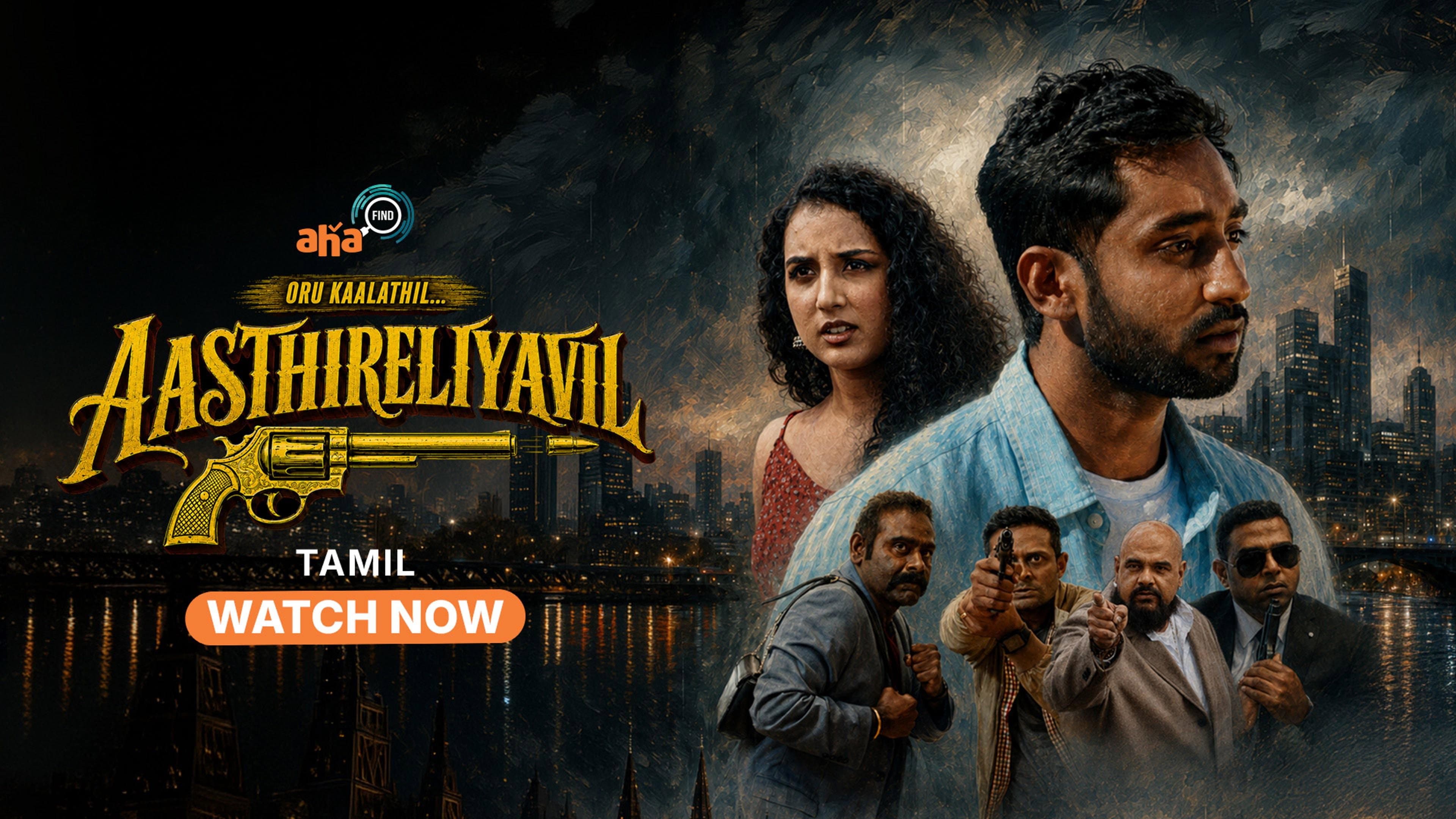
The phone rings, and for the man who once held the highest political office in a South Indian state, the voice on the other end carries a threat that money alone cannot neutralize. That is the core premise of Oru Kaalathil Aasthireliyavil, a crime thriller that lands in Kollywood theatres on July 31, 2026, with a runtime of 145 minutes. Directed by Taraka Srinivas, the film sketches a scenario that feels ripped from a headline one hasn’t read yet: a former Chief Minister, a phone call from Melbourne, and a ransom of 100 crores.
The narrative, however, is less about the money and more about the fragile architecture of political survival. With elections looming on the horizon, the unnamed CM (played by Jyothirnath Goud) finds himself trapped between public duty and private catastrophe. A top-secret, the contents of which remain tightly guarded in the film’s promotional material, is the leverage. The caller in Australia doesn’t just want cash; they want the future of a party held hostage. It’s a high-wire act where every negotiation scene vibrates with the knowledge that a single misstep could unravel decades of carefully plotted ambition.
Director Taraka Srinivas, who also co-writes the screenplay, seems less interested in the conventional cat-and-mouse chase and more in the psychological toll on a man who has wielded absolute power. The film’s title, translating to In a Time of Asthiraveli, hints at a period of turbulence - not just for the protagonist, but for the institution he represents. The runtime allows for a slow burn, letting the camera linger on the claustrophobia of a leader who must now listen, not command. The script reportedly toggles between the sterile calm of the CM’s residence and the chaotic urgency of a Melbourne safehouse, creating a geographic tension that mirrors the internal split of a man torn between legacy and survival.
Goud, known for his commanding screen presence, steps into the role of a leader who is less a caricature of a politician and more a study in controlled anxiety. His performance reportedly anchors the film, shifting from authoritative cadence to a whisper-thin vulnerability when the phone rings. Opposite him, Saanya Bhatnagar plays a crucial role - the only aide who knows the truth and must broker a deal that doesn’t end in a constitutional crisis. Chandrasekhar Kommalapati and JDR Cherukuru flesh out the supporting cast, representing the factions within the party and the law enforcement agencies that are kept in the dark. The dynamics between these four characters form the film’s emotional and strategic core.
What makes Oru Kaalathil Aasthireliyavil distinct is its refusal to paint anyone in broad strokes. The antagonists are not faceless criminals; they are calculated, resourceful, and understand the media cycle better than the politicians they target. The film takes a cynical but realistic view of how a secret, in the digital age, is not a document but a weapon. The Melbourne setting is not incidental - it introduces a jurisdiction where Indian police protocols stall, forcing the CM’s inner circle to rely on unofficial channels. This globalized crime angle lends a modern sheen to a genre often rooted in localised power struggles.
The director’s background in atmospheric storytelling is evident in the teasers, which showed rain-slicked Australian streets contrasting with the dust of an Indian election rally. The cinematography reportedly uses wide shots of Melbourne’s skyline to emphasize the isolation of the caller, while the Indian scenes are tight, handheld, and suffocating. The score, composed with a minimalist pulse, builds tension not through volume but through silence - those gaps in a phone call where a single breath could mean life or death.
The film also subtly critiques the architecture of political secrecy: how leaders surround themselves with loyalists who become gatekeepers of truth, and how that system can be turned against the very person it was built to protect. The 100 crore ransom, a staggering sum by any measure, is merely the surface. The real currency is trust, and the film asks a queasy question - who can a former CM trust when every ally is a potential leak?
As of now, Oru Kaalathil Aasthireliyavil holds a 0/10 rating on TMDb, but that is solely because it has yet to amass a wide audience response. Early word from private screenings suggests a divisive film - one that rewards patient viewers with a tense, talk-heavy thriller but may alienate those expecting action set-pieces. Taraka Srinivas has not confirmed a sequel, but the ending reportedly leaves a door slightly ajar, a narrative thread that could unravel a larger conspiracy.
For Tamil Movie Buzz, the takeaway is simple: this is not a popcorn entertainer. It is a slow-burning examination of power, guilt, and the price of a secret. The Melbourne phone line is open, the ransom is set, and the clock is ticking. Whether the audience will pay attention - or pay the ransom of their patience - remains to be seen.