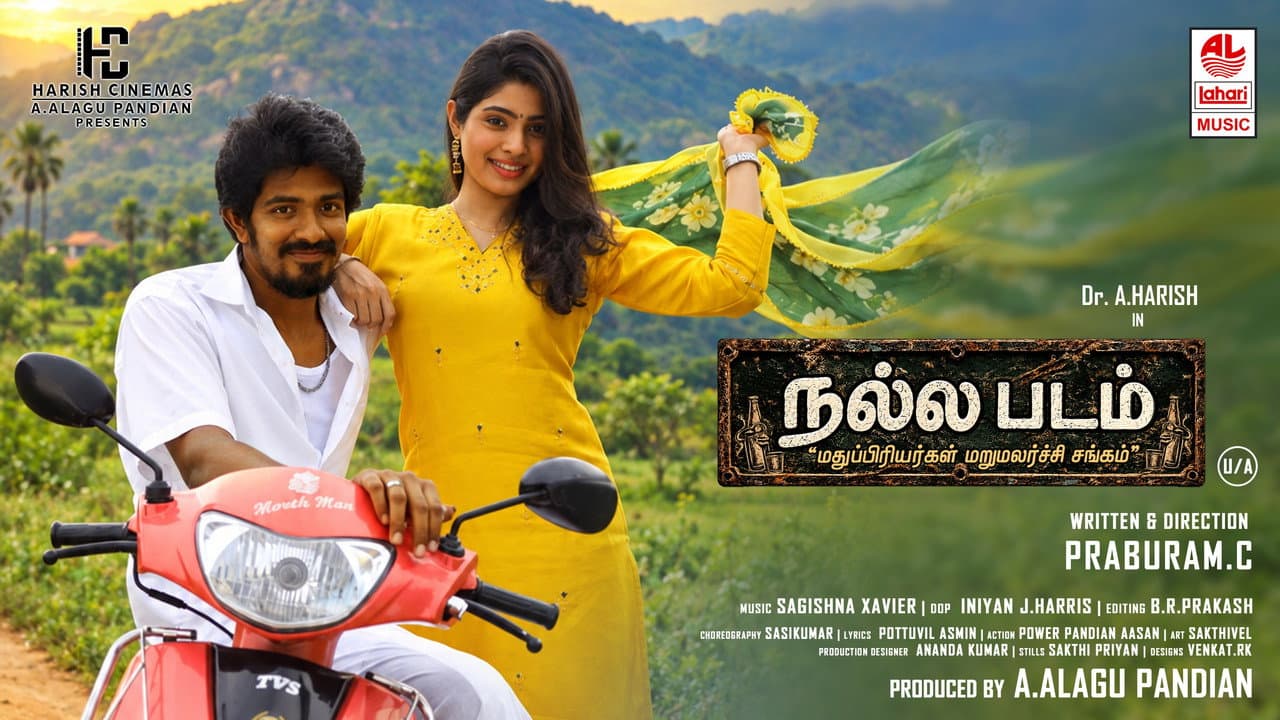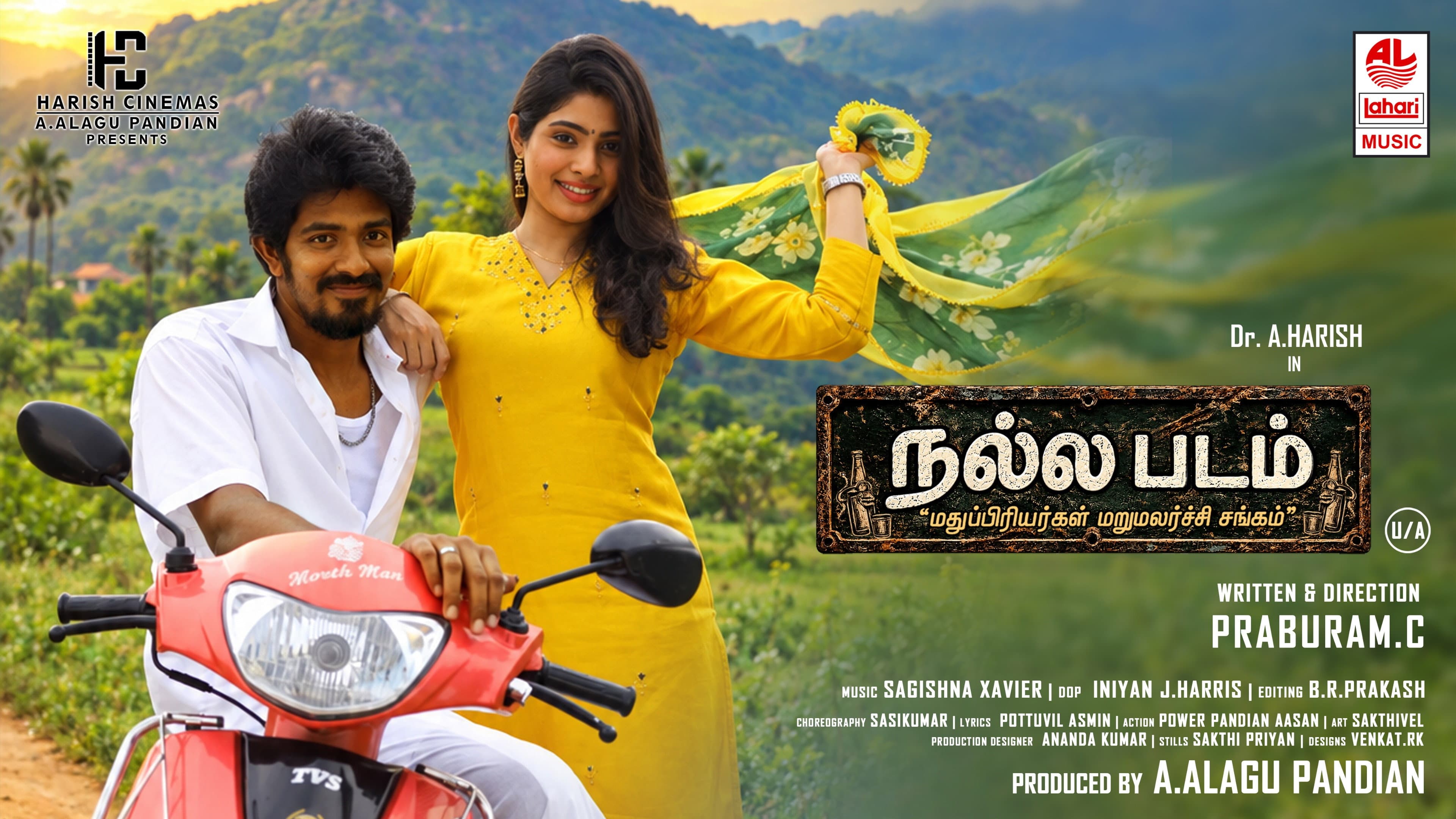
Kumaran has a problem, and it isn't the kind that can be solved with a stern conversation. His entire existence orbits around alcohol, a dependency cushioned by a mother who keeps the household running and challenged by a sister and girlfriend who want him to be someone else. That's the premise of Nalla Padam, a Tamil comedy-drama that arrived in theatres on September 18, 2026, and it wastes little time before turning its hero's world upside down.
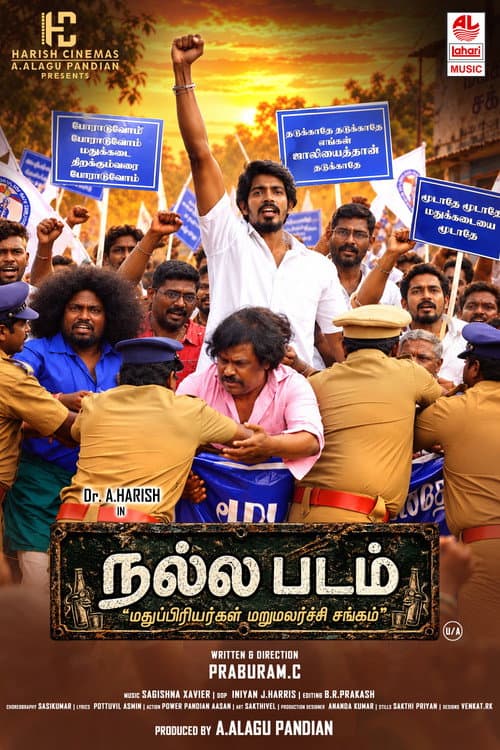
Directed by C. Prabhuram, the film opens in familiar territory: a man trapped in a cycle, loved and enabled in equal measure, nagged by the women who see his potential more clearly than he does. What Kumaran doesn't expect is that his devotion to drink will earn him a promotion. When fellow alcohol enthusiasts band together to form an association, they anoint him their leader. It's a premise tailor-made for satire, and Prabhuram leans into the absurdity of a man being rewarded for his worst habit.
Then the Central Government drops a bomb. A nationwide prohibition comes into force, and suddenly Kumaran's raison d'être is illegal. The association he leads loses its purpose overnight. His mother can no longer quietly support his routine. His sister and girlfriend, who once begged him to change, now watch as the state forces the issue in the most dramatic way possible.
What follows, according to the film's own framing, is a descent into hilarious and desperate measures. Kumaran isn't written as a man who gracefully accepts sobriety. He schemes, scrambles and humiliates himself in pursuit of a drink, and Nalla Padam mines this desperation for laughs without losing sight of the pathos underneath. It is a balancing act that could collapse under a lesser script, but the film's tonal ambitions are clear: humour, romance, emotion, mass moments, a social message and revolutionary ideas, all packed into a runtime of 110 minutes.
That's a lot to fit into under two hours, and the film's willingness to try is part of its appeal. Nalla Padam isn't content to be a simple addiction comedy. The prohibition isn't just a plot device to torture its protagonist; it's a lens through which the film examines what happens to families across India when the state decides what people can and cannot consume. The Association for Alcohol becomes a stand-in for a broader question about personal freedom, public health and the messy space in between.
Dr. A. Harish leads the cast as Kumaran, carrying the film's emotional weight while also delivering the physical comedy that the role demands. Dhana Lakshmi, Rajendran, Kalki Raja, Rama and Krithika round out an ensemble that gives the film its texture, populating Kumaran's world with the voices that alternately enable, challenge and exasperate him. The women in his life in particular, his mother on one side and his sister and girlfriend on the other, form the film's moral core, even as Kumaran stumbles through his own version of a rock bottom.
Prabhuram's direction aims for accessibility, blending broad comedy with moments designed to land in a packed theatre. The "mass moments" the film promises are there for the crowd, but so is a message about dependence and the systems that both create and criminalise it. Whether Nalla Padam ultimately argues for sobriety or for the right to choose is a question the film seems content to leave open, at least until its final act.
Released in Tamil under the Kollywood banner, Nalla Padam arrives at a moment when audiences are hungry for stories that mix laughter with something meatier. It doesn't pretend to be a documentary about prohibition, nor does it claim to have all the answers about addiction. What it offers instead is a portrait of a man forced to confront who he is when his crutch is kicked away, and a society learning to live with the consequences.
For viewers who grew up on Tamil comedies that wear their hearts on their sleeves, Nalla Padam looks like a familiar friend with a new story to tell. It may not have a rating yet, but its ambitions are clear. The question it poses, will Kumaran quit alcohol or find a way to continue, is really a question about all of us: what do we do when the thing that defines us is taken away? Nalla Padam answers that with laughter, tears and a little bit of chaos.