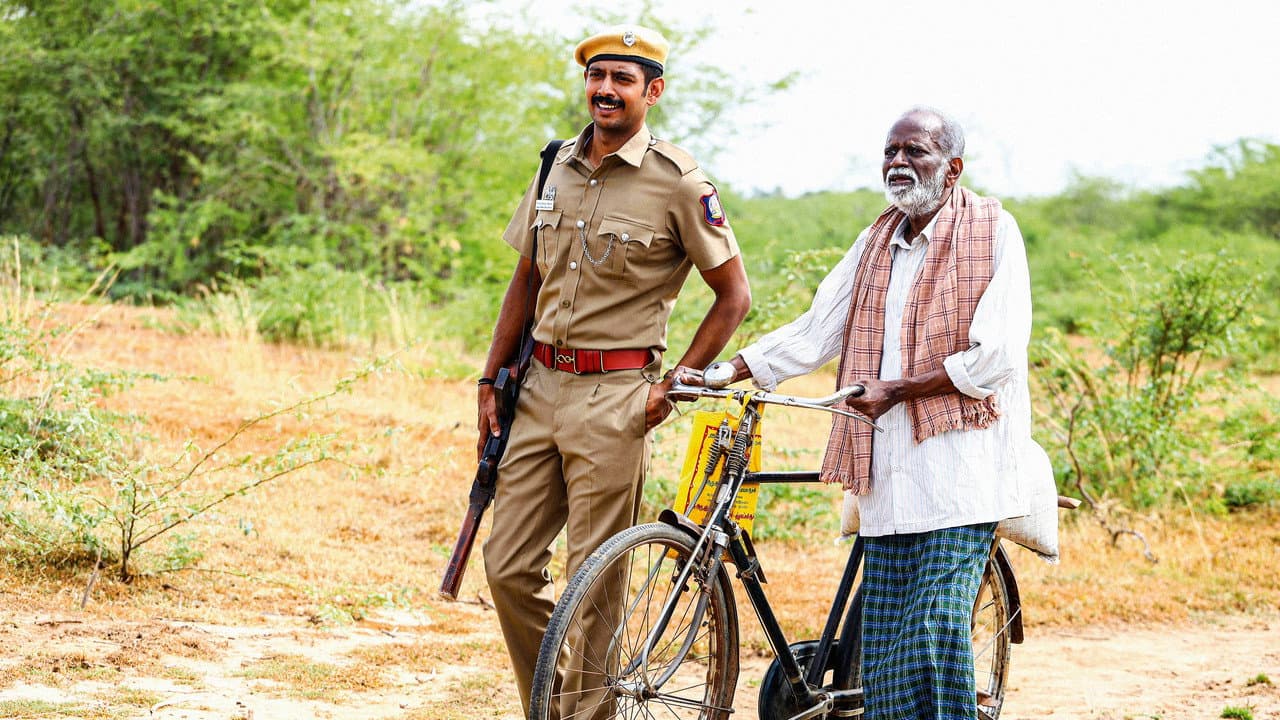
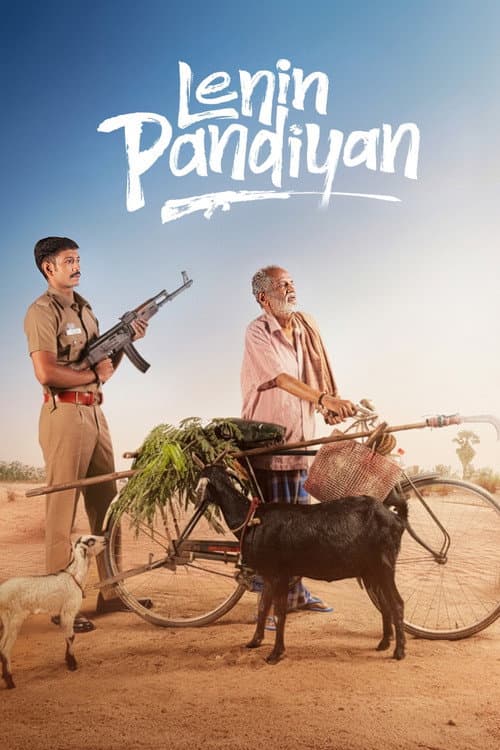
The film opens with the rhythm of a village morning - the sound of water, the creak of a bicycle, the low hum of conversations that have been repeated for decades. We meet Durairasu (Gangai Amaran), an ageing farmer whose body has begun its slow betrayal. He cannot carry what he once carried; the land he has tilled for a lifetime is being quietly eaten from beneath him. Around him, illegal sand mining has become less of a scandal than a weather condition - everyone knows it's there, nobody says its name too loudly.
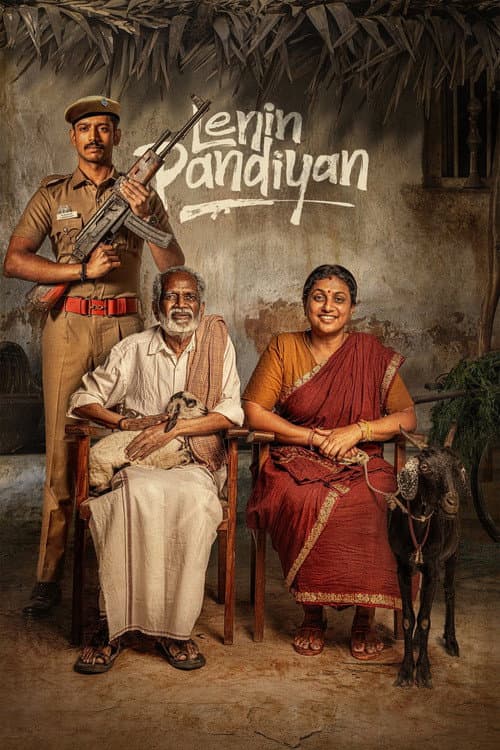
Then enters Maravarman Sundarapandian (Darshan Ganesan), a young police constable whose name and bearing suggest a man raised on romantic ideas of duty. He tells his mother that law is a promise you keep even when nobody is watching; his colleagues find this charming for about a week. When Sundarapandian stumbles onto a transport route that shouldn't exist, he drags into his orbit a cast of characters who each want something different from the same patch of riverbed: Chairman (Aadukalam Naren), whose smile never reaches his eyes; Karuththa Ravi (Yugendran), negotiating in the space between threats and invitations; and Uthayakumar (Bose Venkat), whose loyalties shift with the tide of the river.
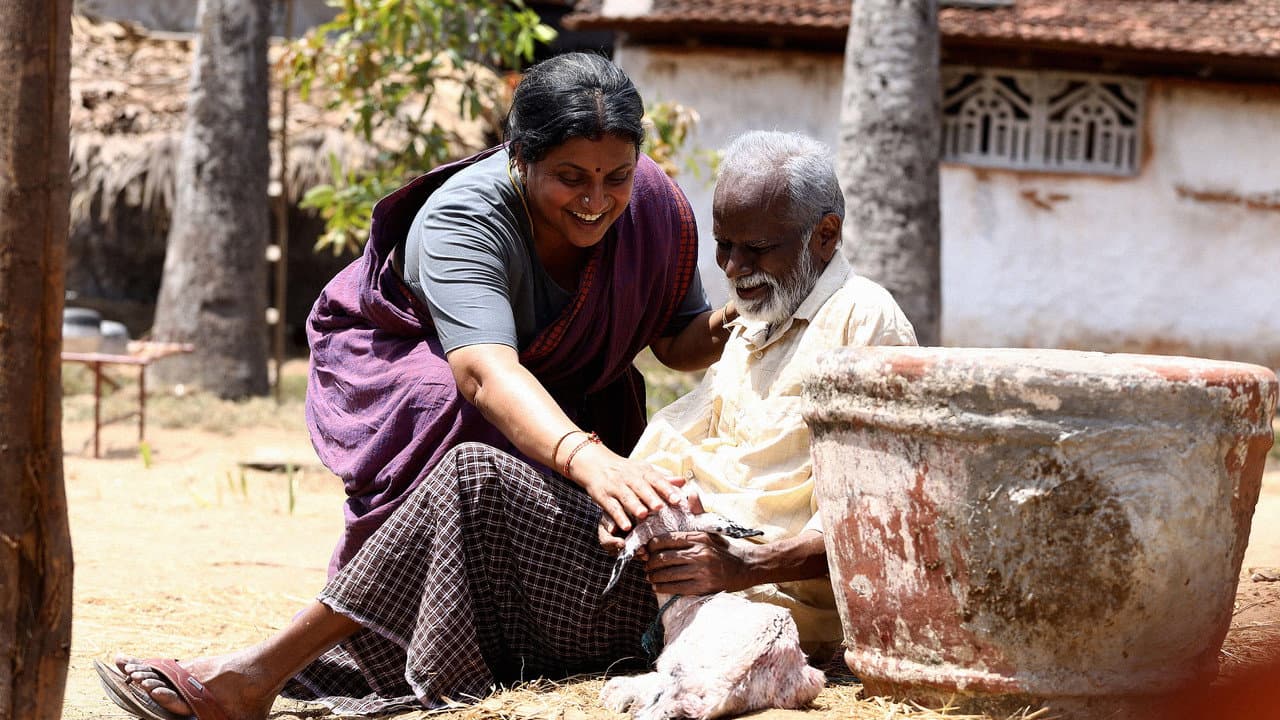
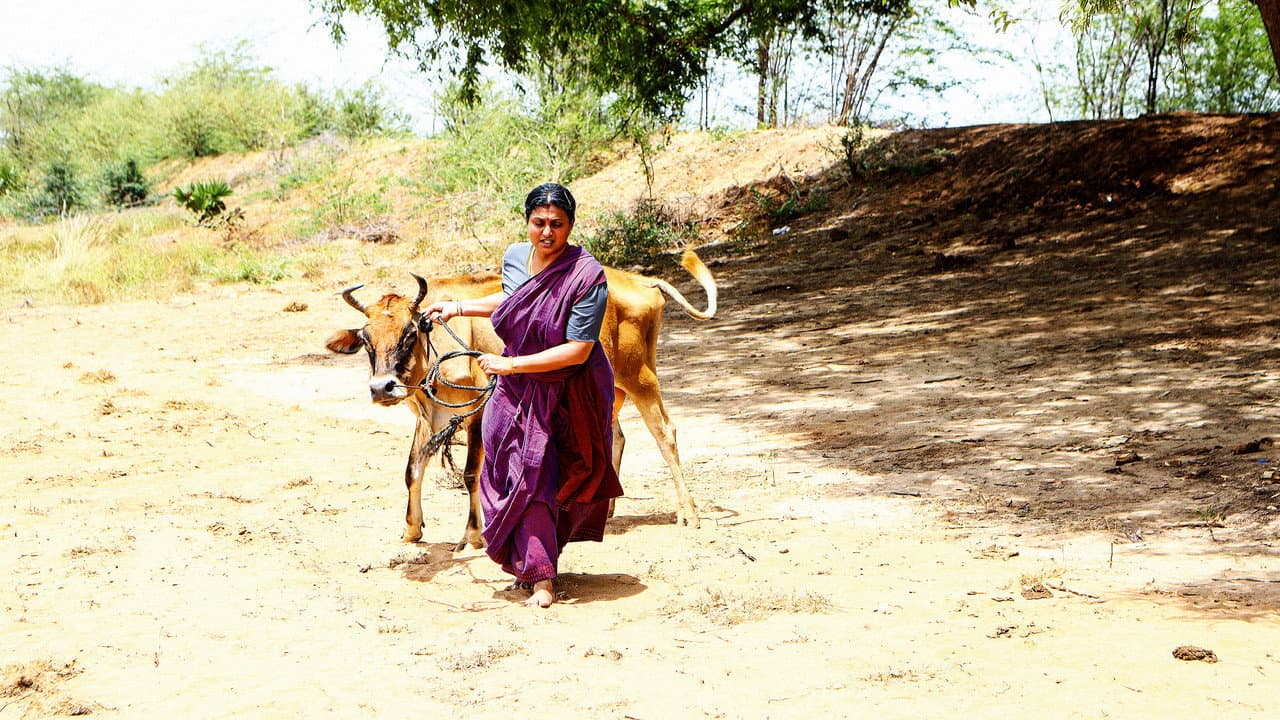
Meanwhile, there's Lakshmi (Roja Selvamani), a widow whose scenes with Durairasu carry a warmth that the film's other plotlines rarely risk. Their late-blooming companionship - shy, unhurried, shot in golden afternoon light - is the emotional heart of a movie that keeps trying to bury its own heart under paperwork and stakeouts. Shrita Rao's Priya, an activist-journalist hovering at the margins, is underused, and George Mariyan's firebrand Bhimarao Ambedkar appears in a handful of scenes that feel imported from a more explicitly political film.