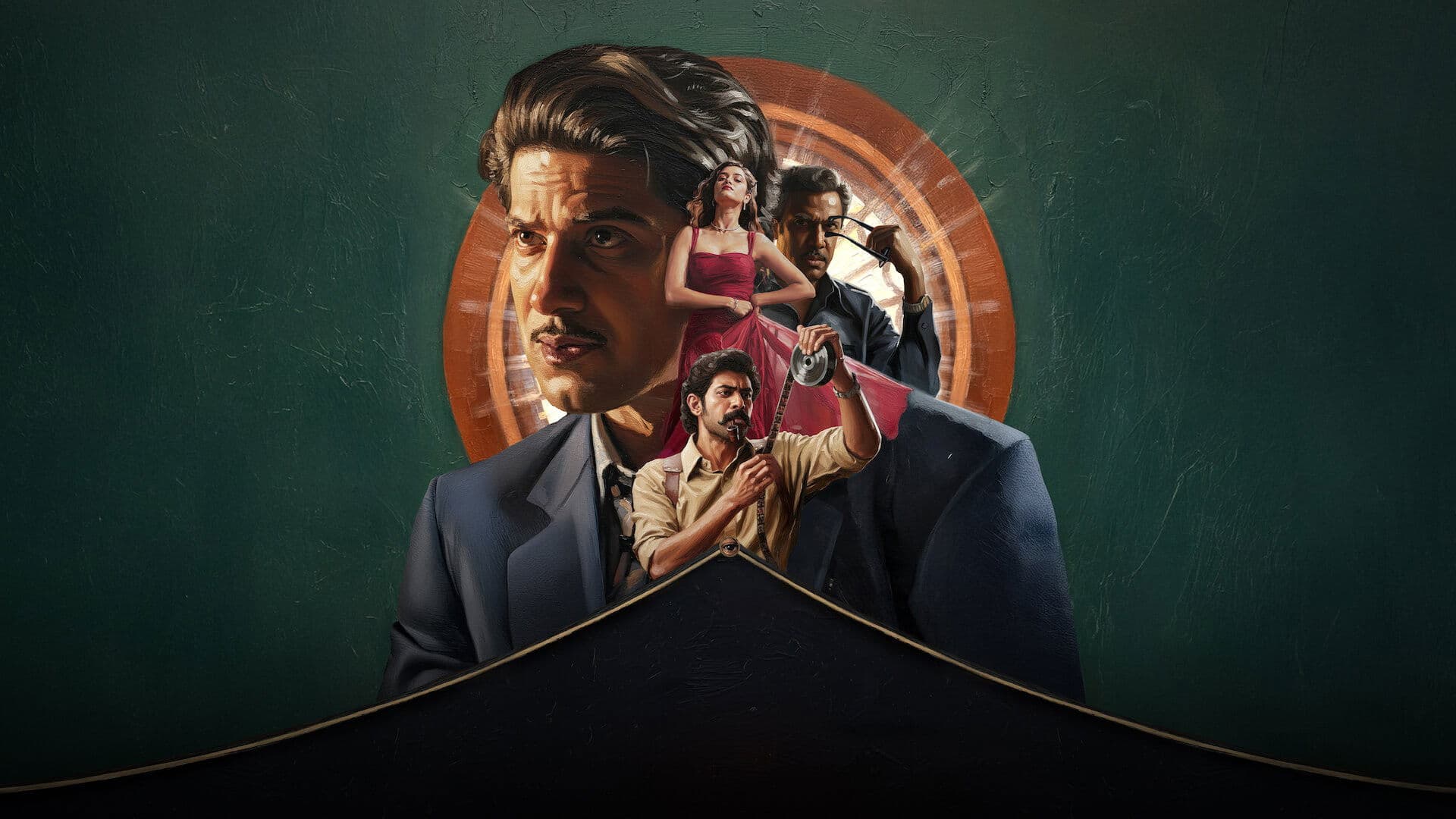
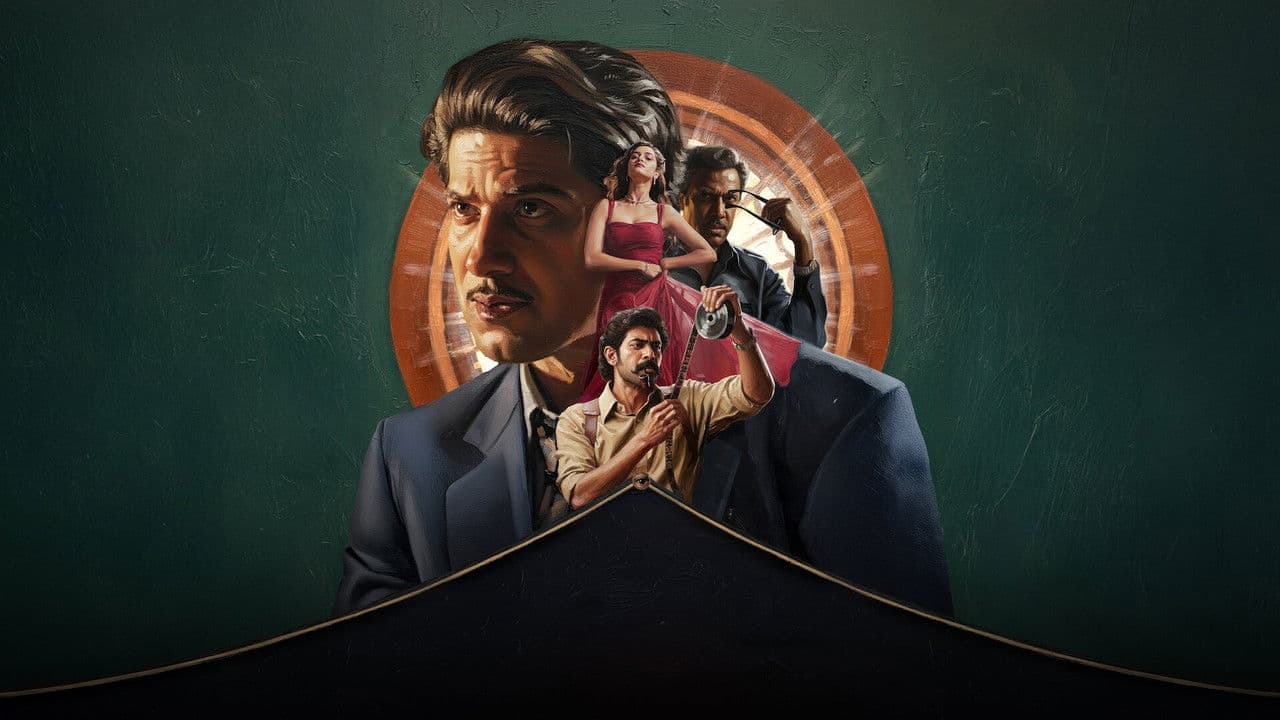
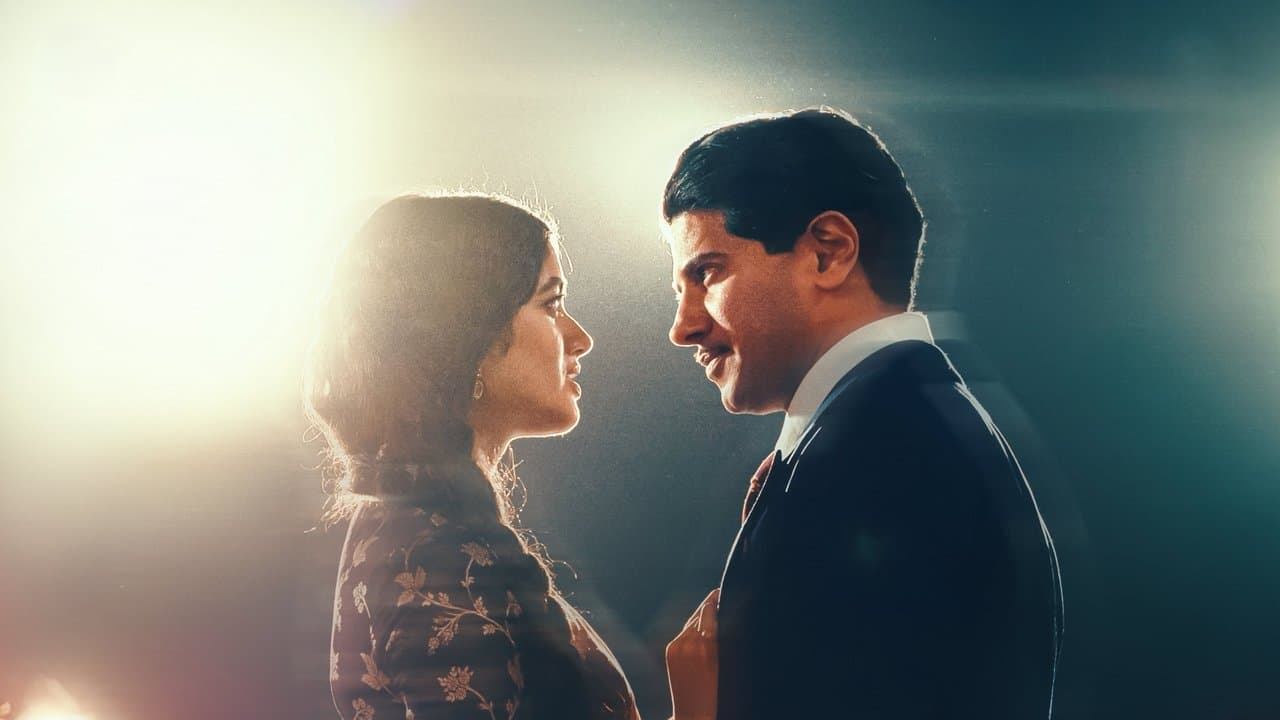
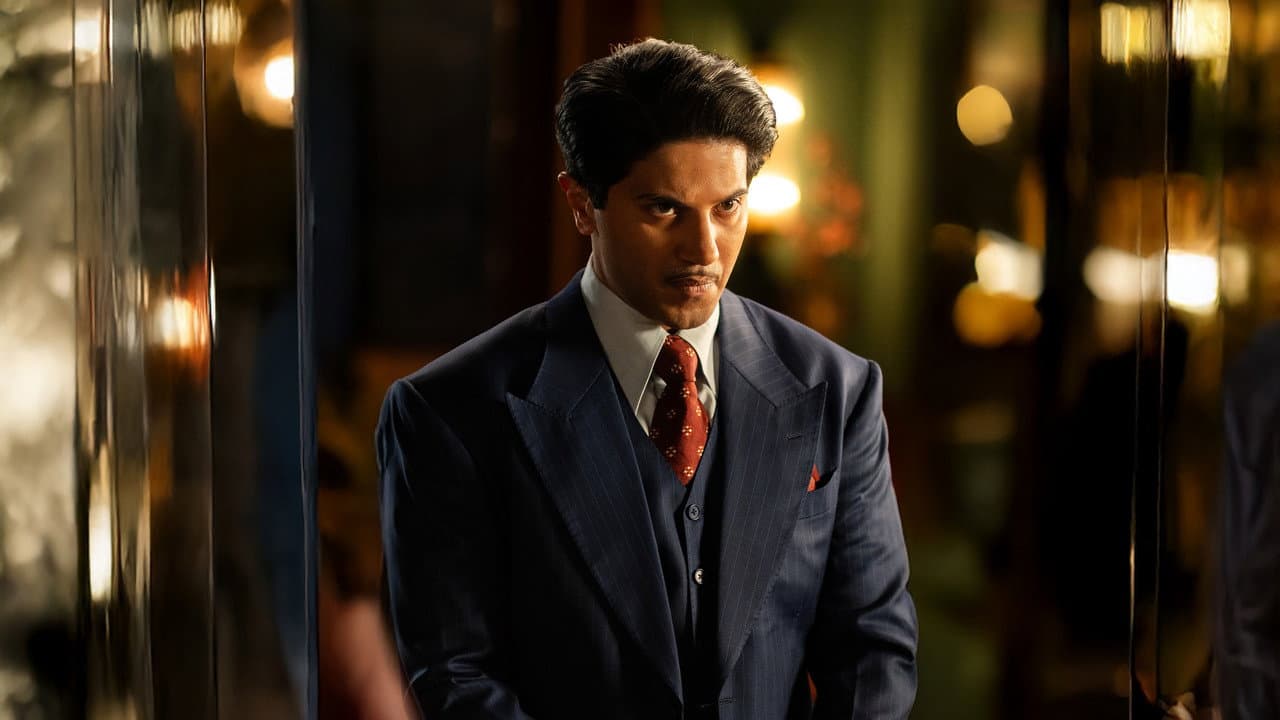
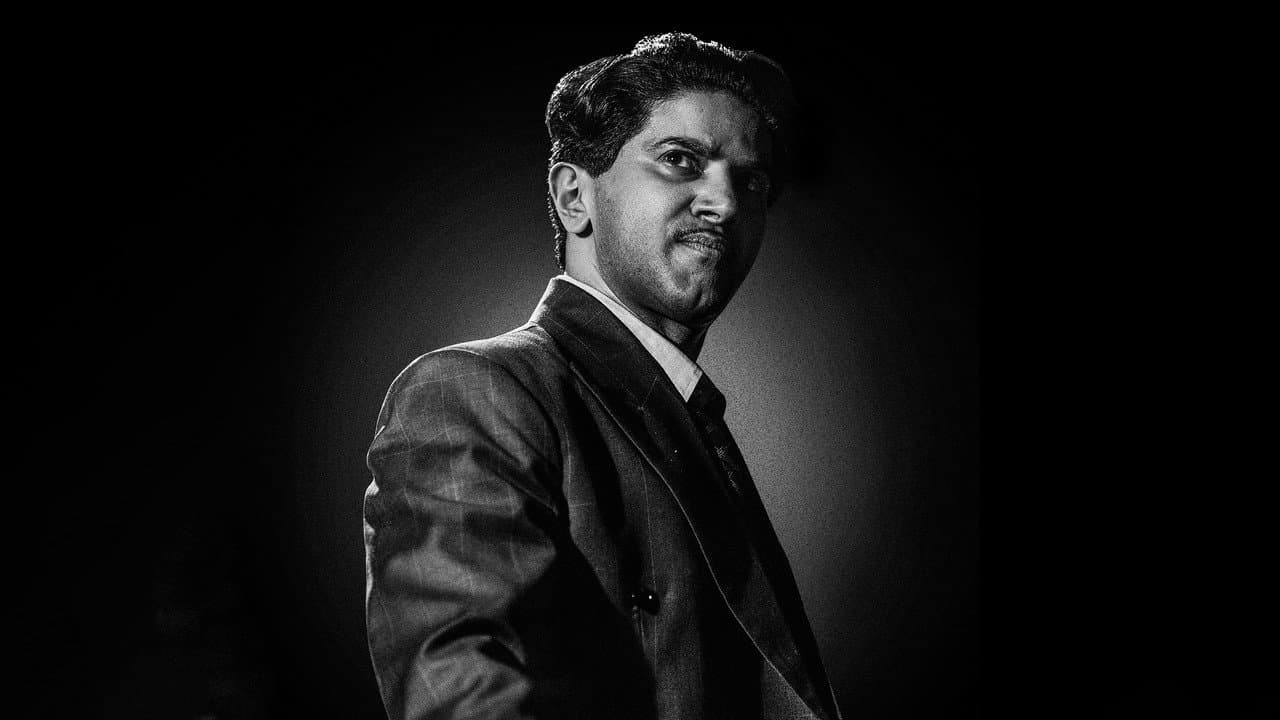
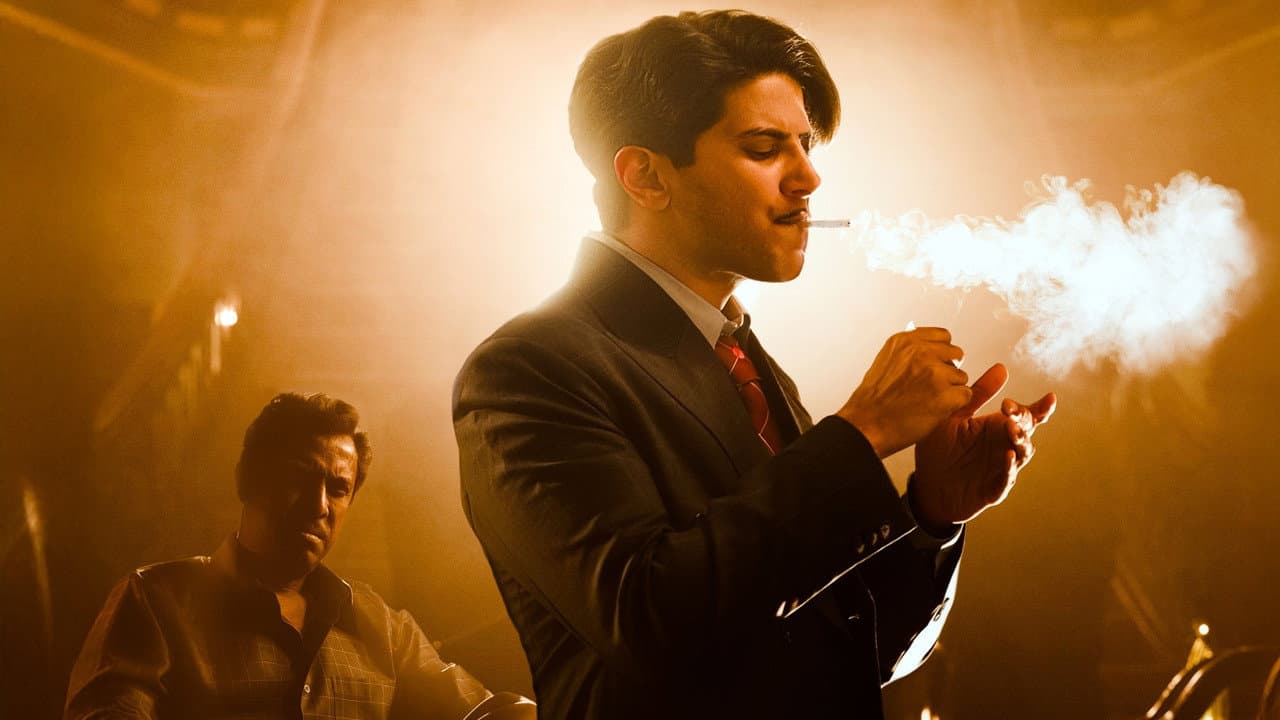
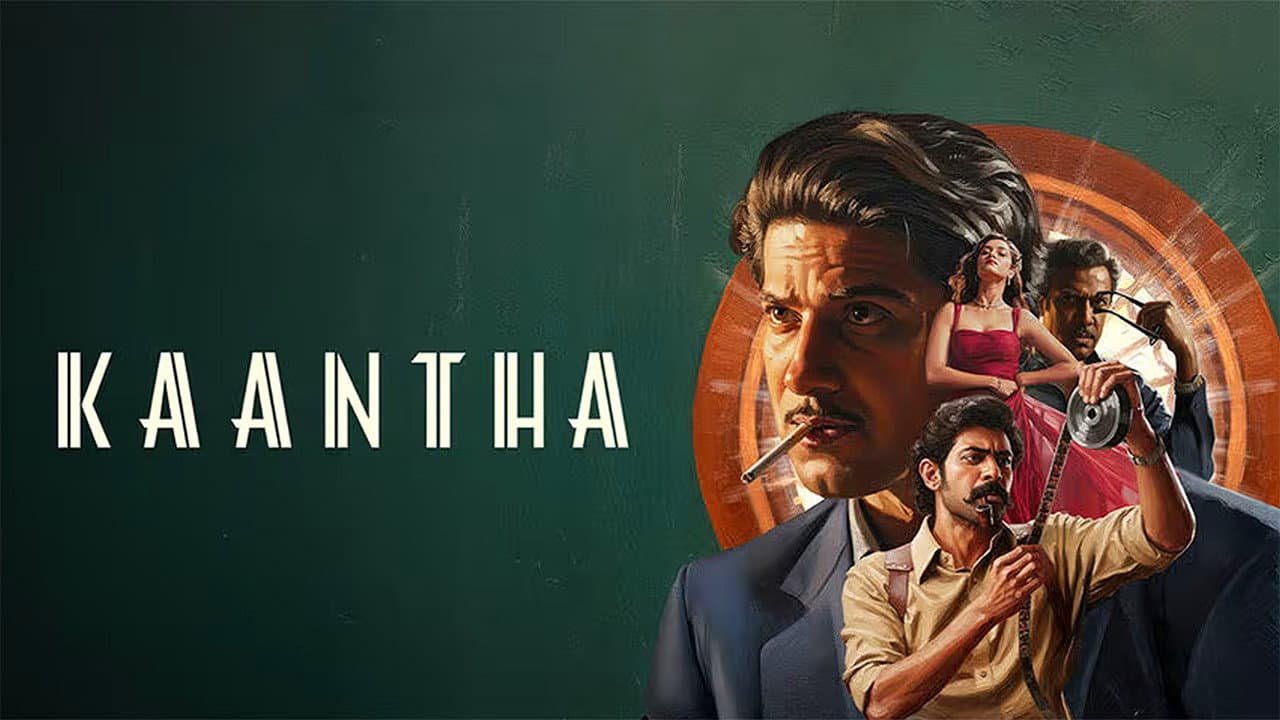
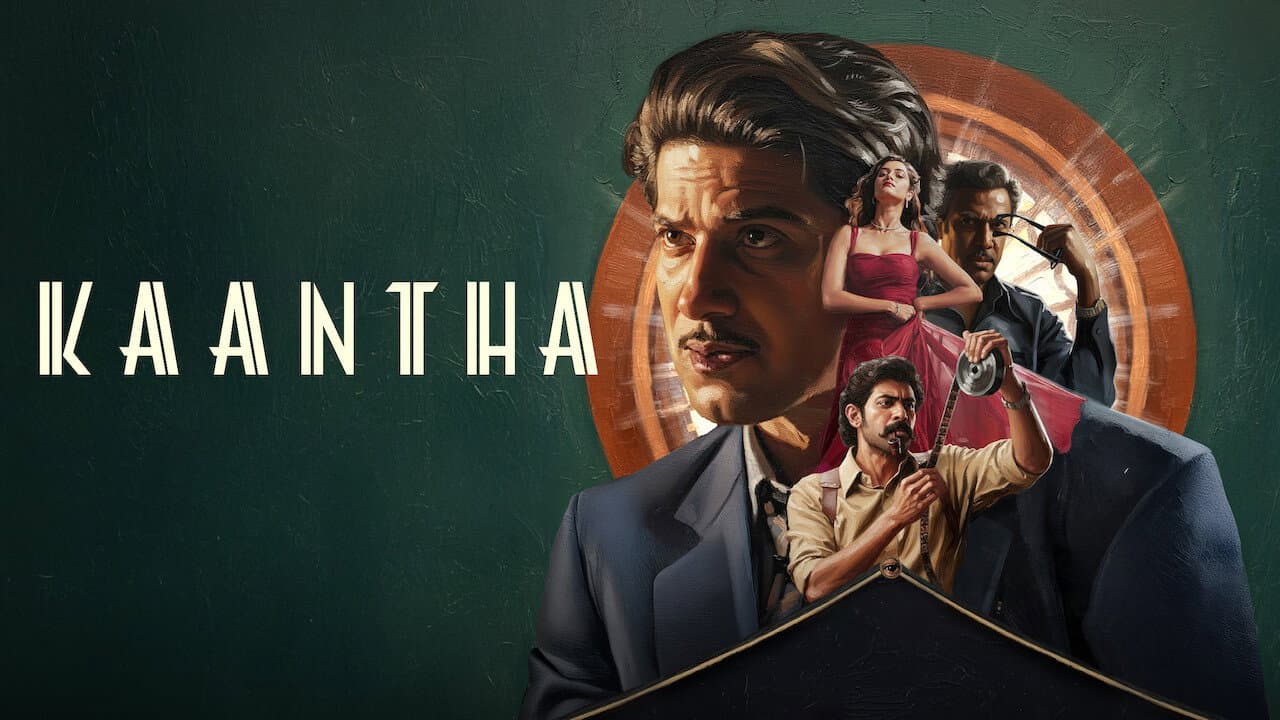
Selvamani Selvaraj has never been a director who plays it safe. With Kaantha, he attempts to weave a tapestry of history, crime, and drama that feels both intimate and epic. The film’s greatest strength is its production design. The recreation of 1950s Madras-from the rickety studio lots to the faded billboards and the urbane yet raw energy of the city-is nothing short of meticulous. The costumes, the lighting, even the grain of the film stock evoke an era when cinema was still discovering its voice.
Dulquer Salmaan, as T. K. Mahadevan, delivers a performance that is restrained yet emotive. His Mahadevan is a man haunted by his own genius, torn between the purity of his art and the compromises demanded by a hungry industry. His scenes with Samuthirakani are electric-two actors who understand the weight of silence and the sting of a well-placed line. Samuthirakani, as Kodandaraman, brings a weathered dignity to the role, portraying a star who knows his star is fading but refuses to go quietly.
Bhagyashri Borse, as Kumari, is a pleasant surprise. Her character could easily have been a passive victim, but she infuses Kumari with quiet defiance. She is not just the object of rivalry; she is a woman trying to carve her own space in a world that sees her as a commodity. Rana Daggubati’s Phoenix is menacing in brief bursts, though his subplot occasionally feels tangential, as if it belongs to a different film.
The crime element is less about whodunit and more about the moral compromises people make for success. There are no neat resolutions. The film dares to leave questions hanging-about loyalty, about the price of ambition, about whether art can ever exist without ego. The runtime, however, is a double-edged sword. At 150 minutes, Kaantha demands patience. The first hour is rich in atmosphere but thin in momentum. The middle act picks up with the introduction of the rivalry’s emotional stakes, but the final act, while emotionally resonant, could have been tighter.
The music and sound design are exceptional. The background score, steeped in analogue warmth, complements the period setting without overwhelming the dialogue. The cinematography by (uncredited in the metadata) deserves special mention-each frame feels like a photograph from a forgotten album.
That said, the film is not without flaws. Some subplots-particularly those involving the supporting cast-are not fully fleshed out. Gayathrie Shankar’s Devi and Nizhalgal Ravi’s Sivabalan Mudhaliyar appear as archetypes rather than fully realised characters. The dialogue, while poetic in places, occasionally lapses into exposition that feels forced. And for a film about filmmaking, there is surprisingly little insight into the actual craft; the focus remains firmly on the battlefield of personalities.