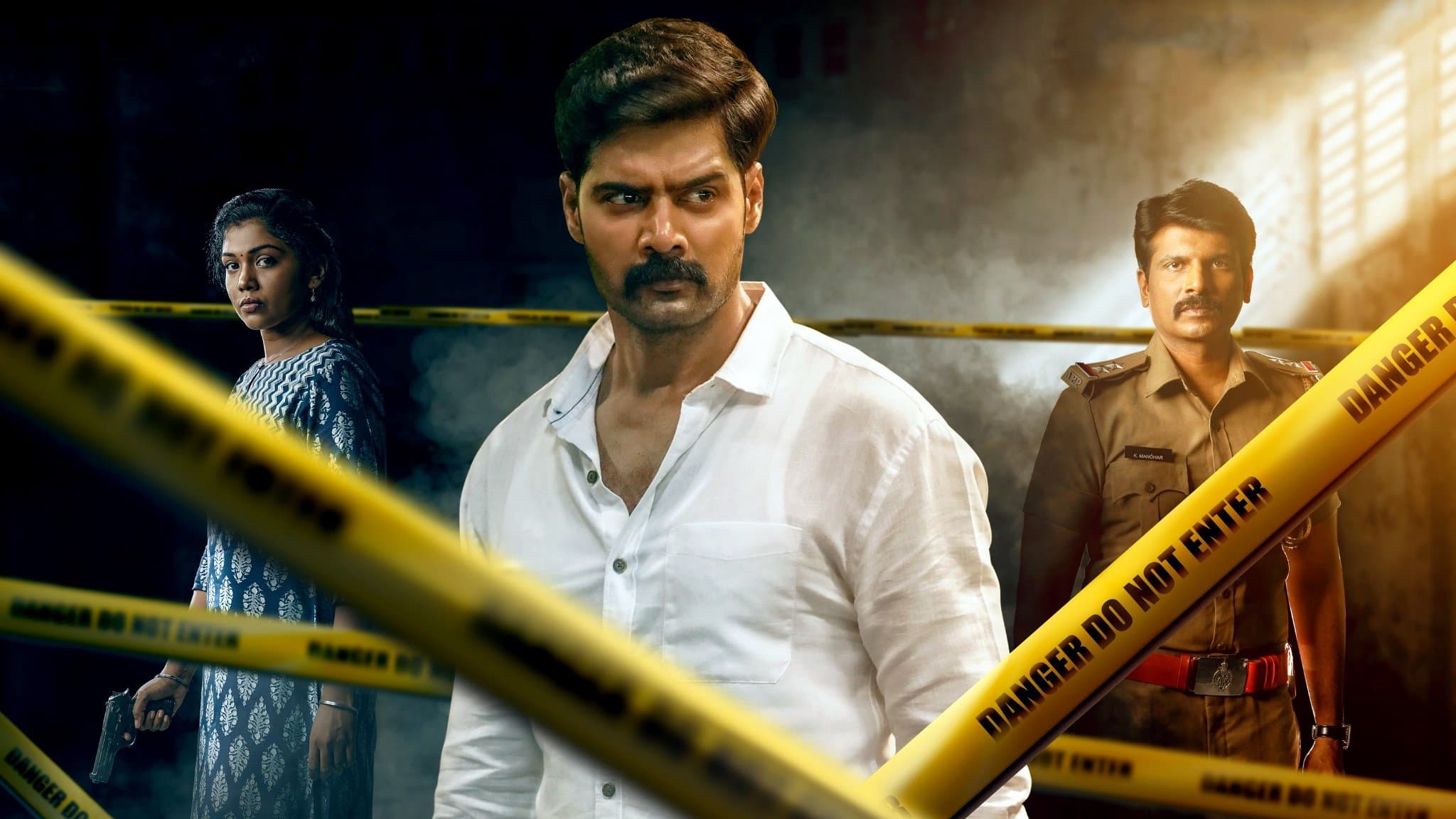
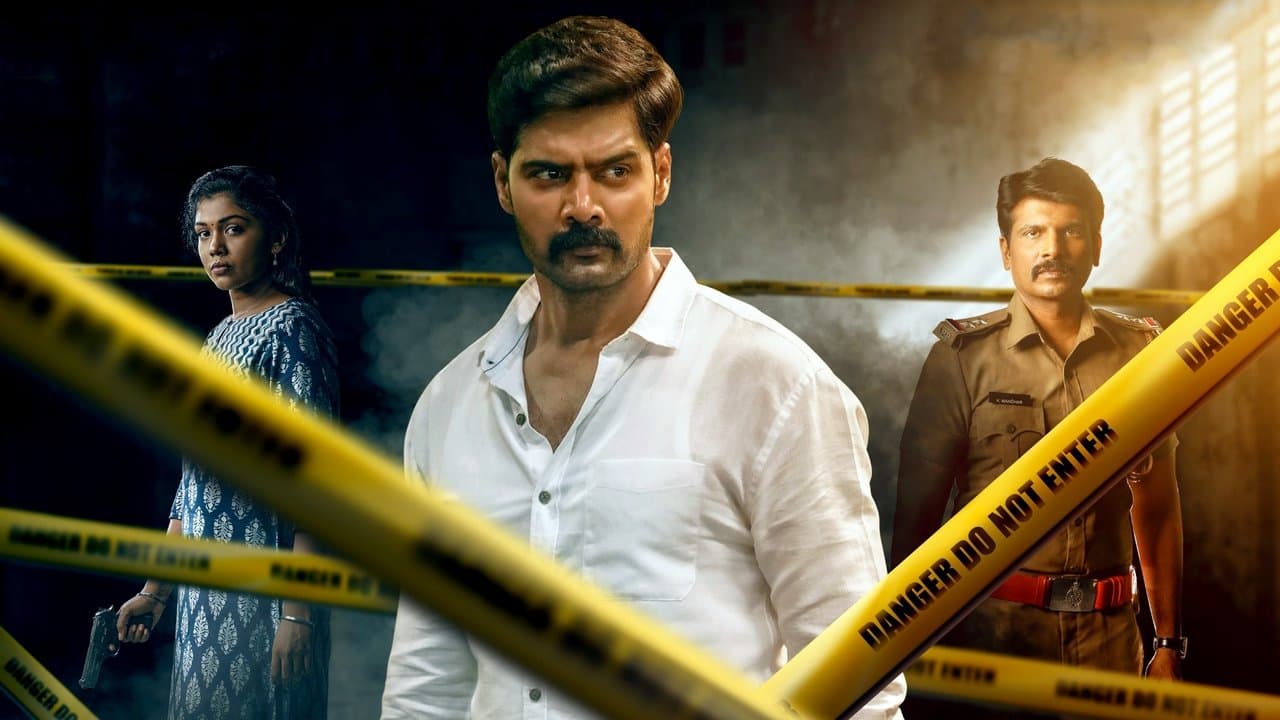
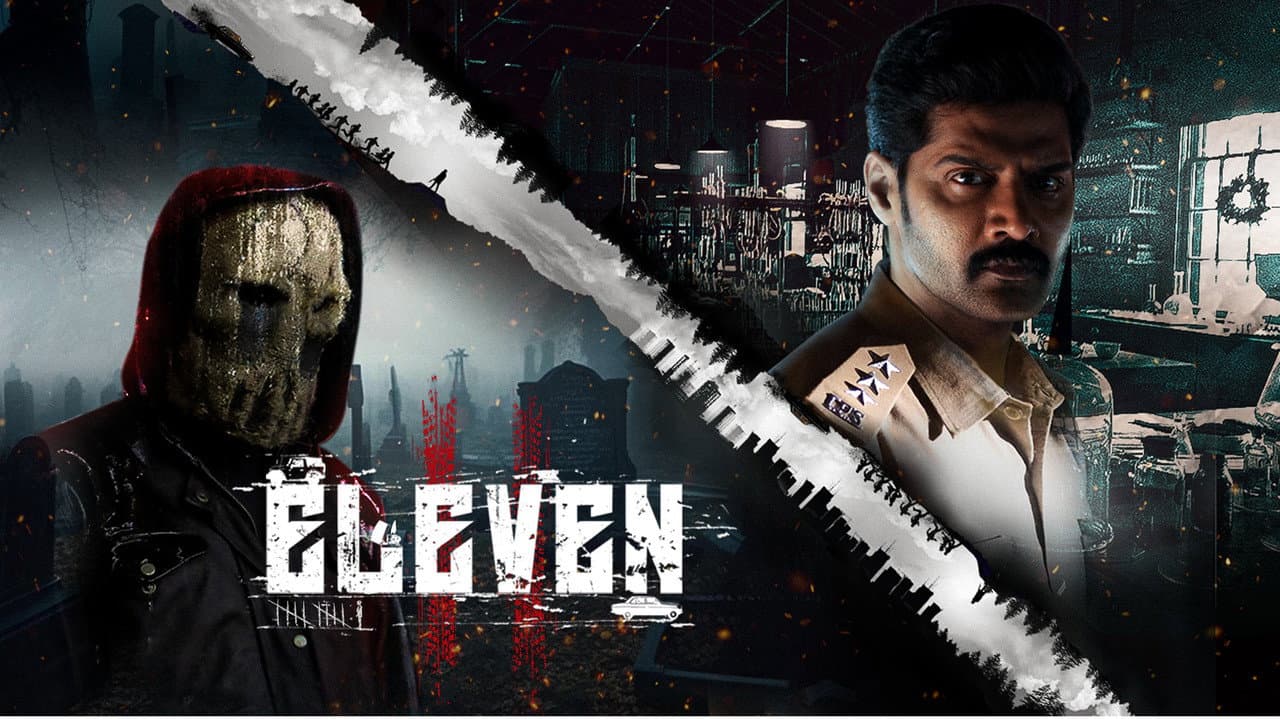
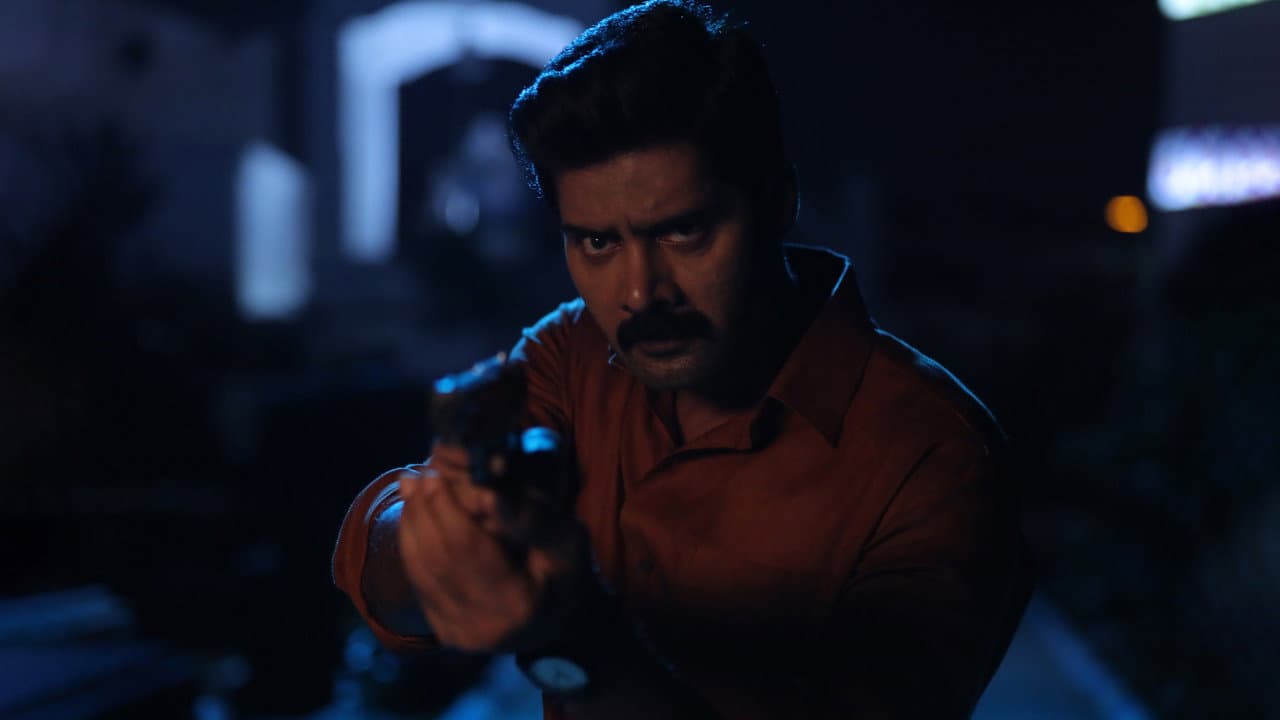
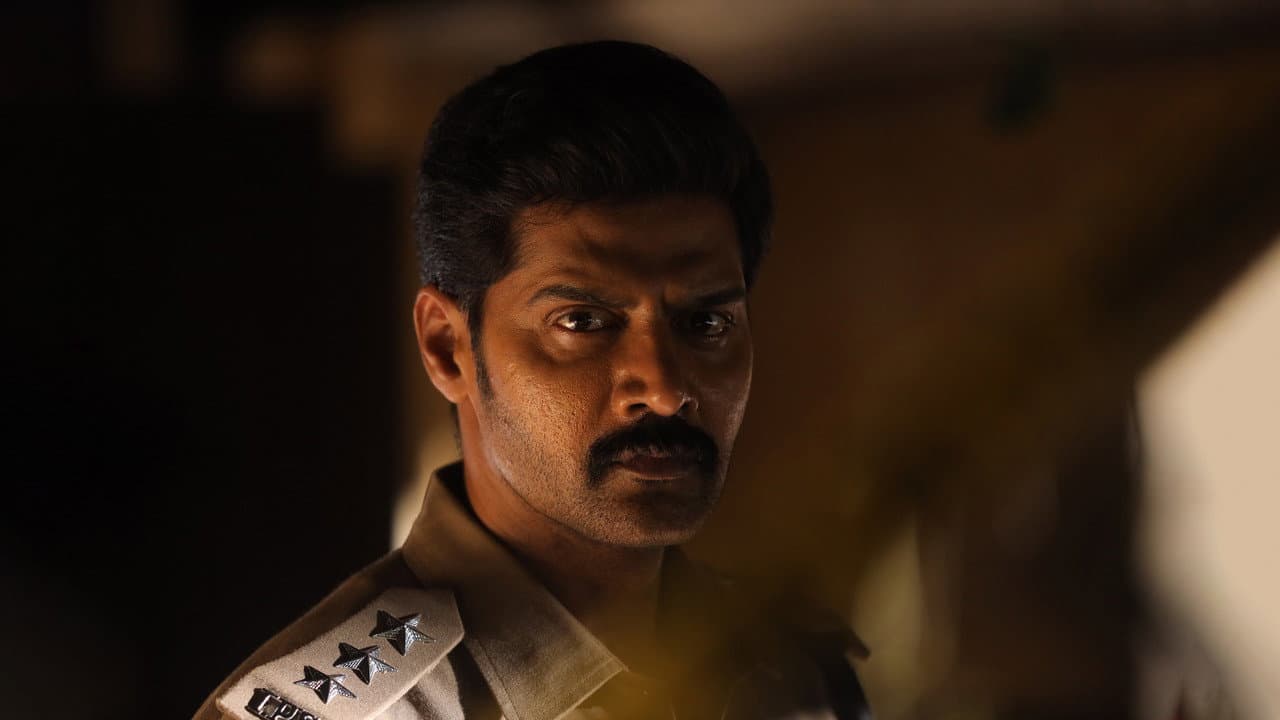
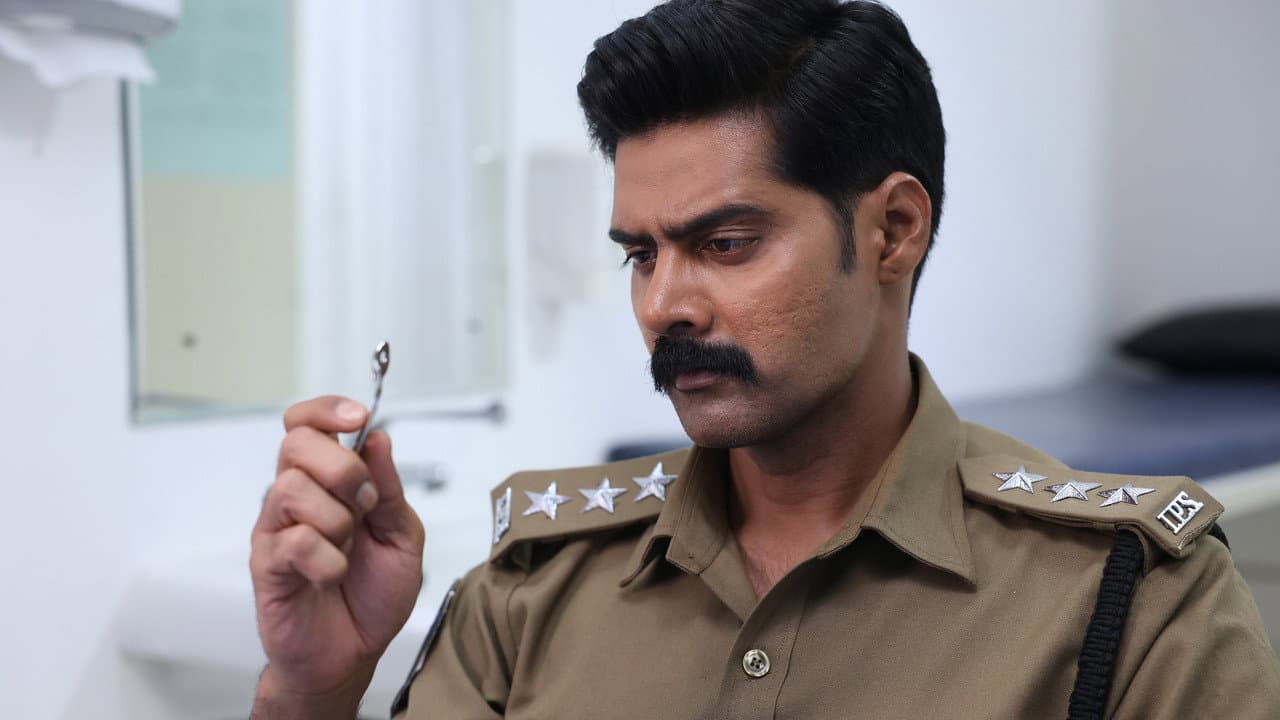
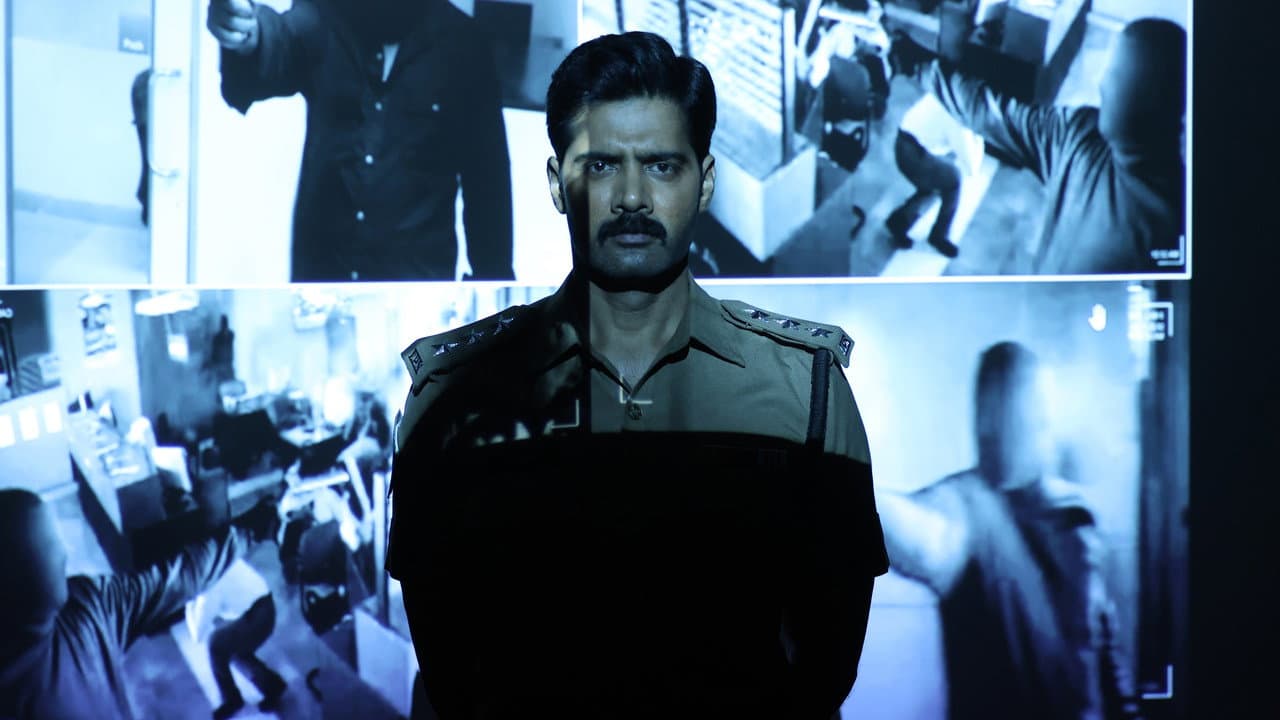
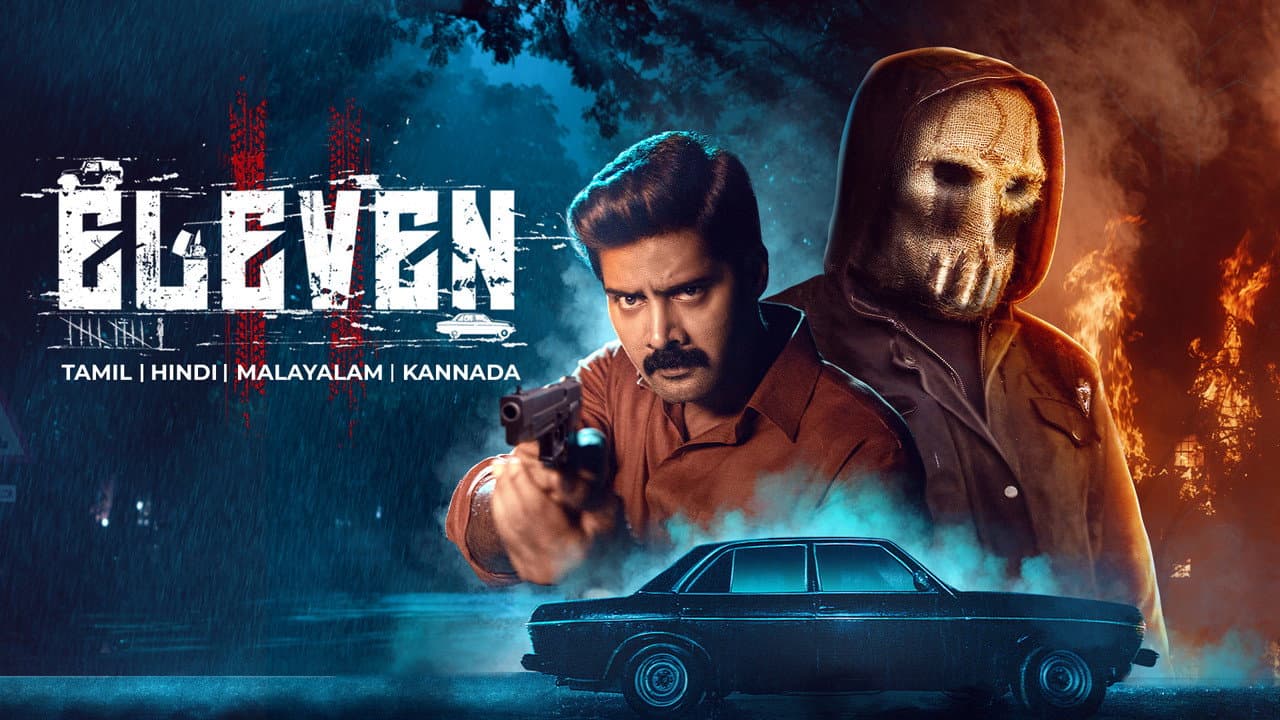
From the opening sequence - a shadowy apartment, two identical beds, one body - Eleven establishes a visual language of mirrors and duplication. Cinematographer work here deserves credit for making the twin motif feel oppressive rather than gimmicky. Corridors are shot with symmetrical precision, and reflections constantly remind us that identity is slippery. That's the film's strongest suit: atmosphere.
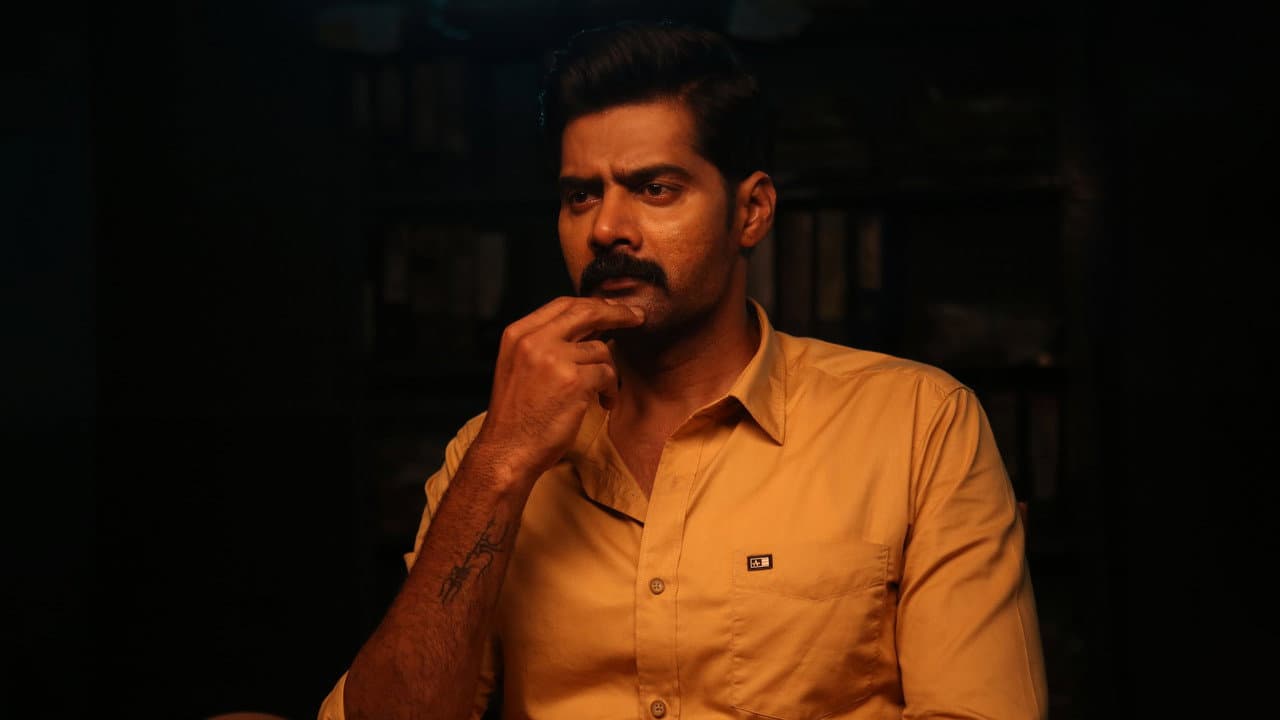
Naveen Chandra carries the weight well. His Aravind is a man running on fumes, all clenched jaws and bloodshot eyes, but he finds quieter moments of vulnerability in scenes with his therapist. Abhirami's Shanthi is underused, though she gets one solid confrontation scene that hints at a more assertive character the script never bothered to build. Shashank's Ranjith feels like a plot device given a pulse, and Riythvika's brief appearance as Thara - a grieving mother who lost one twin - delivers more emotional impact than several entire subplots.
Director Lokkesh Ajls clearly loves narrative red herrings, but he doesn't always play fair. Some revelations come out of nowhere, relying on information the audience couldn't possibly have tracked. The childhood trauma angle is genuinely upsetting, yet the film treats it as a blunt instrument rather than a wound to be examined. Flashbacks repeat the same images so often that the intended poignancy dulls into monotony.
The pacing is a mixed bag. The first hour crackles with nervous energy, cutting between crime scenes and forensic breakdowns with brisk efficiency. But around the 90-minute mark, the middle sags into repetitive argument scenes where characters shout variations of "You don't understand the killer's mind!" There's also an extended subplot involving a corrupt political figure (Ravi Varma) that feels like padding, even though it technically ties into the twist.
Musically, the background score works overtime to generate suspense, occasionally overwhelming scenes that would have benefited from silence. The final 20 minutes, however, are genuinely tense. A chase through an abandoned warehouse uses darkness and narrow corridors to create a claustrophobic dread that the earlier city-set police work never achieves. The ultimate reveal - who the killer is and why the twins mattered - lands with a sickening emotional thud, even if the logic is a bit wobbly.