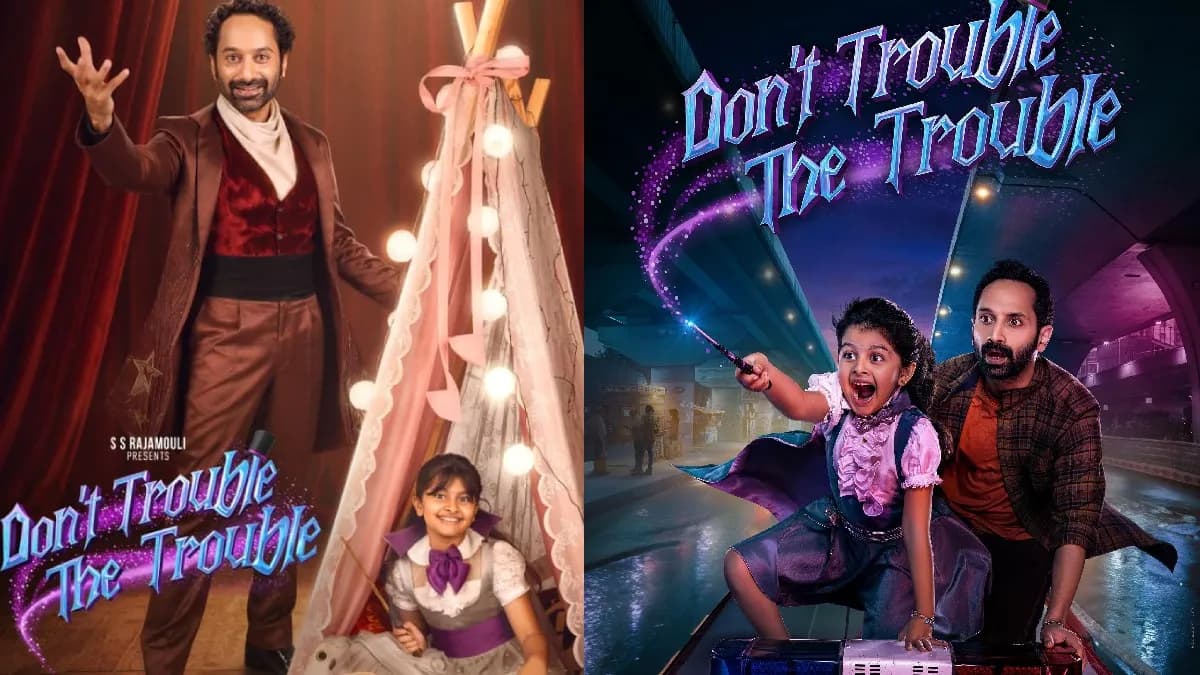
The first wave of audience reactions to "Don't Trouble The Trouble" has landed, and the verdict is neither the triumph nor the disaster that the film's pedigree seemed to promise. The thriller, which arrived in theatres with the combined weight of an S. S. Rajamouli presentation and a story from Malayalam cinema's most restless storyteller, Bhagath Fazil, has left a section of its core fanbase vocal, disappointed and, in their own words, complaining loudly. For a project sold on the strength of two names synonymous with scale and craft, the response so far reads less like a celebration and more like a post-mortem conducted in real time on social media.
The disappointment carries an extra sting precisely because of who is attached. Rajamouli's name on a poster has, for more than a decade, functioned as a near-guarantee of a particular kind of theatrical event - grand, emotionally engineered, technically immaculate. Bhagath Fazil, meanwhile, has built a reputation for scripts that twist familiar genres into something stranger and more unsettling than audiences expect. Fans who walked in expecting that combination to produce something explosive are instead describing an experience that felt muted, as though two distinct creative instincts never quite fused into a single, coherent film.
Where the Praise and the Complaints Meet
To be fair to the film, the early chatter is not uniformly hostile. Several viewers have singled out the technical departments and the performances as genuinely accomplished, noting that the film looks and sounds like a premium product. The criticism, however, clusters around the screenplay. The recurring complaint from the disappointed camp is that the story's central mystery is telegraphed too early, that the tension the premise demands never fully materialises, and that the film's most interesting ideas are introduced and then left dangling rather than developed. In a genre that lives and dies on the audience's uncertainty about what happens next, that is a serious charge.
There is also a sense among the film's defenders that it has been judged against an impossible standard. A Rajamouli presentation invites a certain scale of expectation, and a Bhagath Fazil story invites a certain density of plotting. A film that is merely solid, rather than revelatory, can feel like a betrayal to viewers who arrived expecting both. Some reactions have argued that the film would be received far more generously if it carried neither name - a familiar lament in an era when marketing leans so heavily on established brands that the film itself struggles to clear the bar those brands set.
The Pattern Behind the Outcry
It is worth stepping back from the noise. The gap between pre-release hype and post-release sentiment has become one of the defining features of contemporary mainstream cinema, and the speed at which disappointment calcifies into a narrative is faster than ever. A strong opening weekend can mask a wave of dissatisfaction; by the time word of mouth genuinely settles, the damage to a film's long-tail prospects is often already done. "Don't Trouble The Trouble" now finds itself in that precarious middle ground - not rejected outright, but not embraced either, and dependent on how the next few days of audience conversation unfold.
The film's fate may also hinge on expectations management for the second wave of viewers. Those walking in cold, without the weight of the Rajamouli and Bhagath Fazil combination pressing on them, may well find a more enjoyable film than the early adopters did. That is a strange irony for a movie marketed on the strength of its creative team: the very names meant to draw audiences in may be the reason some of them leave dissatisfied.
For now, the fanbase's mood is best described as restive rather than furious. There is admiration for the craft on display and frustration that the craft did not serve a tighter story. Whether "Don't Trouble The Trouble" recovers its footing will depend less on the promotional push and more on whether audiences who are not hung up on the billing decide the film works on its own terms. The early verdict from the faithful is clear enough: talent on the poster is not the same thing as a story that holds together on screen.
Source: Filmibeat Tamil