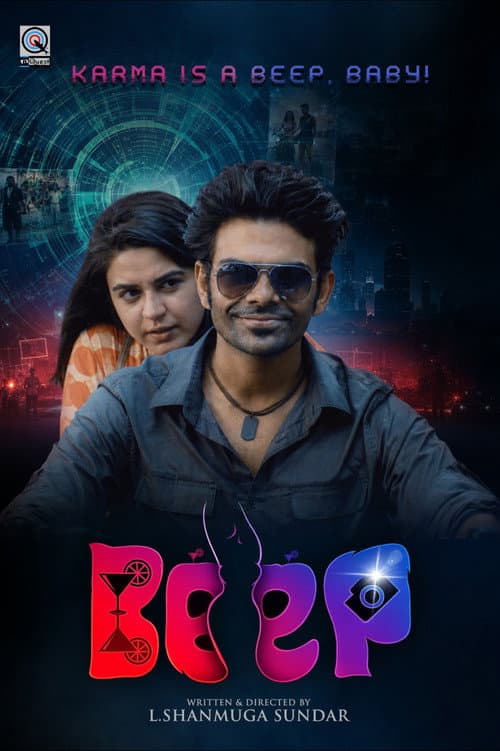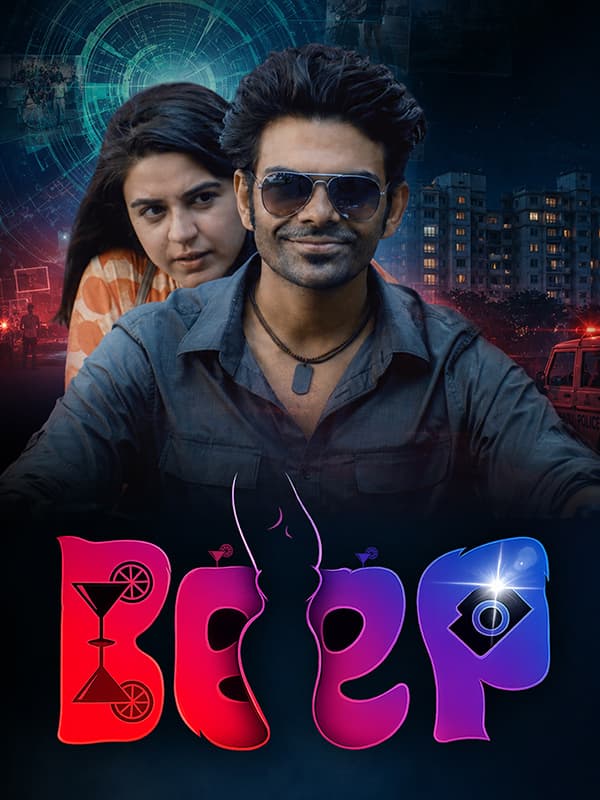
Two days after its release, BeeP is already the kind of film that splits a room. Some viewers walk out of the theatre arguing about the ending. Others sit through the credits, quietly trying to piece together how a story about a young man who steps into photographs ended up being about college dreams, narcotics and a killing. That, in itself, is a victory for director L Shanmuga Sundar, whose crime-fantasy opened on September 18 and is refusing to behave like a conventional Tamil thriller.
The premise sounds like something pulled from a glossy graphic novel. Raaghav plays Ilandevan, a young man with an ability that would make most investigators weep with envy: he can step inside a photograph and uncover the thoughts hidden behind it. Every image becomes a doorway, every snapshot a confession waiting to be read. It is a delicious hook, and the film leans into it early, letting its hero move through frozen moments the way other protagonists move through rooms.
Then Sundar does something braver than any special effect. He takes the gift away.
A life-changing event leaves Ilandevan's extraordinary ability useless, and the film shifts gears entirely. What was a fantasy becomes a procedural of the most human kind, a young man forced to rely on instinct, memory and other people after losing the one thing that made him special. It is a canny structural gamble, and it is the reason BeeP lingers longer than its running time.
Around Ilandevan orbit two worlds that appear unrelated until they aren't. There is the college circuit, with its ambition, its hierarchies and its quiet desperation. And there is the darker economy running beneath it: drugs, and eventually murder. The film's smartest choice is refusing to treat these as separate stories for too long. A campus is never just a campus in a crime drama, and BeeP knows it.
Prerna Khanna plays Kavya, while Yamini Lakshmanan appears as Sunaina, and together they give the film its emotional counterweight. Priyadarshini Rajkumar's Prof. Laya and Sundar's own turn as Prof. Chidhambaram fill out the academic side of the narrative, giving the college sequences a lived-in texture rather than a backdrop quality. Sundar directing himself is a curious decision, but it works; there is a restraint to the performance that suggests a filmmaker who understands exactly how much space a scene needs.
Where the film will divide audiences is in its construction. BeeP is described as mind-bending, and it earns the label. The photography conceit is not merely decorative; it shapes how information is withheld and released, how the audience is invited to look at a frame within a frame. When the ability vanishes, so does that visual grammar, and the film's aesthetic loosens deliberately. Some will read this as ambition. Others will read it as unevenness. Both readings are defensible.
What is not in dispute is the swing. Tamil cinema has spent recent years producing a steady stream of gritty crime films and a smaller, stranger stream of fantasy-tinged dramas. BeeP plants itself squarely between the two, and the fusion is more organic than the logline suggests. The drug thread carries real menace. The murder investigation carries real weight. And the fantasy, when it is present, is treated with a straight face rather than a wink, which is precisely why it lands.
The film arrives without the safety net of pre-release hype or a recognizable box-office anchor, and its TMDb rating currently sits at 0/10 simply because too few users have logged votes. That number tells us nothing yet. Word of mouth, in Tamil cinema, is the only metric that matters in week one, and BeeP is the sort of title that tends to build rather than open. It rewards attention, punishes phone-checking, and practically demands a second viewing once the final act recontextualises what came before.
Raaghav carries the film with a performance that moves from curiosity to confidence to something closer to grief, and he is matched well by Khanna, whose Kavya refuses to be a romantic footnote. Lakshmanan gets fewer scenes but makes them count. The ensemble is small, tight and purposeful, which suits a story that is ultimately about the limits of what one person can see.
BeeP is not a perfect film. Its middle stretch sags under the weight of its own plotting, and a few narrative threads dangle longer than they should. But it is an interesting one, and in a release calendar crowded with familiar shapes, interesting counts for a great deal. Here is a filmmaker willing to hand his hero a superpower and then ask what happens when it's gone. That is not a gimmick. That is a thesis. And for a September release with no fanfare, that is more than enough reason to buy a ticket.