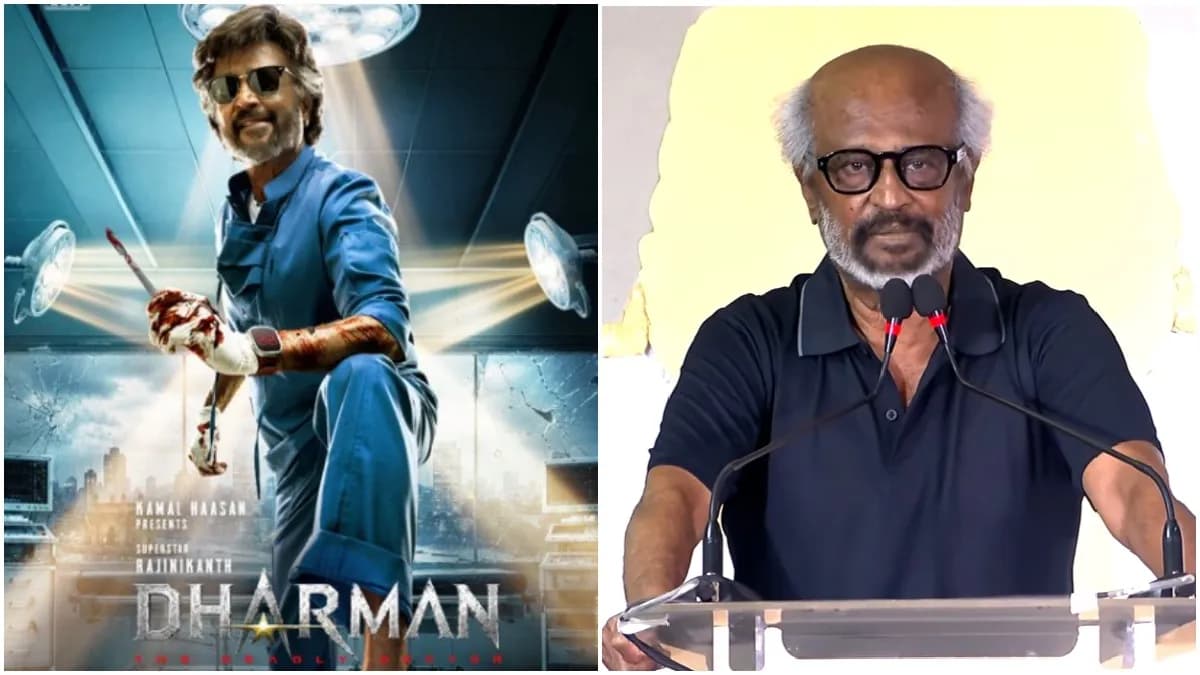
Actor Ashwath has opened up about what it was like to work alongside Rajinikanth, and the picture he paints is one of near-total awe. Speaking about his experience on the sets of "Dharman," Ashwath described how closely he observed the superstar during production, and his comments suggest that the admiration he carried into the project has only deepened now that cameras have stopped rolling. For a performer still carving out his place in the industry, sharing screen space with a figure of Rajinikanth's stature has clearly been a defining chapter.
An actor who studies the people around him
Ashwath's remarks carry weight because of how he approaches his own craft. He has consistently said that he learns by watching, that a set is a classroom for anyone willing to pay attention, and that the most valuable lessons rarely arrive through formal instruction. That mindset explains why he has been so vocal about his time on "Dharman." When someone who treats every shoot as a learning opportunity says he is overwhelmed by what he saw, the statement lands differently than routine promotional praise.
What emerged from his account is less a catalogue of technical lessons and more a portrait of temperament. Ashwath spoke about the discipline that defines a Rajinikanth workday, the punctuality that has become almost folklore in Tamil cinema, and the way a veteran performer carries the weight of a massive production without letting it show. Those observations matter because they come from an actor who was close enough to notice the small things: how lines are prepared, how scenes are discussed, how crew members are treated between takes.
The legend whose shadow falls across every generation
Rajinikanth's career is now measured in decades rather than years, and it has passed well beyond the point where any single film can define it. From his early days as a villain who stole scenes to his emergence as one of the most bankable leading men in Indian cinema, he built a following that cuts across age groups, languages, and regions. His screen presence has always been difficult to describe in strictly technical terms; fans respond to a gesture, a pause, a particular way of adjusting his sunglasses. That intangible quality is precisely what has kept him central to the industry even as the industry around him has changed.
For younger actors, that longevity is both an inspiration and an intimidating benchmark. Several stars have spoken about growing up on his films, and working with him is often described as a milestone that few careers can match. Ashwath's reaction fits that tradition, but there is a personal texture to it as well. He is not simply a fan recalling a childhood hero; he is a colleague who spent a production cycle watching how that hero goes about the job.
What the reaction really tells us
There is a pattern in how Tamil cinema treats its elder statesmen. The tributes come, they are sincere, and then the conversation moves on. What is rarer is a younger actor articulating something specific about process, the small professional habits that explain why a performer remains relevant for so long. Ashwath's appreciation leans in that direction. He seems impressed not only by the legend but by the labour behind the legend, the repetition and rigour that most audiences never see.
That distinction matters for his own trajectory. An actor who studies his seniors rather than merely flattering them tends to absorb something useful. If Ashwath takes even a fraction of what he observed into his next projects, the time spent on "Dharman" will pay off in ways that have nothing to do with the film's eventual reception.
A reminder of what sets endure
The wider significance here is simple. In an industry that moves quickly, cycles through stars, and chases trends, the spectacle of a young actor standing genuinely overwhelmed by a veteran reminds everyone why certain careers become institutions. Rajinikanth has survived shifting tastes, changing technology, and the constant demand for novelty. When someone who watched him up close describes that survival as remarkable, it is not flattery. It is testimony.
Ashwath's comments will not settle any debates about legacy, nor are they meant to. They offer a window into what it feels like to stand beside that legacy and realise how much work it took to build. For fans, that is a satisfying glimpse behind the curtain. For aspiring actors, it is a nudge in the direction of patience, preparation, and respect for the craft.
Source: Filmibeat Tamil