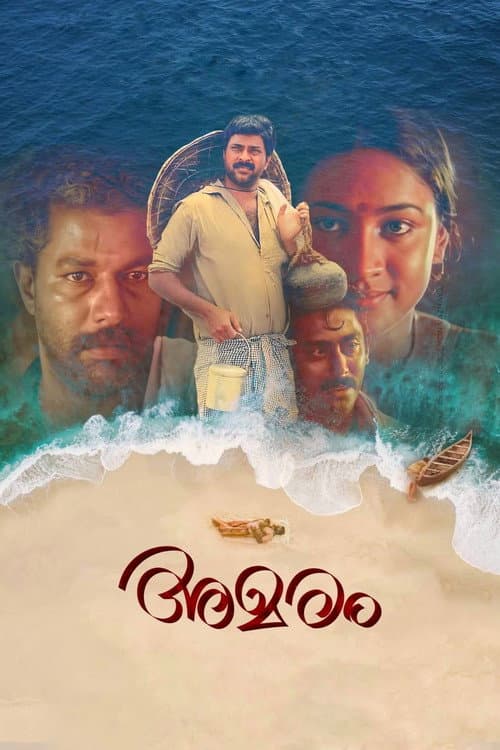
The 1991 Malayalam classic Amaram has resurfaced in Tamil discourse, sparking fresh conversations about its enduring portrayal of a father's ambition and the quiet tragedy of shattered dreams. Directed by the legendary Bharathan, the film is being revisited by a new generation of viewers who are discovering its emotional weight through recent re-releases and streaming availability. At its core, the drama revolves around Achootty, an uneducated fisherman whose sole purpose in life is to see his daughter Radha become a doctor - a dream that collides painfully with the realities of love and circumstance.
The film's narrative centers on Achootty, played with remarkable restraint by Mammootty, who toils relentlessly to provide his daughter with the education he never had. His world, built on the simple yet profound belief that literacy is the only escape from a life of hardship, begins to crumble when Radha, portrayed by Maathu, falls for her childhood friend Kochu Raman, essayed by Murali. Bharathan crafts this domestic conflict with a gentle, observant lens, avoiding melodrama in favor of quiet, searing realism. The result is a story that asks a timeless question: what happens when a parent's dream for their child is not the child’s own dream?
What makes Amaram particularly compelling, even thirty-five years after its original release on February 1, 1991, is its refusal to offer easy villains or simple resolutions. Radha is not rebellious for the sake of defiance; her love for Kochu Raman is portrayed as innocent and genuine. Similarly, Achootty is not a tyrannical father but a man trapped by his own limited worldview, unable to see beyond the future he has meticulously planned. The emotional tension is not between good and evil, but between love and expectation, duty and desire. This ambiguity is precisely why the film continues to be dissected in Tamil film circles, where similar father-daughter narratives often lean toward more didactic conclusions.
The supporting cast elevates the material further. KPAC Lalitha brings her characteristic warmth to the role of Bhargavi, while Ashokan, Balan K Nair, and Kuthiravattam Pappu round out the ensemble with performances that ground the story in a convincingly lived-in coastal community. Bharathan’s direction is aided by the film’s atmospheric cinematography, which captures both the beauty and the harshness of the fishing village setting. The 136-minute runtime moves at a deliberate pace, allowing the audience to sit with the characters' discomfort rather than rushing toward a tidy climax. The film’s TMDb rating of 7.118/10 reflects this lasting critical appreciation, though long-time fans argue the number still undersells its emotional impact.
The question that lingers in the discourse around the film - whether Radha ever seeks vengeance against the hero who destroyed her father’s dream - requires a more nuanced reading. Amaram is not a revenge thriller, and Radha’s arc is not one of retaliation. Instead, her journey is one of quiet negotiation with grief and guilt. The film’s final act deals not in dramatic confrontations but in the slow, painful process of understanding and forgiveness, both of others and of oneself. It is this maturity in storytelling that makes Amaram a touchstone for those who study how Indian cinema handles complex familial fractures without resorting to theatrical catharsis.
For Tamil audiences, the film also represents a fascinating cross-cultural conversation about regional storytelling sensibilities. While Tamil cinema of the early 1990s often favored loud, emotionally amplified family dramas, Amaram offered a more subdued, naturalistic alternative. Mammootty’s performance, in particular, is a masterclass in restraint - he conveys Achootty’s devastation through slumped shoulders and weary glances rather than grand speeches. This approach challenges viewers to recalibrate their expectations of what a tragic father figure can look like on screen.
In revisiting Amaram, critics are also noting how the film presciently addressed issues of class and education that remain painfully relevant today. The chasm between Achootty’s world of physical labor and the professional world he dreams of for his daughter is drawn with precision. His anxiety is not merely about losing his daughter to a husband, but about losing her to a life he cannot comprehend or participate in. This fear of being left behind - both intellectually and emotionally - gives the drama a universality that transcends its specific setting.
The question posed by the renewed interest in the film - did the heroine take vengeance? - is likely a product of a modern viewing culture that expects decisive, morally clear endings. Amaram defiantly refuses such clarity. It leaves its characters, and its audience, in a space of unresolved sorrow, where love and loss are inextricably intertwined. Bharathan’s film does not answer whether Radha “wins” or “loses”; it simply presents her with the impossible task of carrying her father’s ghost alongside her own choices. That unresolved weight, many argue, is what makes Amaram a masterpiece that no passing trend can diminish.
Source: Filmibeat Tamil