Let’s get the obvious out of the way: the premise sounds grim. An elderly woman on her deathbed, greedy relatives circling like vultures-that’s black comedy territory, and “Thaai Kizhavi” leans hard into it. But director Sivakumar Murugesan has a trick up his sleeve: he never lets the comedy demean its central character. Instead, he builds the humour from the sheer absurdity of family dysfunction.
Radhika Sarathkumar is the film’s spine. Her Pavunuthaayi is a terrifying matriarch-sharp-tongued, calculating, and fiercely independent. Even while confined to a bed, she commands every scene with a glare or a dry one-liner. She’s not a villain, nor a saint; she’s a survivor who made tough choices, and the film refuses to judge her. Radhika delivers the year’s most layered performance in a Tamil film so far.
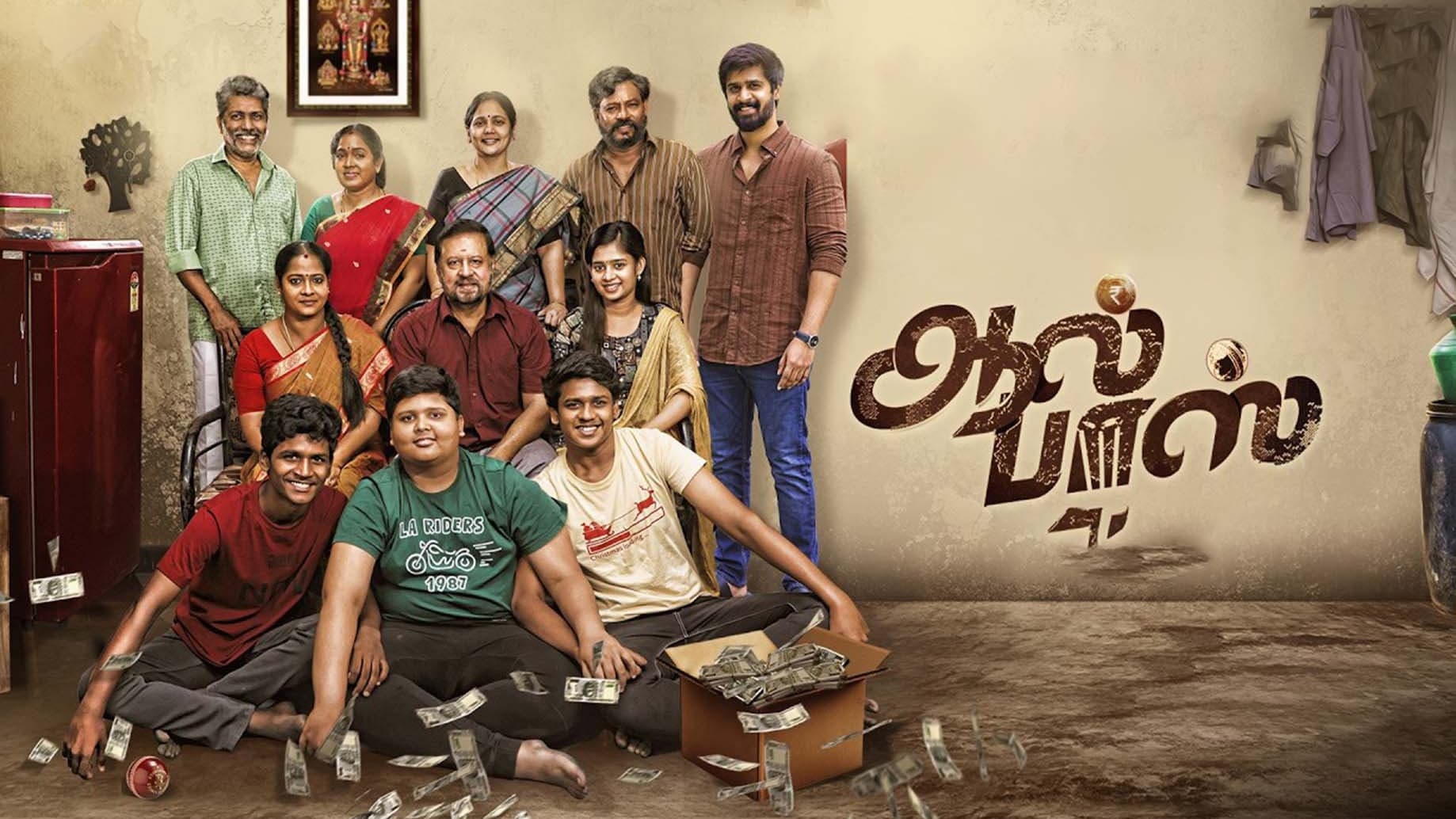
The ensemble is uniformly strong. Singampuli’s Uppuliyaan is a comic delight-his desperate schemes to win Amma’s favour are both ridiculous and pitiable. Aruldoss and Balasaravanan play the feuding brothers with just enough sibling rivalry to feel real, while Munishkanth’s Pennycuick is a scene-stealer as the loyal sidekick whose devotion is tested. Raichal Rabecca Philip brings sharp energy as Suruli, the kind of relative who gossips with a smile and stabs with a whisper.
The writing is uneven but often brilliant. The first hour is a slow burn of character introductions and petty squabbles-some jokes land, others drag. But the second half tightens the screws. A dinner-table argument sequence is masterfully staged, shifting from forced civility to outright accusations without losing its comic rhythm. The climax, however, tries to do too much-a twist involving hidden property deeds feels rushed, and an emotional reconciliation scene sags under music that’s too saccharine.
Technically, the film is assured. Cinematography by [not credited] captures the claustrophobic interiors of the family home in warm, oppressive tones. The editing keeps the 144-minute runtime from feeling bloated, though a subplot about a local political rival is underdeveloped and feels like setup for a sequel. Songs are functional, but the background score by [not named] effectively shifts from jaunty to sombre as needed.
“Thaai Kizhavi” wears its influences-think “Virumandi” meets “Kalakalappu”-proudly, but it carves its own voice. It’s a film about how money can make monsters of us all, but also about how love, however damaged, survives. It doesn’t offer easy answers; instead, it laughs at the mess.