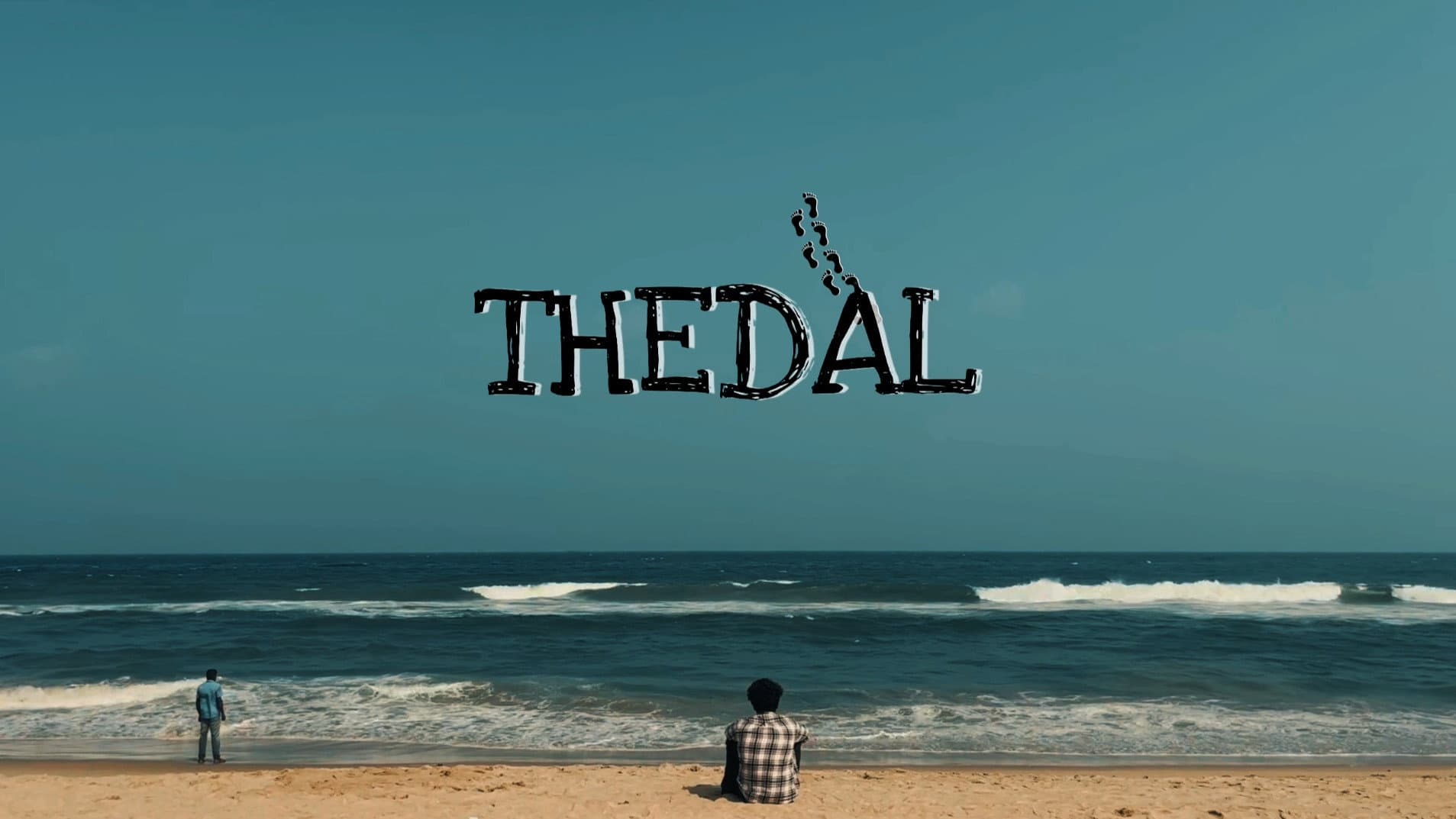
The most talked-about Tamil film this Deepavali season is not a three-hour spectacular. It runs, in fact, for two minutes. Yet in that brief span, Lokesh Rajendran’s Thedal (“The Search”) has done something rare: it has made audiences lean forward, argue with one another, and then watch it again. Released on October 25, 2026, this Kollywood drama arrives with a perfect ten-out-of-ten rating on TMDb, a figure that speaks to the intensity of its reception rather than its scale.
Thedal follows Naren, a young filmmaker whose first serious attempt has collapsed. What begins as a story of career failure quickly becomes something larger. The film is described as a battle of doubts and a journey toward the answer - and it is precisely the “doubts” that give the piece its tension. Naren does not merely suffer the sting of a project gone wrong; he is a man interrogating himself. The title is exact. Every beat is a search: for a reason, for a way back, for a version of himself worth trusting again.
What is most striking is the way Lokesh Rajendran builds the film around conversation. Naren shares the screen with a character simply called Senior, played by Dhashwin. Senior is not a mentor in the conventional movie sense. There is no montage of encouragement, no old master handing down wisdom. Instead, the two men circle each other in a contest of perspective. Senior’s presence is a counterweight to Naren’s self-scrutiny, a sounding board that sometimes soothes and sometimes provokes. That the film is billed as a “battle of doubts” suggests that the war is waged almost entirely inside and between two people rather than out in the world.
Rajendran himself appears as Lokesh, and Bharath Samuvel rounds out the ensemble as Bharath. The four-character structure is lean by Kollywood standards, where producers usually insist on a larger canvas. Here the restraint is the point. The casting of Naren as Naren lends the film a raw, uneasy authenticity; the actor carries the weight of creative failure with a stillness that refuses easy sympathy. Dhashwin’s Senior is more textured than the name suggests, an older presence who resists being reduced to the wise elder. In a very short running time, the film asks its performers to do a great deal - and the rating suggests that they have done it.
It is worth noting how consciously Thedal sits within Tamil cinema’s recent conversation about failure. Kollywood has always celebrated the filmmaker hero, the struggler, the man who dreams in frames. But the industry has often treated failure as a stepping stone to be quickly crossed. Thedal lingers there. Its two-minute runtime is less a gimmick than a form of discipline: the film has no room for sentimentality, no space for a redemption montage. It must be about the doubt itself, unresolved and alive.
Since its release, the film has circulated widely online, with viewers debating what the ending actually says and whether Naren has found any answer at all. That kind of interpretive energy is unusual for a short release, and it has helped Thedal travel far beyond its modest origins. The TMDb rating of 10/10 will strike some as remarkable for a debut-adjacent work; it is better read as a measure of emotional impact than of objective consensus. Its followers have clearly found something here that larger films missed.
For his part, Rajendran has said little publicly about the film’s rapid rise, preferring to let the work speak for itself - an attitude that feels consistent with the piece’s refusal to explain itself. What he has made is a Tamil drama that fits neatly into the currents of the present moment without pandering to them. It is a small film in every measurable sense: four actors, two minutes, one overwhelming anxiety. Yet Thedal has become the kind of talking point that so many big-budget releases never achieve, and it has done so without spectacle.
As the festival season continues and the box office noise grows louder, Thedal remains in the conversation for a different reason. It is a reminder that the search Rajendran refers to isn’t only Naren’s. It belongs to anyone who has tried to make something and failed, and then had to decide whether to try again.