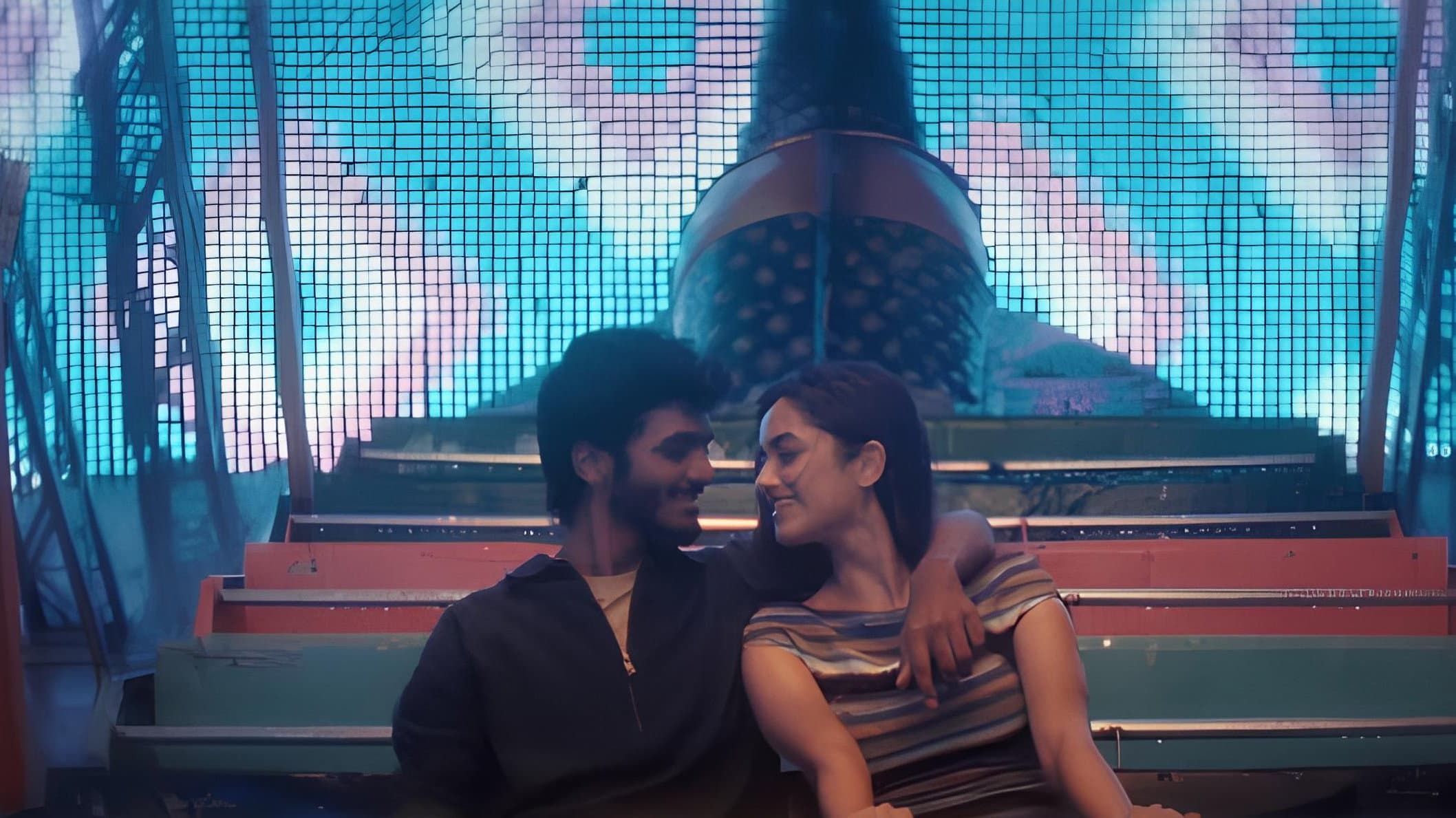
Seven minutes is barely enough time to boil water, let alone unpack the making of a film. Yet that is precisely the window Goutham Ramesh has chosen for Radhimaa (Documentary), a micro documentary that slipped into theatres and streaming feeds on October 5, 2026, with little of the fanfare that usually accompanies a Tamil film release. No teaser blitz. No city-wide cutouts. Just a quiet, compact piece of nonfiction filmmaking that dares to suggest that the story behind a story can be told in the time it takes to drink a cup of filter coffee.
The premise is disarmingly simple. Billed as the making of Radhimaa, the documentary pulls back the curtain on a production that has otherwise kept its cards close to its chest. Ramesh, who directs, approaches the material not as a promotional puff piece but as a distilled snapshot of craft - the rehearsals, the pauses, the small decisions that never make it to the final cut. At seven minutes, there is no room for indulgence, and that constraint appears to be the point. Every frame has to earn its place.
What lends the project its curiosity value is its cast. Sai Abhyankkar, whose musical footprint has made him one of the more talked-about young talents in the industry, appears as himself, and so does Bhagyashri Borse. Neither is performing a role here in the conventional sense. Instead, they are filmed in the act of being collaborators, subjects, and witnesses to their own work. There is an intimacy to that setup that a glossy behind-the-scenes featurette rarely achieves. When a performer drops the mask and simply exists in the space between takes, the camera catches something closer to truth than any scripted interview could deliver.
Ramesh's choice to keep the runtime under ten minutes places Radhimaa (Documentary) in a growing lineage of short-form nonfiction that has begun to find an audience in Tamil cinema circles. Where once a "making of" was a DVD extra or a YouTube afterthought, the format is slowly being treated as a legitimate artistic statement in its own right. The film's release on October 5 suggests a distributor willing to bet that audiences are curious enough about the creative process to sit through a brief, tightly edited window into it.
It is worth noting what the documentary does not do. There is no dramatic voiceover narrating every beat. There is no manufactured conflict, no staged revelation designed to generate headlines. The film's restraint is its signature. Ramesh seems to trust that the small, unglamorous moments - a repeated take, a shared laugh, a moment of concentration - carry more weight than any orchestrated set piece. For a documentary that shares its name with the feature it documents, that decision feels deliberate: the goal is not to overshadow the original work but to illuminate a corner of it.
The timing of the release is intriguing as well. Arriving in early October, the documentary lands in a crowded calendar, yet its brevity makes it an easy entry point for viewers who might not otherwise seek out behind-the-scenes content. Seven minutes is a commitment almost anyone can make. And in an industry where runtime is often equated with seriousness of purpose, there is something quietly subversive about a film that refuses to pad itself out.
As of now, the documentary carries no aggregated rating, sitting at 0/10 on the platform where such data is tracked - a figure that reflects a lack of votes rather than any critical judgment. That blank slate is arguably fitting. Radhimaa (Documentary) arrives without baggage, without a pre-built narrative of success or failure, and asks only to be watched on its own modest terms.
For those who follow Tamil cinema's shifting formats, this is a small but telling release. It signals that the making-of can be more than marketing - that it can be an essay, a sketch, a brief meditation on how films get made. Whether Radhimaa the feature eventually arrives to match it remains an open question, but the documentary has already made its case: sometimes the most interesting story is the one happening just off-camera, and sometimes it only needs seven minutes to tell it.