The roar of a machine cutting through the stillness of a Coimbatore morning. The frantic scribble of a patent application. The cold, hard stare of a bureaucrat threatened by progress. These are the sonic and visual textures of G.D.N, a film that refuses to let the legacy of G.D. Naidu - the man history crowned the ‘Edison of India’ - fade into sepia-toned nostalgia. Directed by Krishnakumar Ramakumar, this 146-minute Tamil drama, which hit Kollywood screens on August 7, does not merely recount a biography; it stages a confrontation between a restless mind and a system built to contain it.
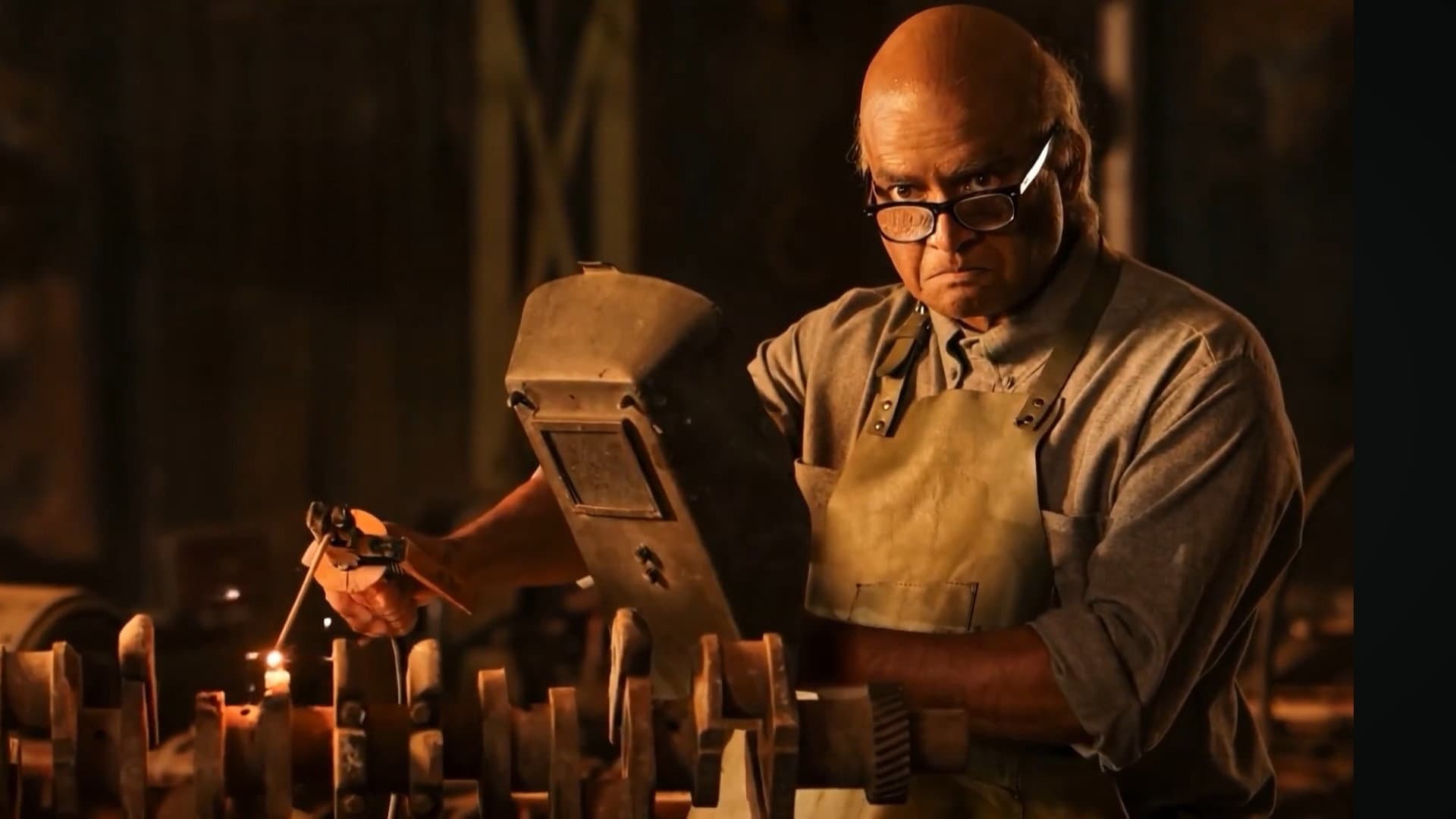
We open not with a birth, but with a buzz. R. Madhavan, in what may be the defining performance of his career, embodies Naidu with a wiry intensity that feels almost dangerous. This is not the polished, romantic lead we’ve seen in other ventures. Madhavan’s Naidu is a man whose hands are perpetually stained with grease and ink, whose eyes dart between a flawed prototype and the horizon of possibility. The film wastes no time on hagiography. Instead, it drops us into the heart of his industrial empire - a sprawling workshop where lathes whine and sparks fly - and immediately establishes the central friction: the state sees a nuisance; Naidu sees the future.
Ramakumar’s direction is assured, favoring a gritty, grounded realism over the glossy sheen typical of big-budget dramas. He shoots the machinery with a documentarian’s reverence, letting the clang of metal underscore the rhythm of invention. But the true tension is human. Priyamani, as Chellammal, is not just the long-suffering wife; she is the emotional ballast, the quiet pragmatist who understands that her husband’s genius is a double-edged sword. In a particularly gut-wrenching sequence, she watches him dismantle a household appliance to understand its mechanics, and you see the toll his obsession takes - not on him, but on the domestic peace she craves. Her performance is a masterclass in restraint, offering a counterpoint to Madhavan’s volcanic energy.
The narrative engine, however, is the conflict. The film’s overview promises “severe scrutiny” and “opposition,” and it delivers on that promise with a slow-burn political thriller subplot. Sathyaraj, as Ramaiah Pillai, emerges as a formidable antagonist - not a caricatured villain, but a functionary of the old guard, a man who sees Naidu’s international dealings as treachery rather than ambition. Their exchanges crackle with ideological warfare. In one scene, Pillai hisses, “Your foreign machines will make our people lazy,” to which Naidu retorts, “Your laziness will make our country obsolete.” It’s dialogue that feels ripped from contemporary policy debates, yet grounded in the 1930s and 40s milieu where Naidu’s electric motors and automotive innovations ruffled colonial and local feathers alike.
Jayaram brings a welcome warmth as Ambalapara Krishnan, Naidu’s confidant and business ally, while Thambi Ramaiah provides the film’s earthy comic relief as Ramasamy Mama, a relative who serves as the audience’s surrogate - astounded, bewildered, and ultimately proud. The ensemble is rounded out by Dushara Vijayan as Ranganayaki, a sharp-witted associate who holds her own in the male-dominated workshop, and Vinay Rai as Bhupendra, a North Indian magnate whose rivalry with Naidu highlights the fragmented nature of pre-independence Indian industry.
What elevates G.D.N beyond a standard biopic is its unflinching look at Naidu’s international ambitions. The film dramatizes his trips abroad, the espionage-tinged suspicion he faced from British authorities wary of a native outsmarting the Empire, and the bureaucratic red tape that often strangled his projects. The screenplay does not shy away from the darker implications of his genius: the patents denied, the funds withheld, and the heartbreaking moment where a prototype for a lightweight vehicle is dismantled by customs officials who claim it is a security threat. It’s here that Ramakumar’s script finds its tragic rhythm - the struggle is not against physics, but against pettiness.
Cinematographer (in absence of named crew, one can assume the technical team behind Ramakumar’s vision) paints Coimbatore in sepia and steel, contrasting the monochrome of bureaucratic offices with the vibrant, oil-slicked colors of the factories. The sound design deserves special mention: the whirring of motors becomes a leitmotif for progress, while silence is deployed strategically during moments of defeat, making the eventual triumphs all the more resonant.
At 146 minutes, G.D.N is a sprawling, demanding watch, but it never feels padded. Every scene serves to illuminate a facet of Naidu’s complex character - the inventor, the industrialist, the husband, the rebel. Madhavan’s physical transformation is staggering, but it’s his internalized geekery - the way he casually licks a pencil before sketching a gear - that sells the performance.
The film closes on a poignant note, not with a celebration of wealth, but with a quiet acknowledgment that innovation is a lonely, often adversarial pursuit. G.D.N is not just a tribute to the ‘Edison of India’; it is a warning to every society that dismisses its dreamers. For Tamil cinema, it is a bold, ambitious statement - a reminder that our greatest stories often lie in the workshops of history, waiting for someone to turn the key. It is a must-watch, not only for its craft but for its courage to question the price of progress.